Wolfsschanze Hitler's HQ, Ketrzyn Poland and Peenemunde WW2 V1/V2 Research Centre in North Germany
June 19, 2024
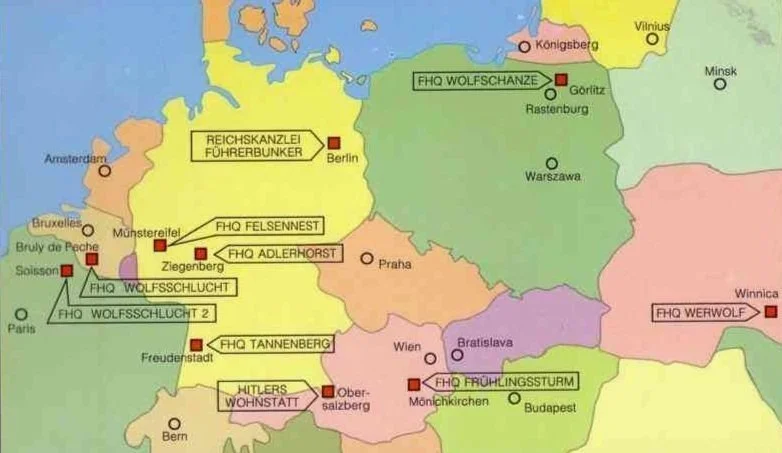
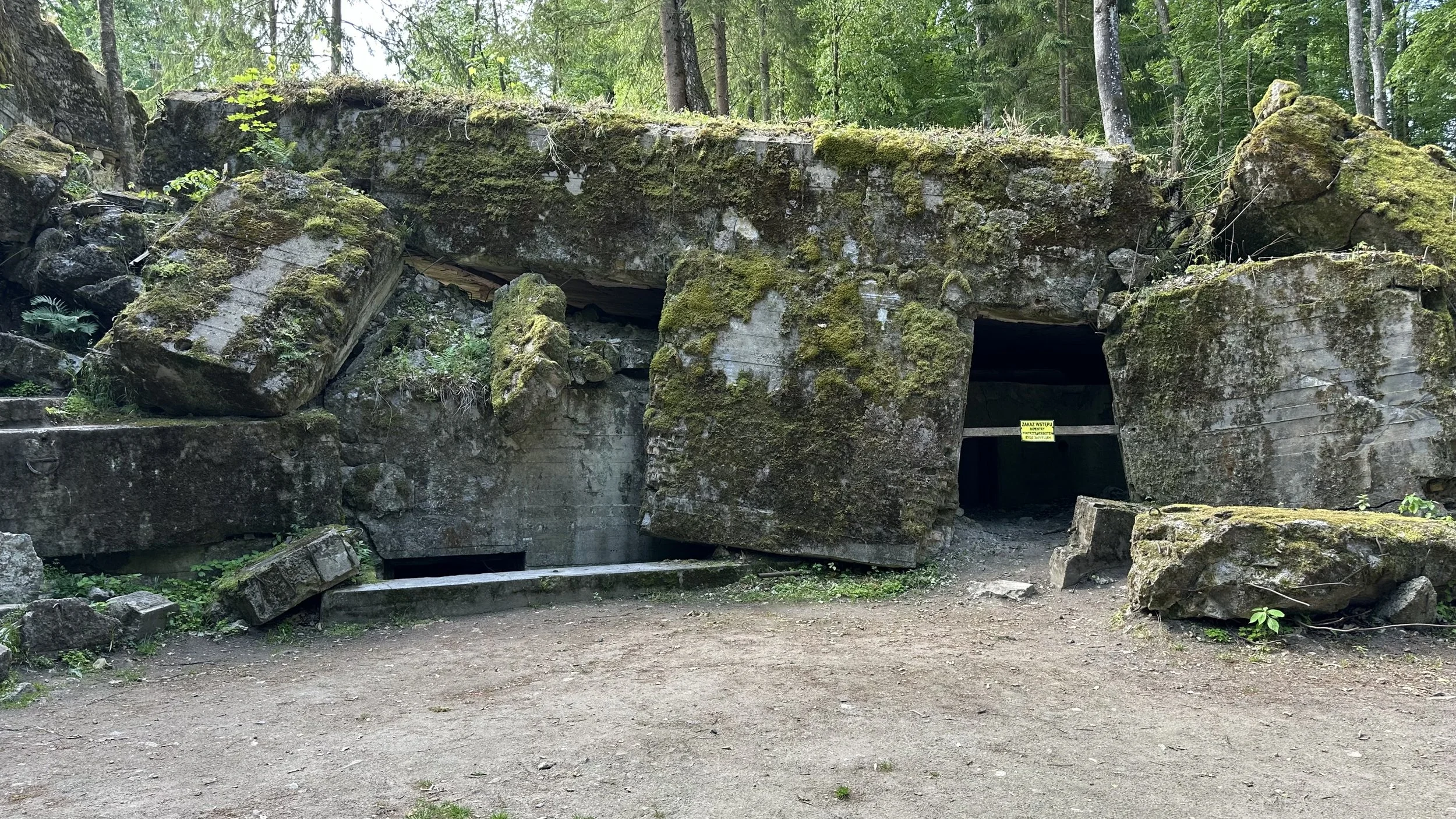
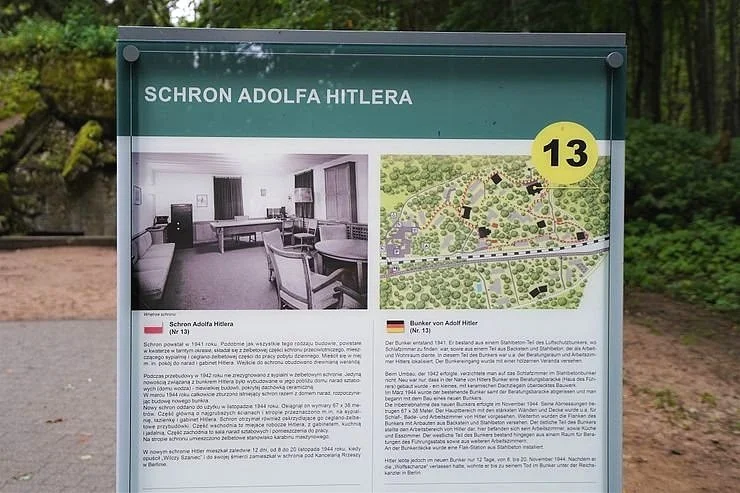
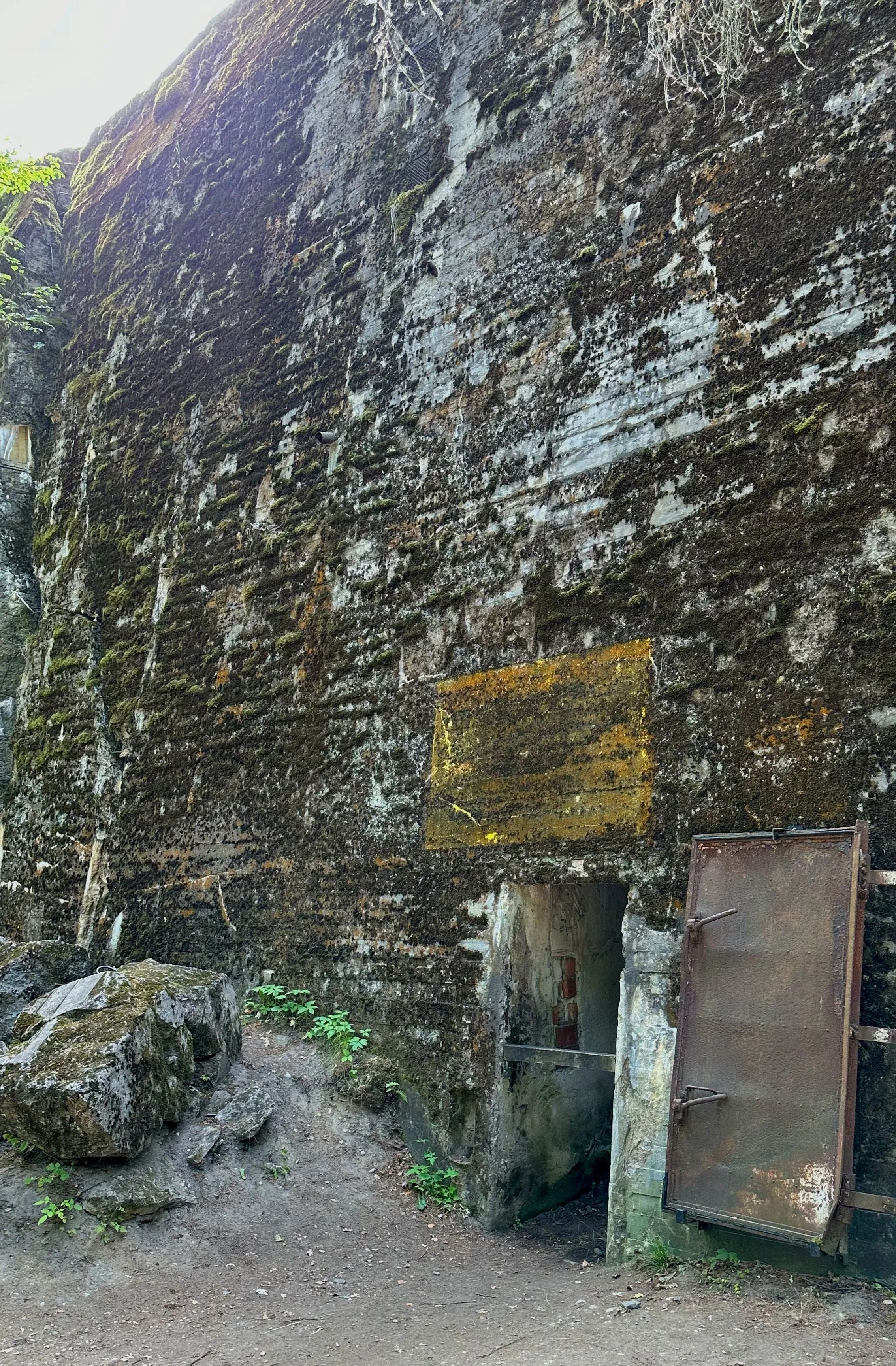
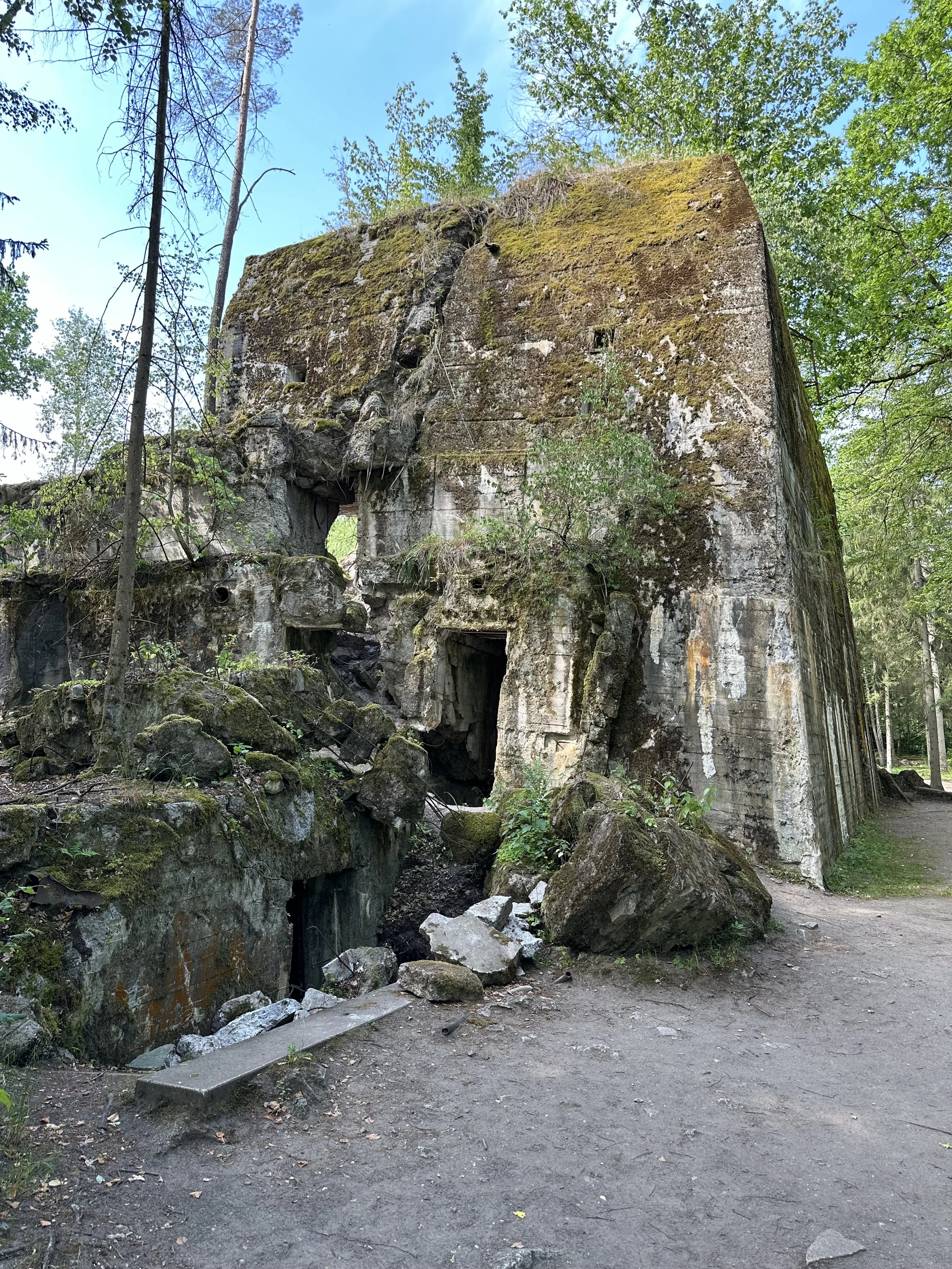
Hitler’s headquarters in Europe
This place is remote by European standards. I think it is a good destination for persons interested in WW2 history. I thought that it was very interesting and well presented so definitely worth time and effort to get there. In addition to the main site, there are more impressive bunkers located on private lands and definitely worth a visit. The museum’s website is also very well done and full of interesting information and photos not even presented at the Wolfssahanze.
The Wolf's Lair, or Wolfsschanze, was situated in the Masurian woods of East Prussia, near the small East Prussian town of Rastenburg (now Kętrzyn in Poland). This location was chosen for its seclusion and strategic advantage, being far from the major war fronts and well-protected against air raids. The site's remote location in a dense forest provided natural camouflage and made it difficult for enemy forces to locate and attack.
Construction of the Wolf's Lair began in 1940, a massive undertaking that transformed a remote woodland into one of the most fortified military headquarters of the Nazi regime. The complex sprawled over an area of about 6.5 square kilometers and was constructed by Organisation Todt, a civil and military engineering group in Nazi Germany. It consisted of over 80 buildings, including bunkers, barracks, two airfields, a railway station, power plants, and even a teahouse.
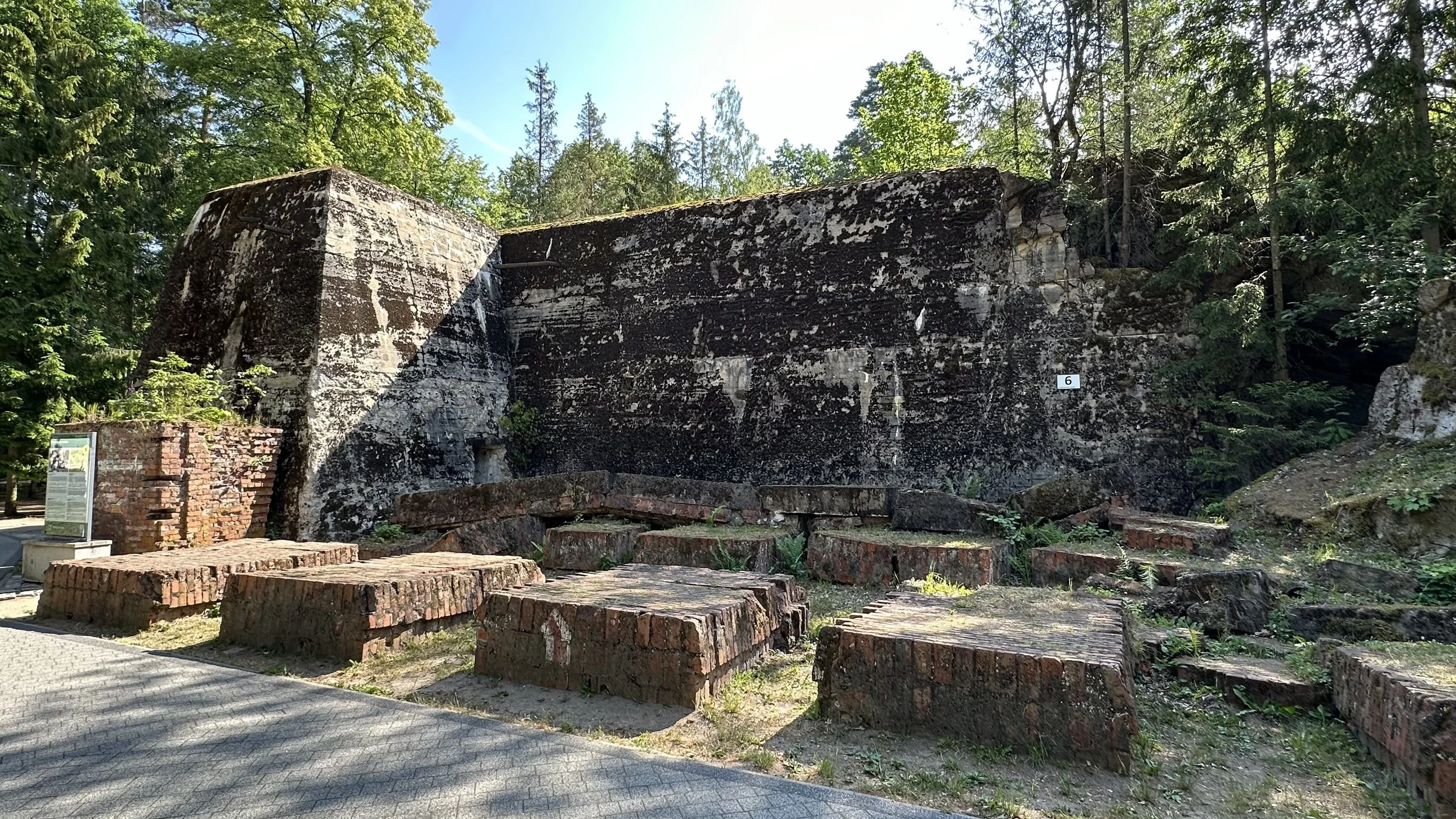
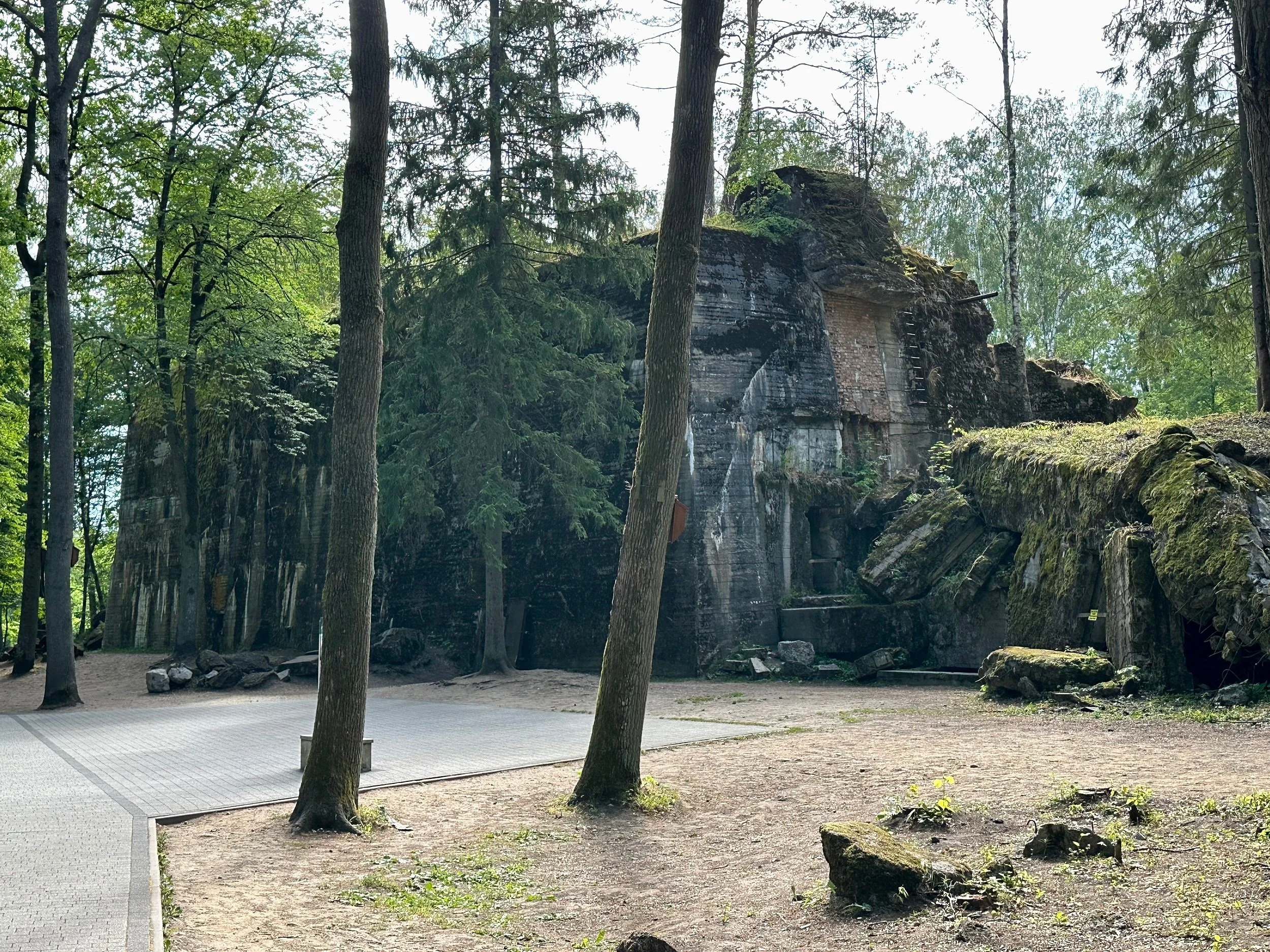
The heart of the complex was the heavily fortified bunkers, including Hitler's own bunker, which had walls up to 8 meters thick made of reinforced concrete to withstand direct hits from bombs. Wolf's Lair, known in German as Wolfsschanze, was a critical command center for Adolf Hitler during World War II.
The choice of location reflected strategic and security considerations, nestled far from the reach of Allied bombing campaigns yet close enough to the Eastern Front to oversee operations directly. The location in East Prussia was strategically chosen, close enough to the front lines for direct oversight yet secluded and secure from potential Allied attacks. On June 22, 1941, Germany launched Operation Barbarossa, the largest military invasion in history, against the Soviet Union.
See the excellent website of the museum at https://wolfsschanze.pl/en/
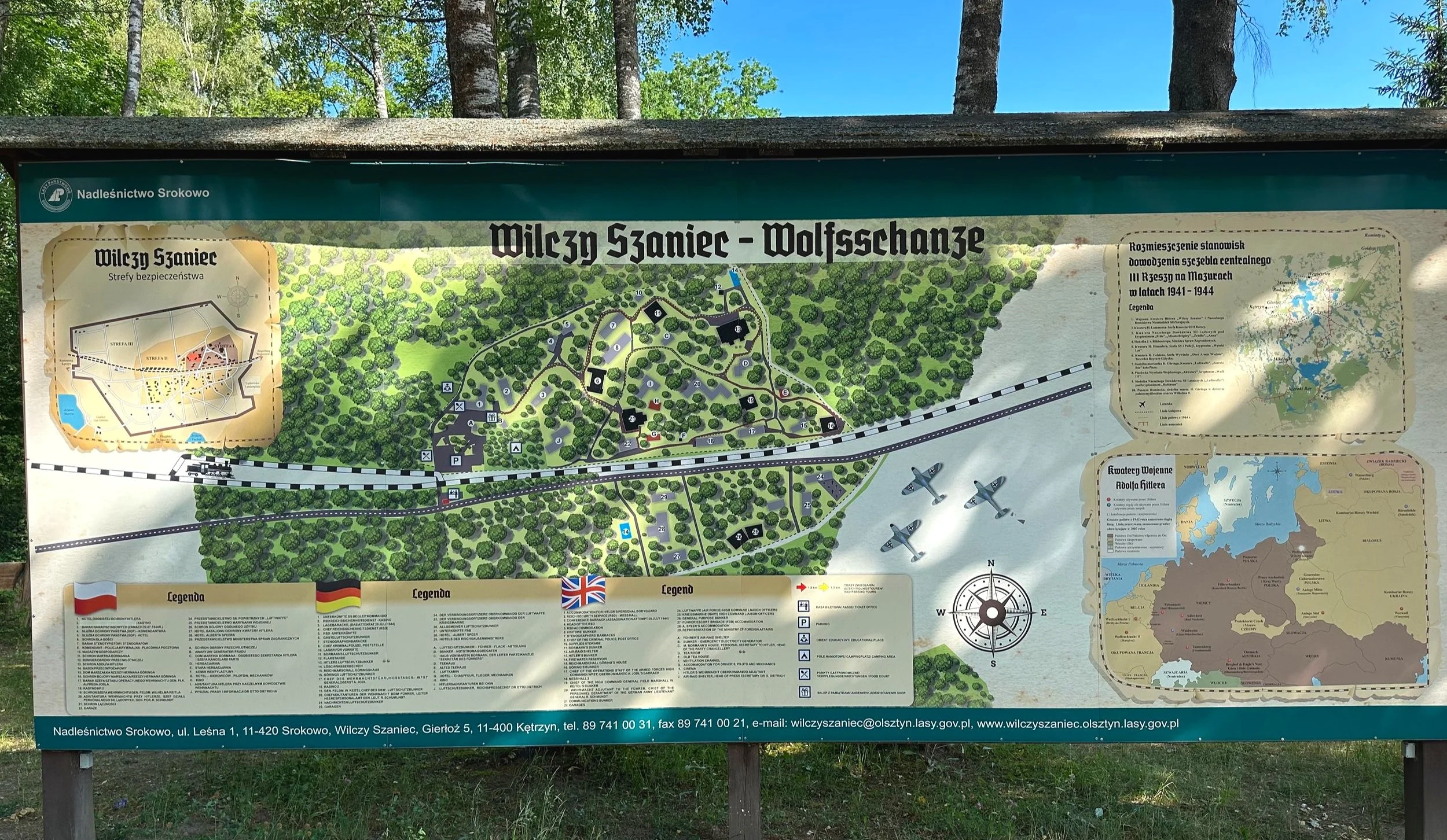
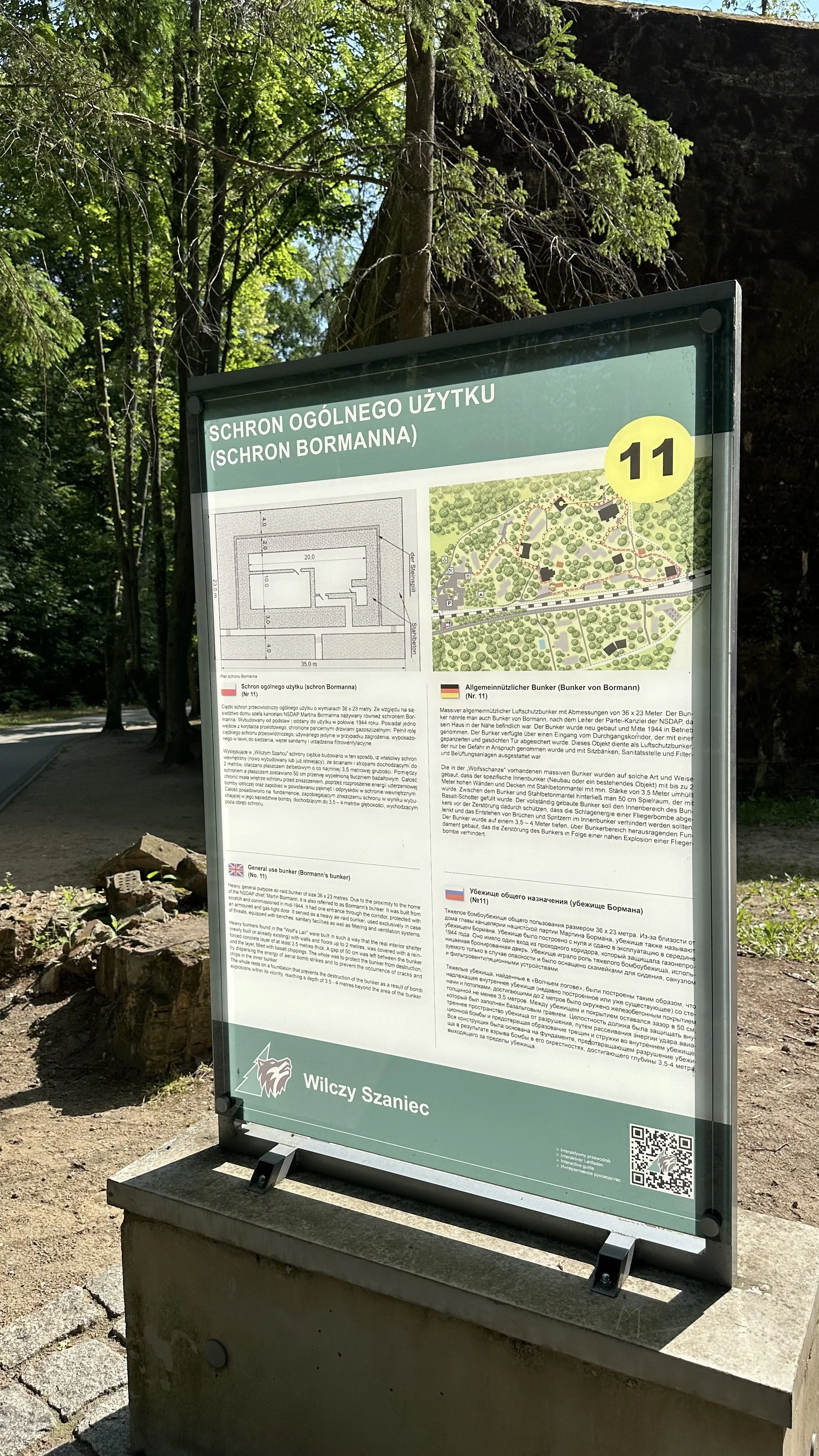
The plan of the site at the entrance. This is the inner circle of the complex. It is possible to join a driving tour to see other facilities in more remote locations.
On January 24, 1945, with the Soviet forces closing in, the decision was made to evacuate and abandon Wolf's Lair. This move signaled the imminent collapse of the Nazi regime and the end of Hitler's tyrannical rule, which had brought untold suffering and devastation to Europe.
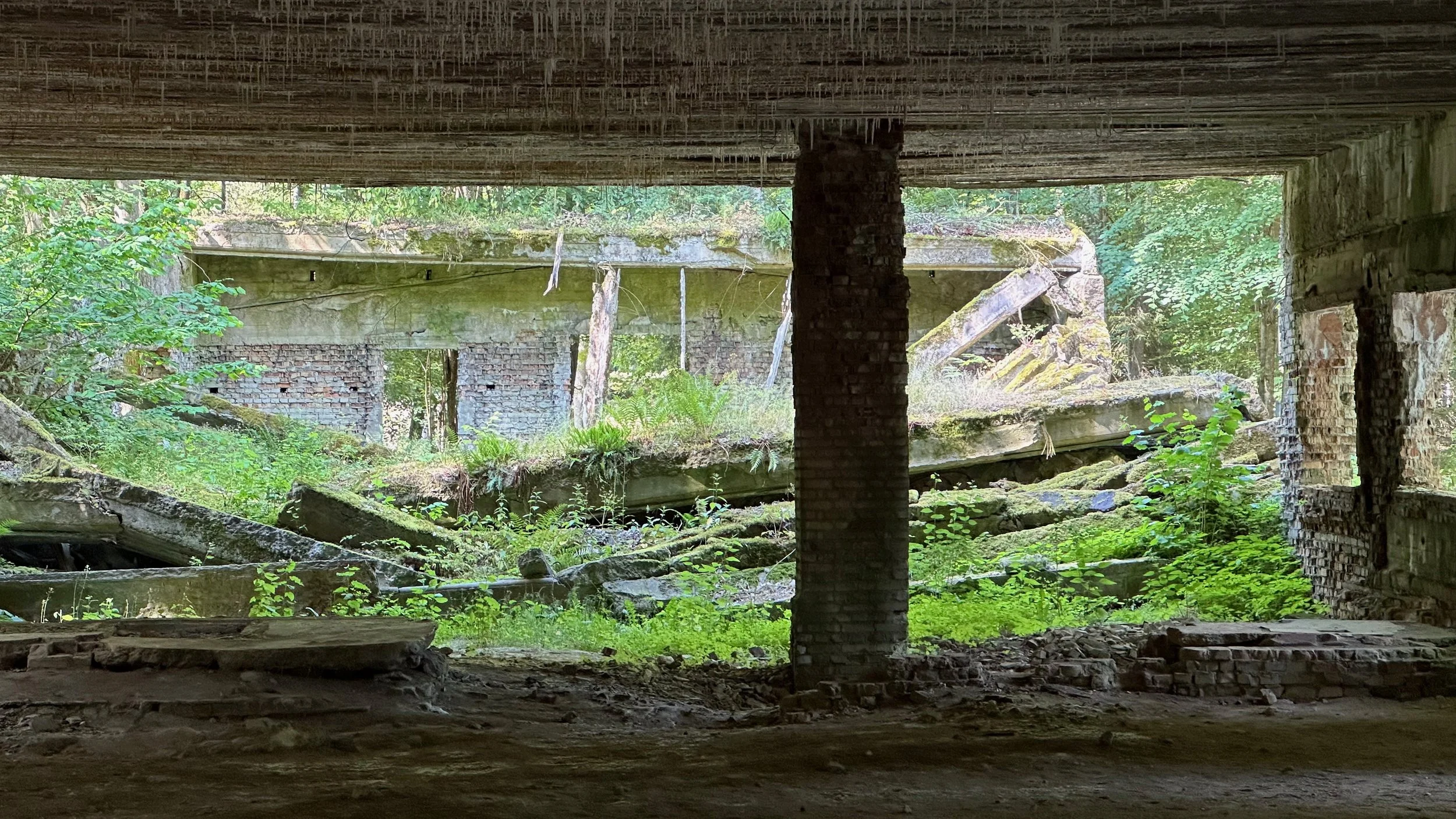
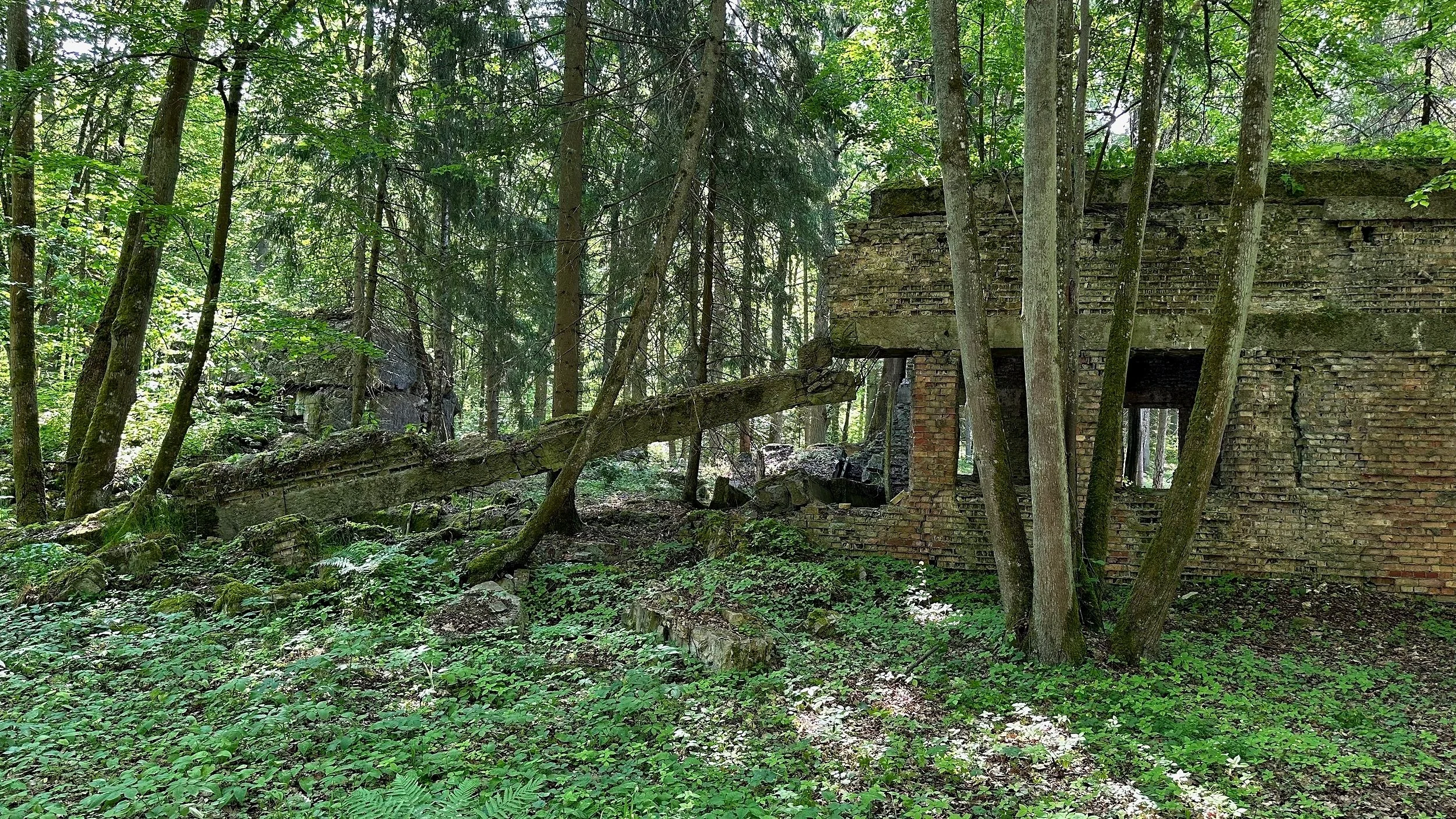
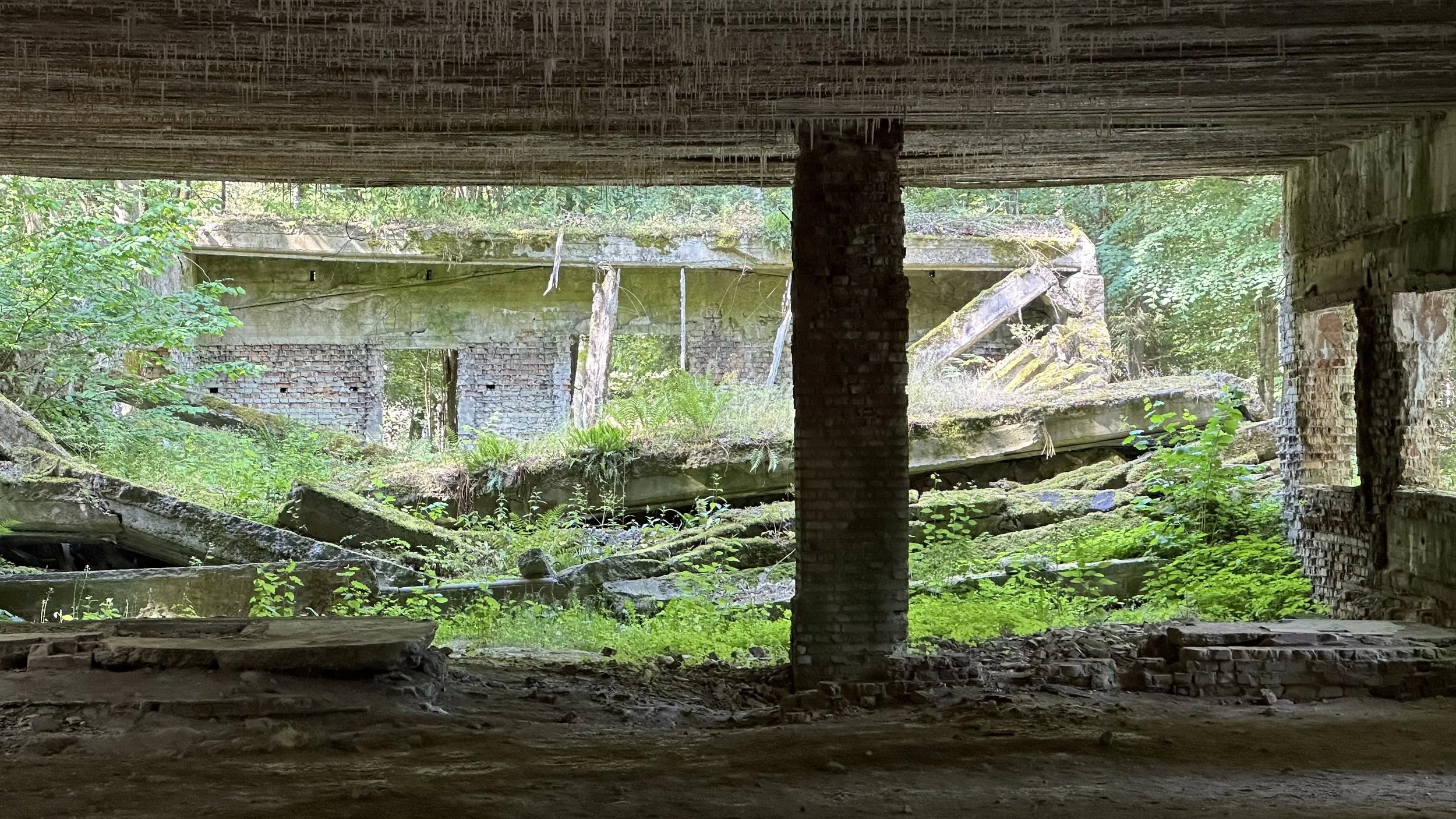
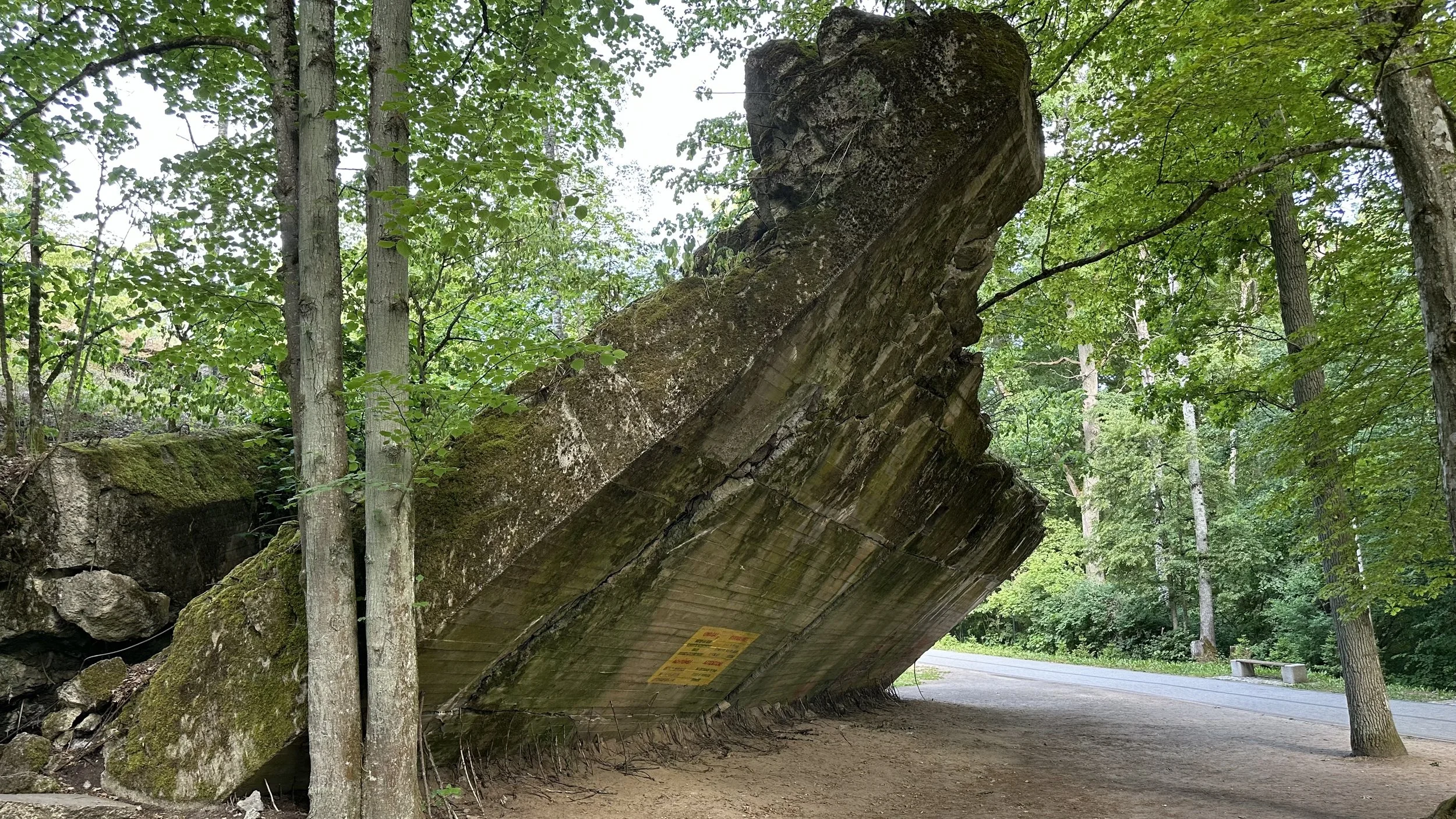
In a bid to prevent the Soviets from using the facility or discovering its secrets, German forces systematically destroyed Wolf's Lair before their retreat. Explosives were used to demolish the bunkers and buildings, leaving the once-formidable complex in ruins.
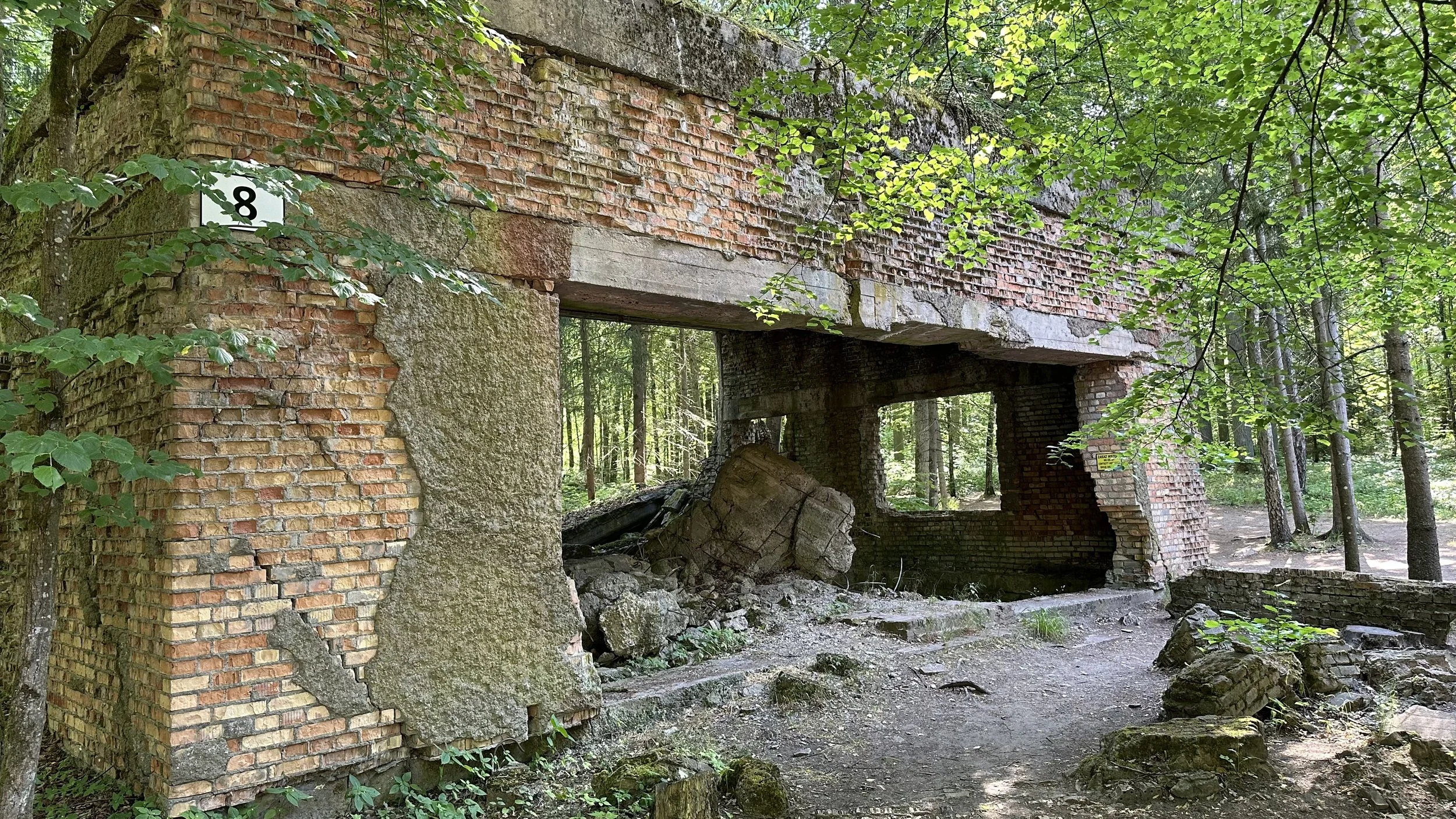
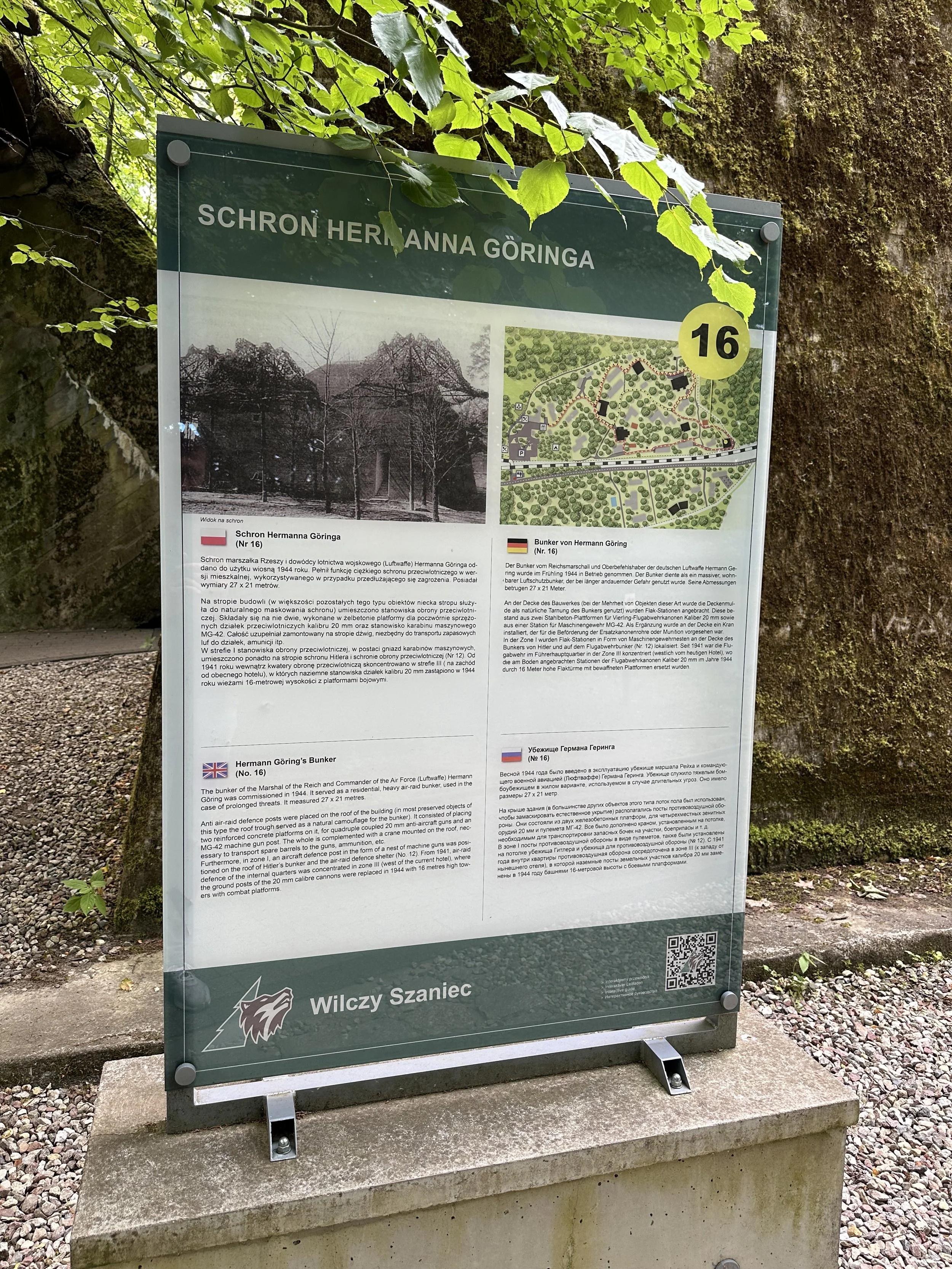
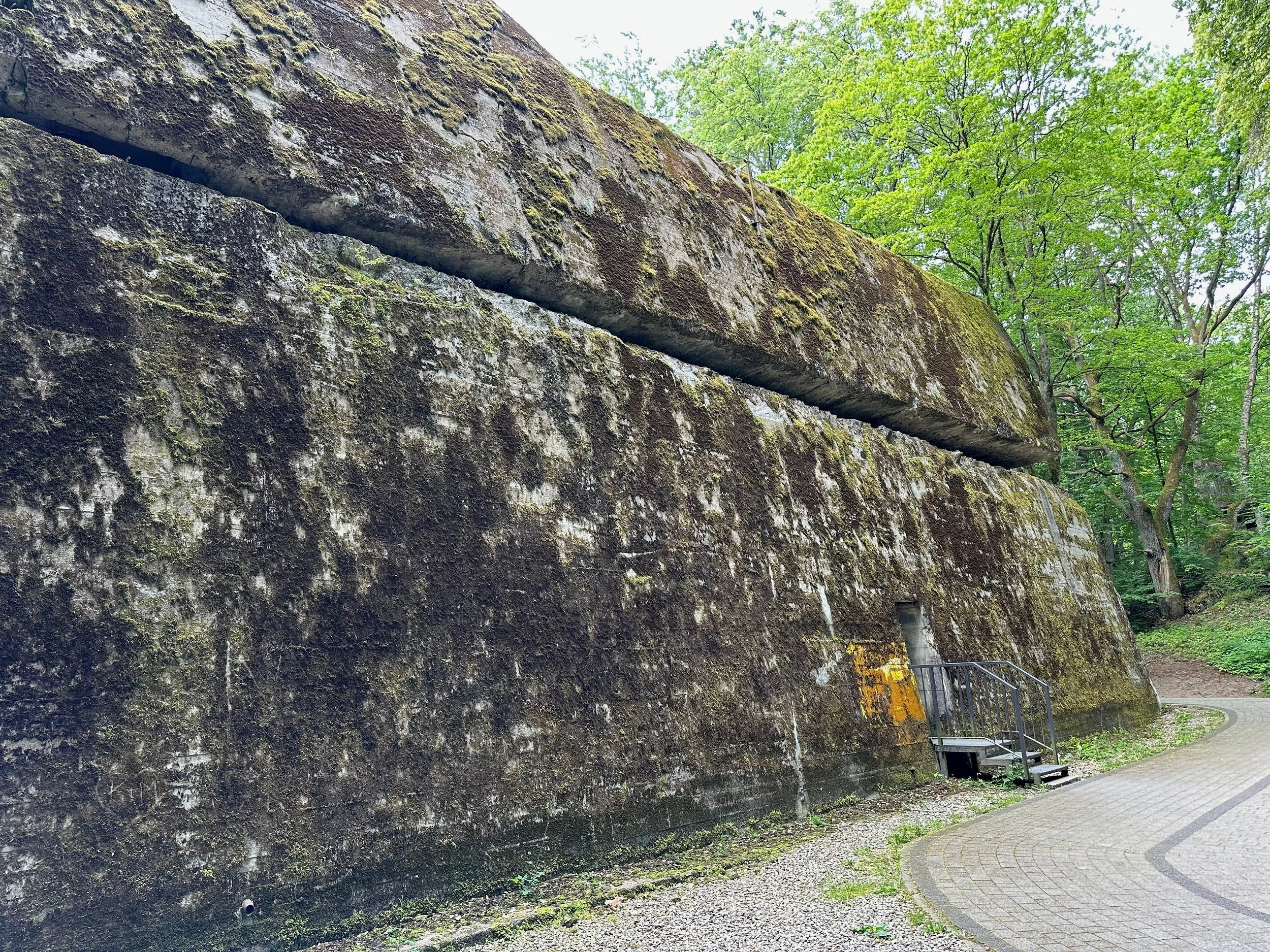
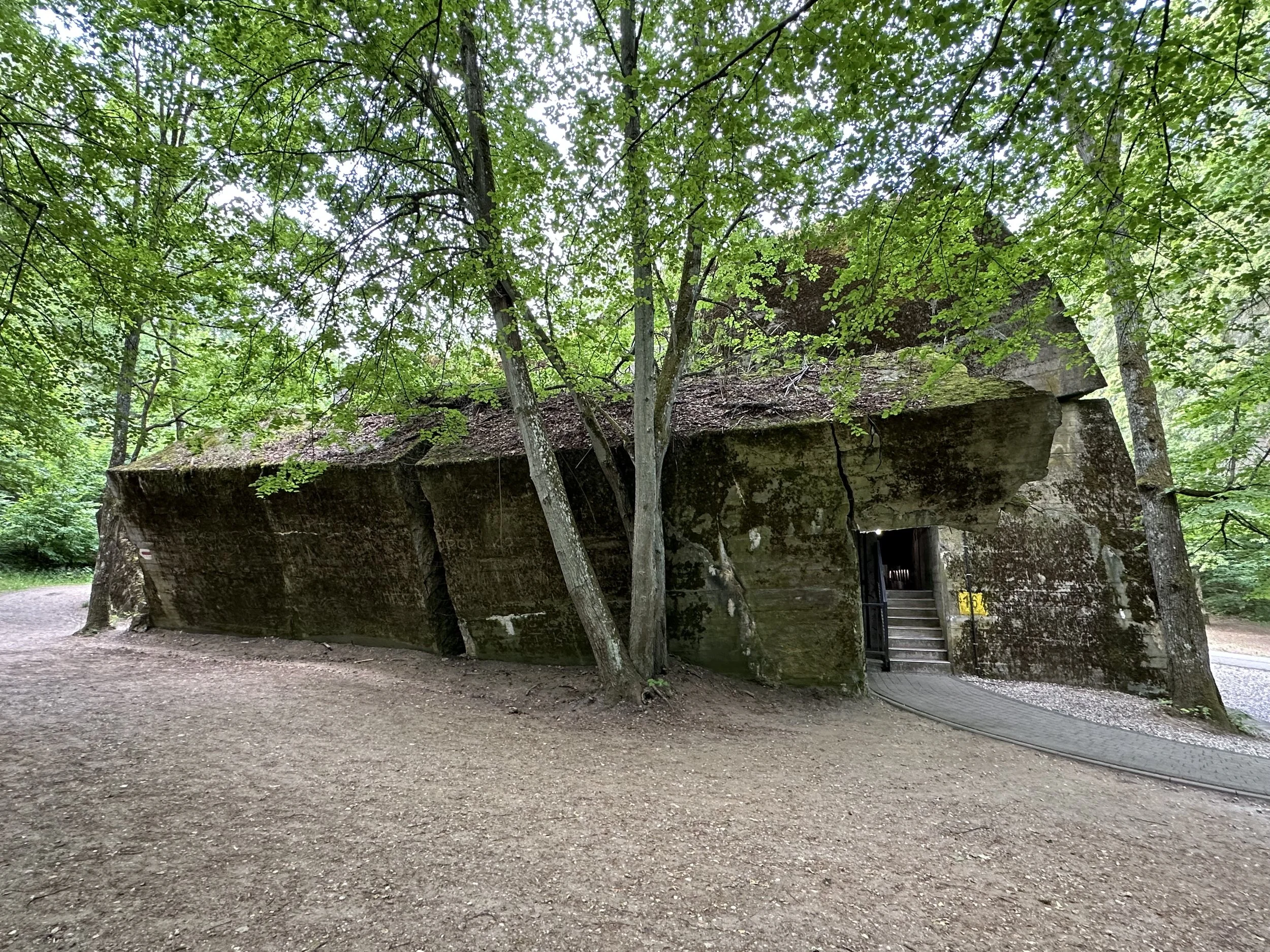
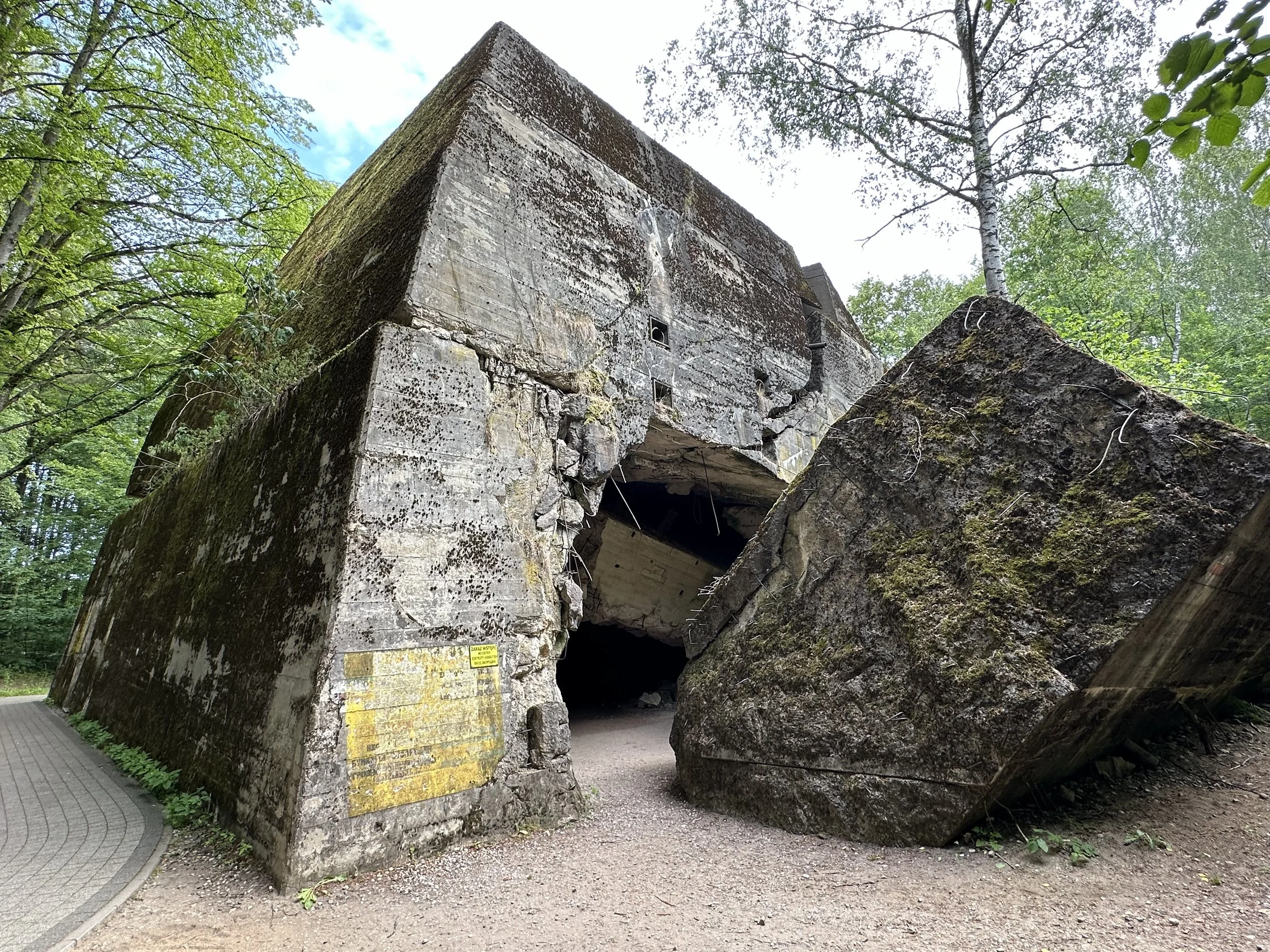
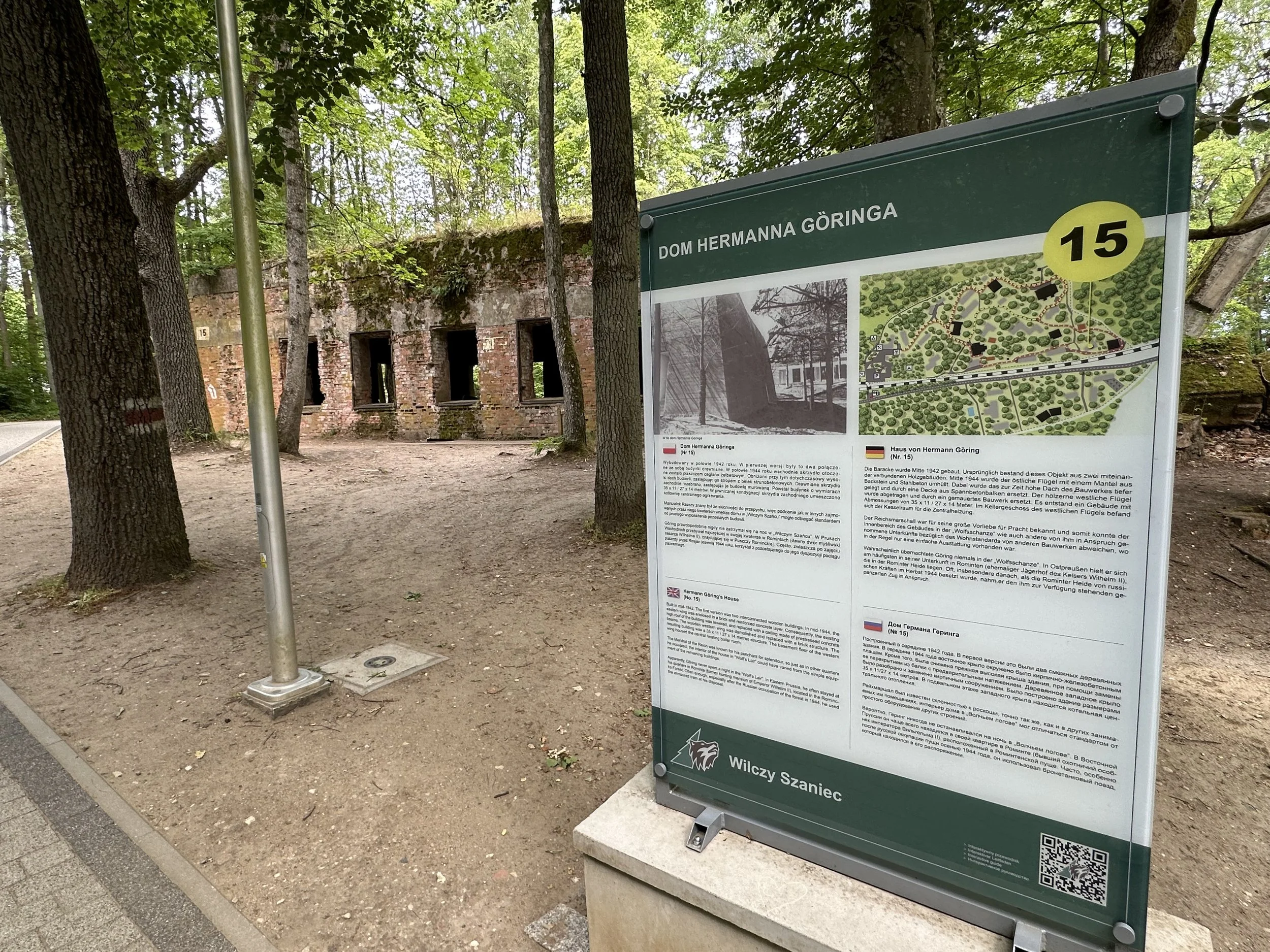
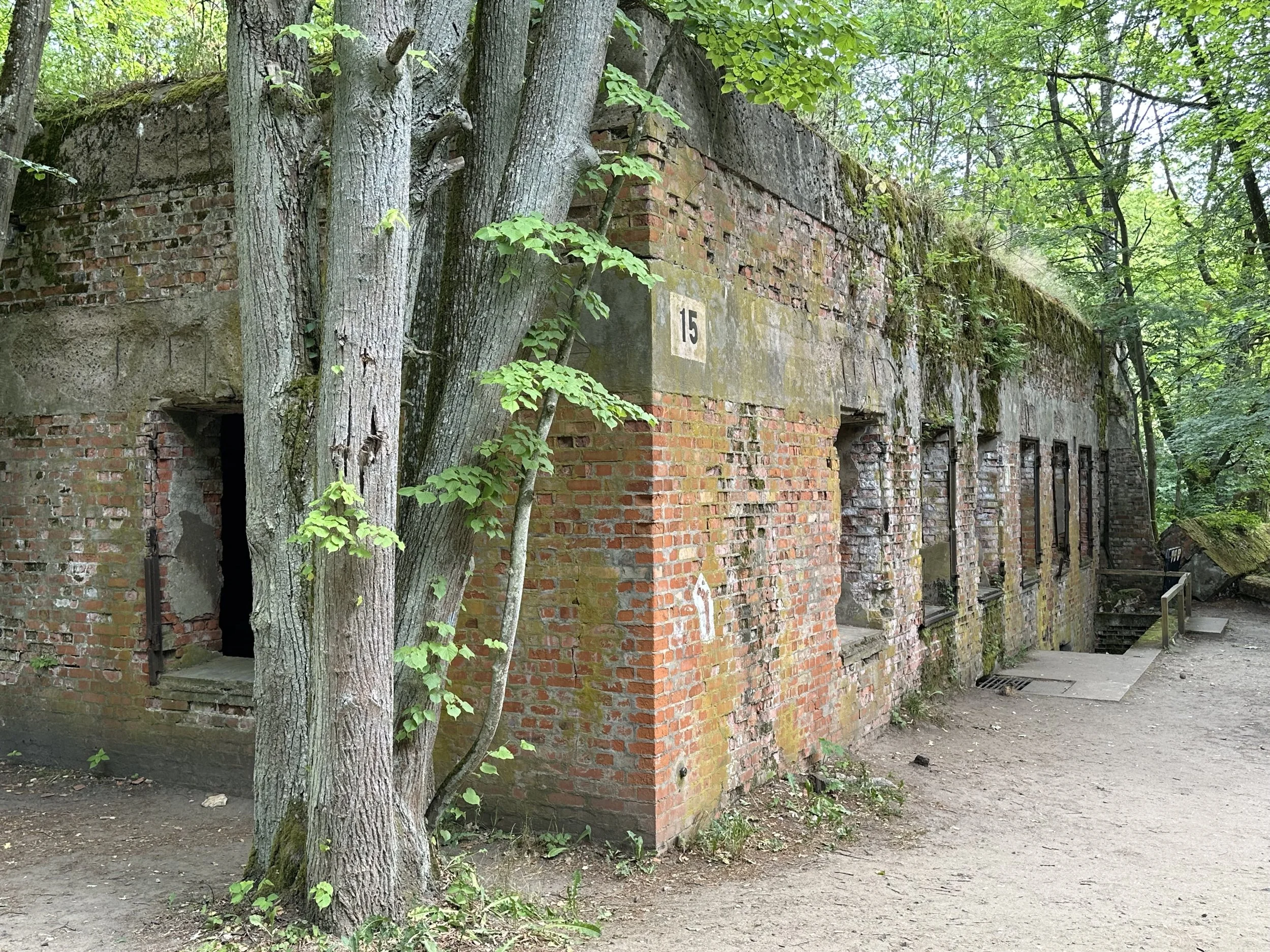
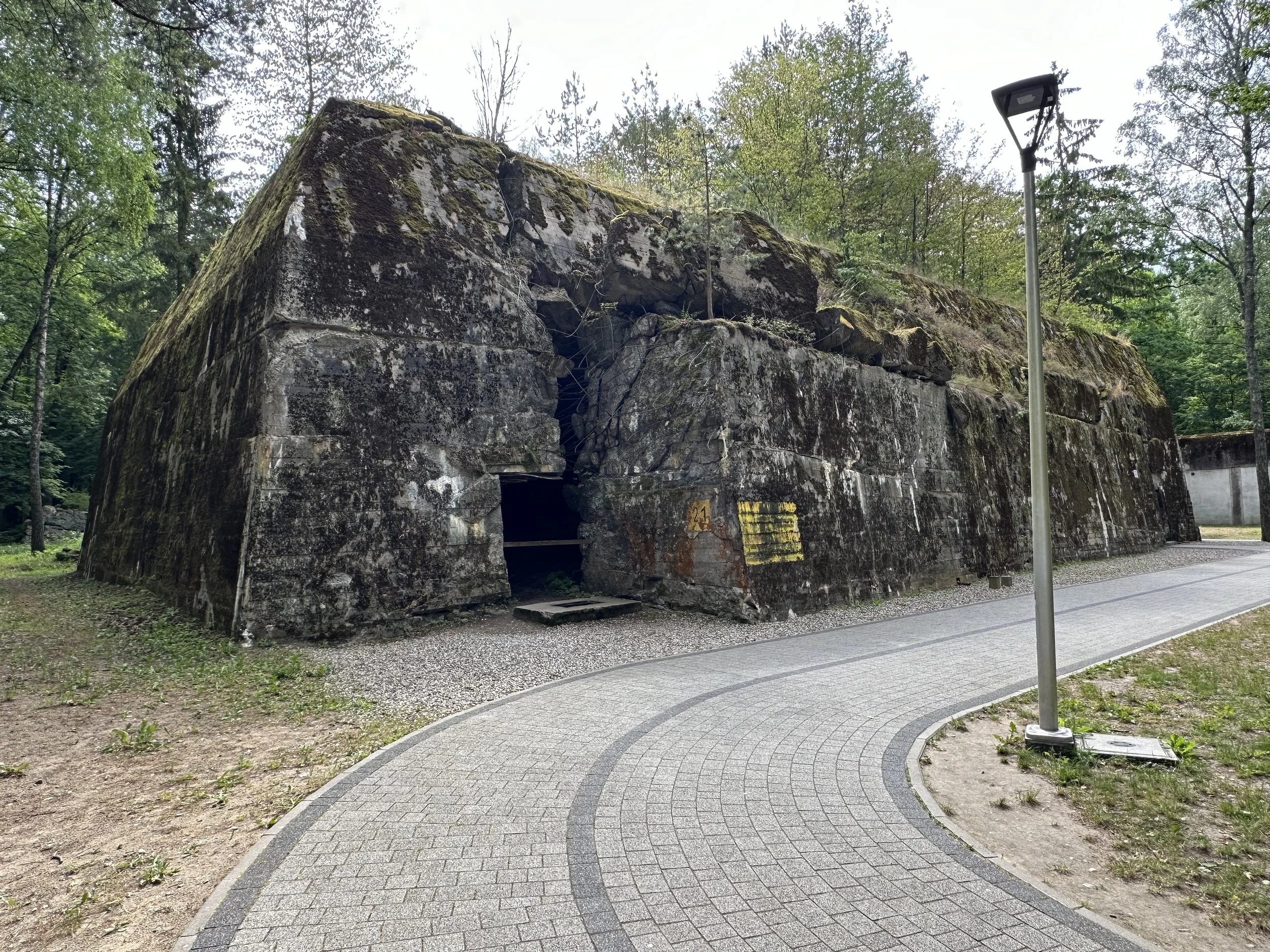
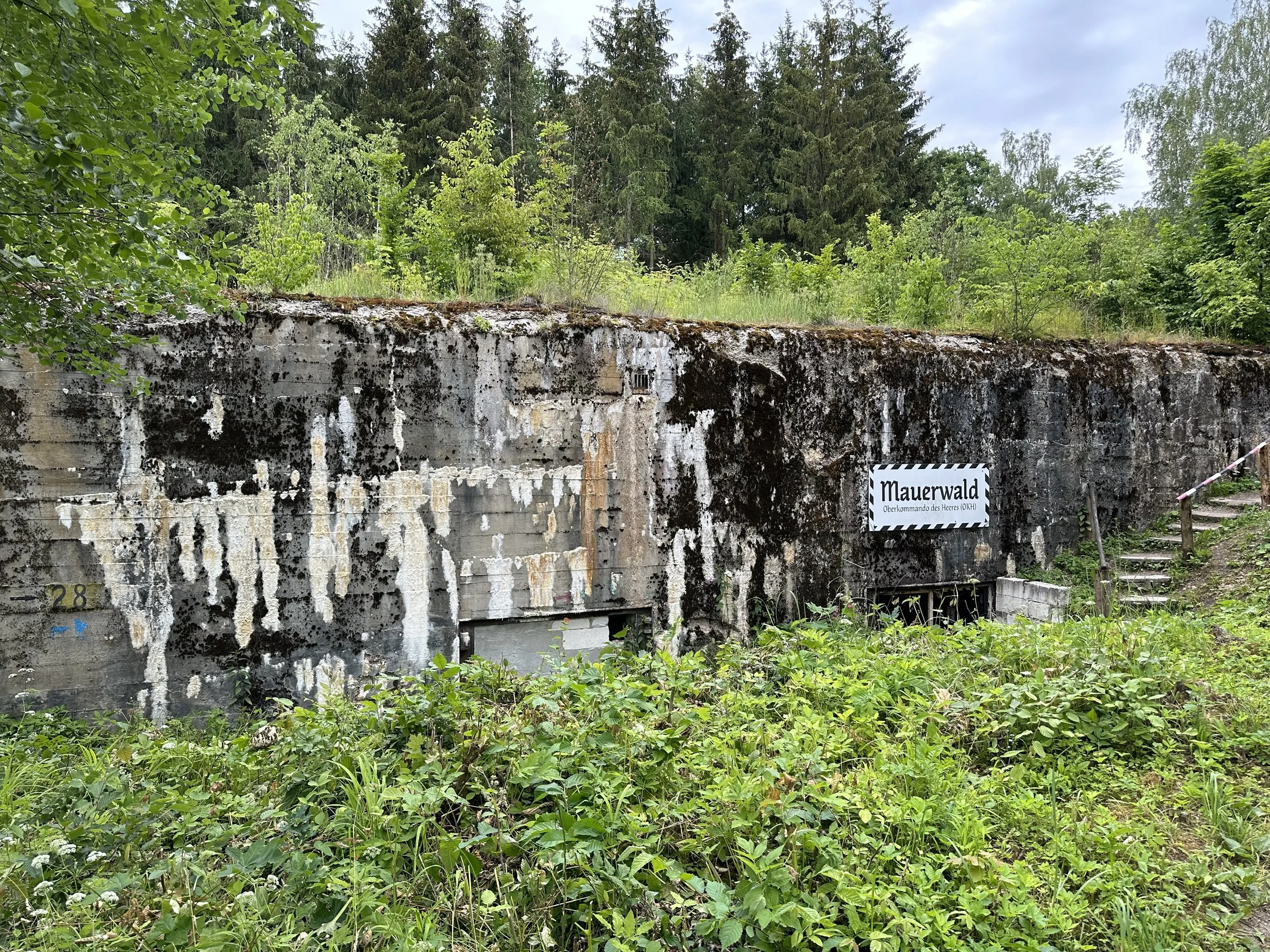
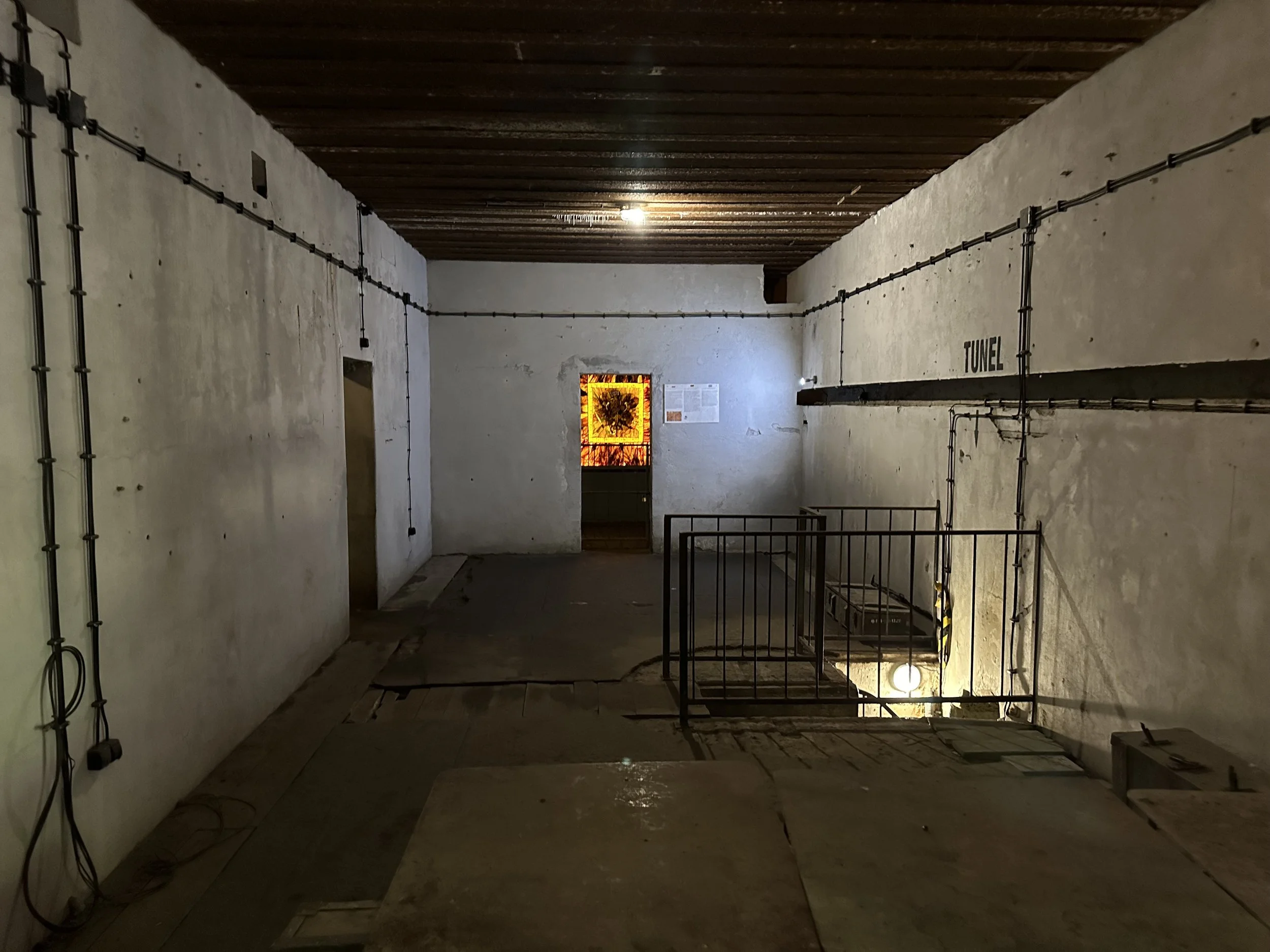
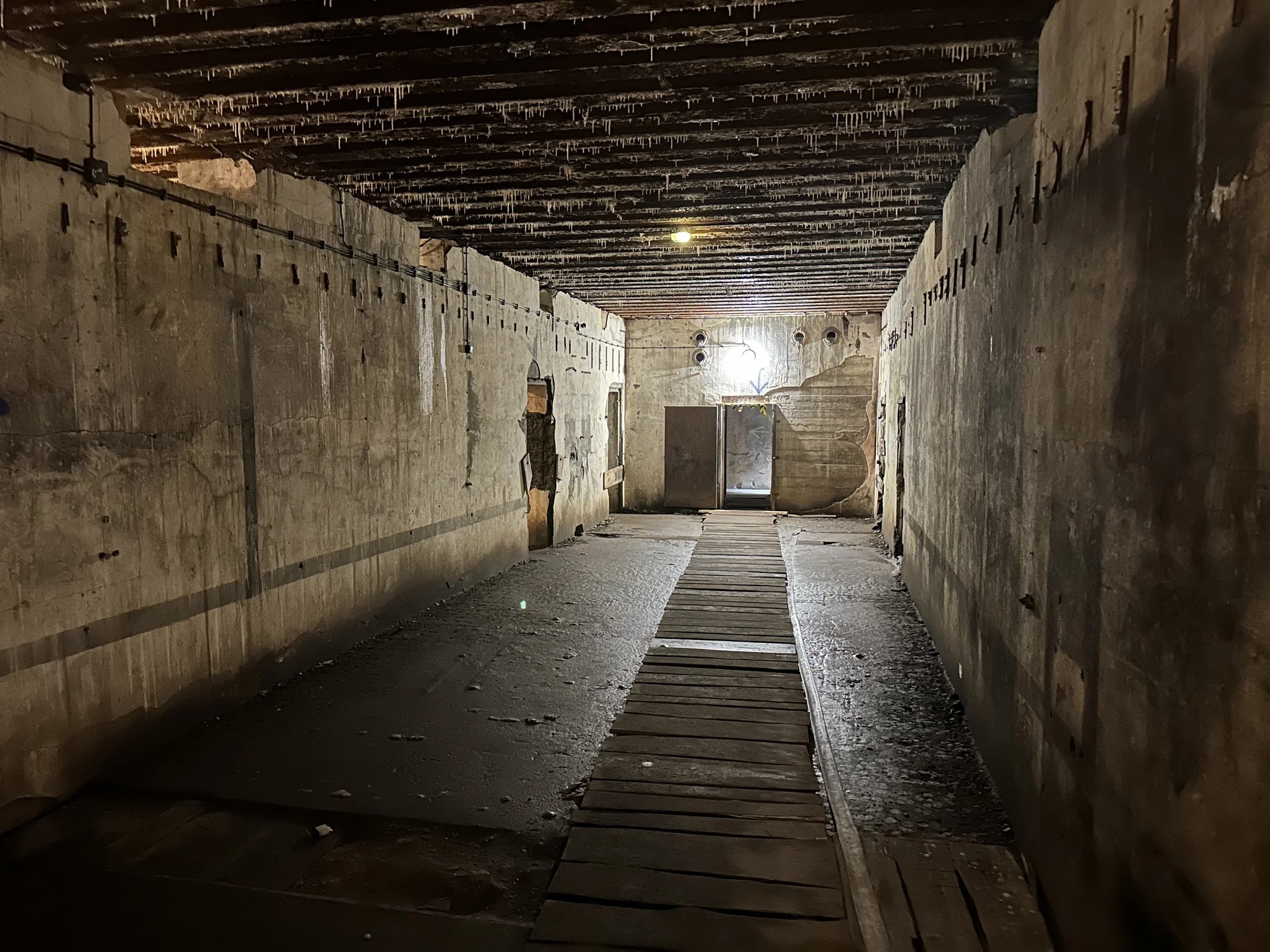
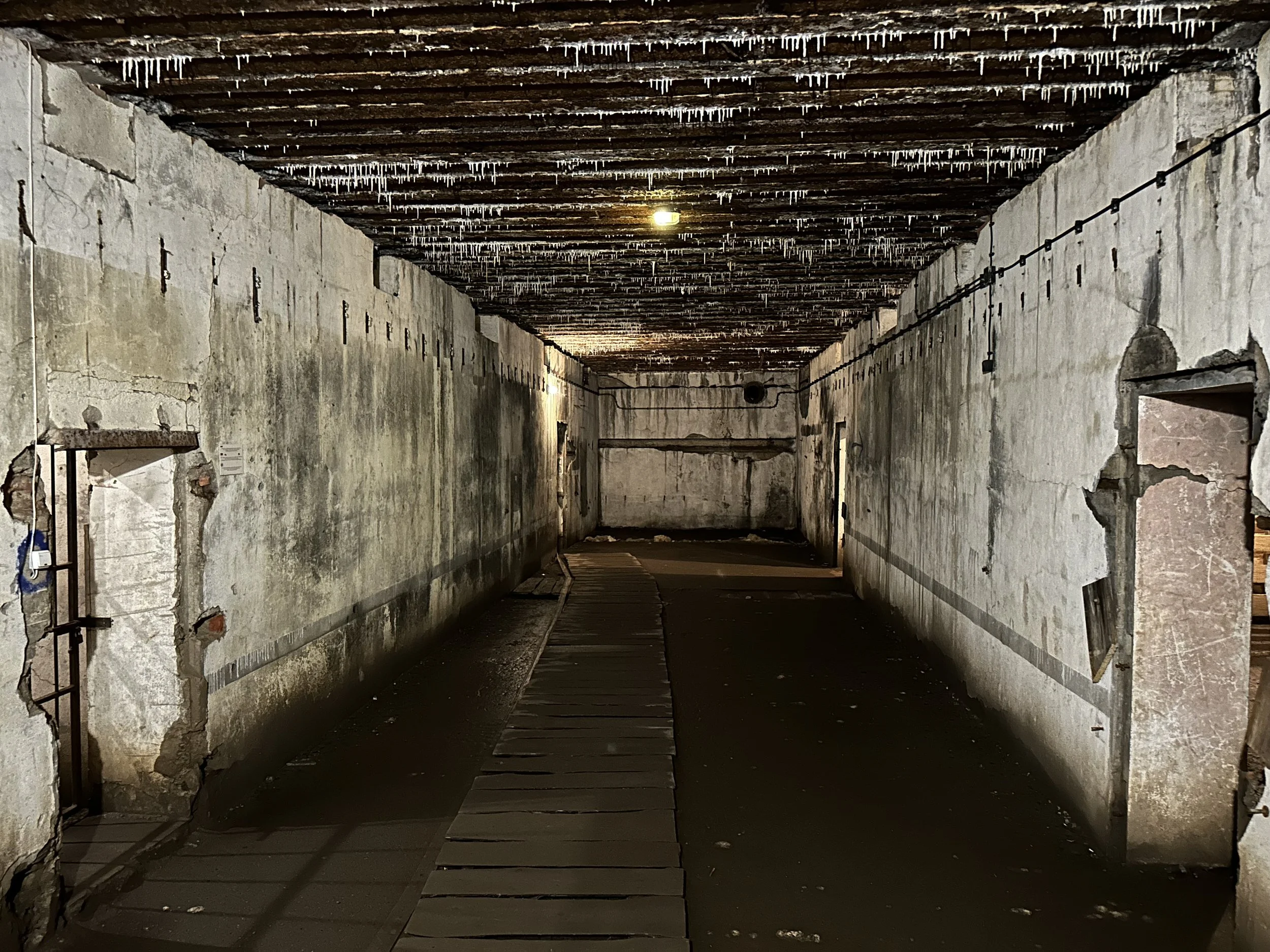
The Goring’s bunker is one of the few that is partially intact and possible to enter.
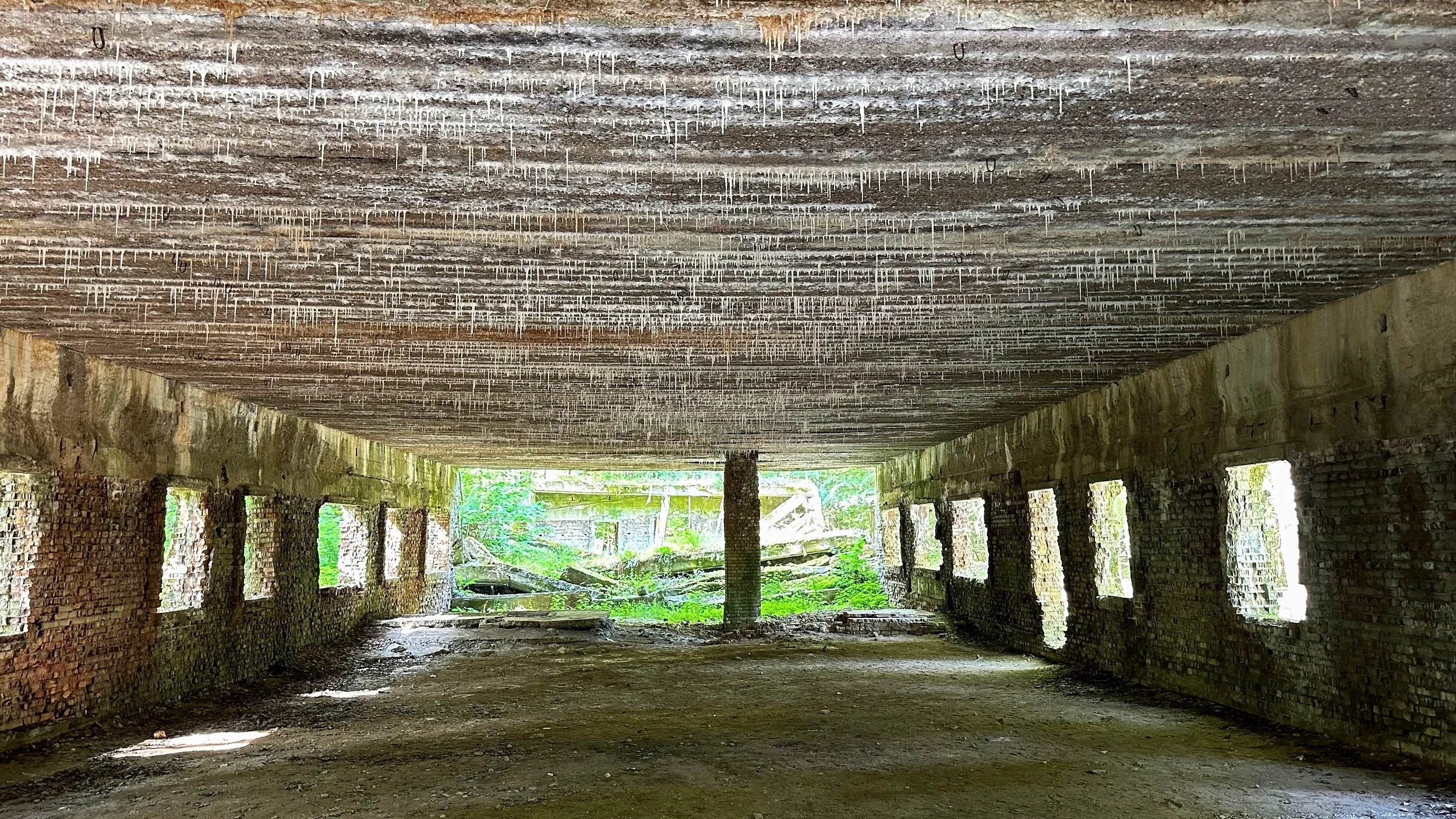
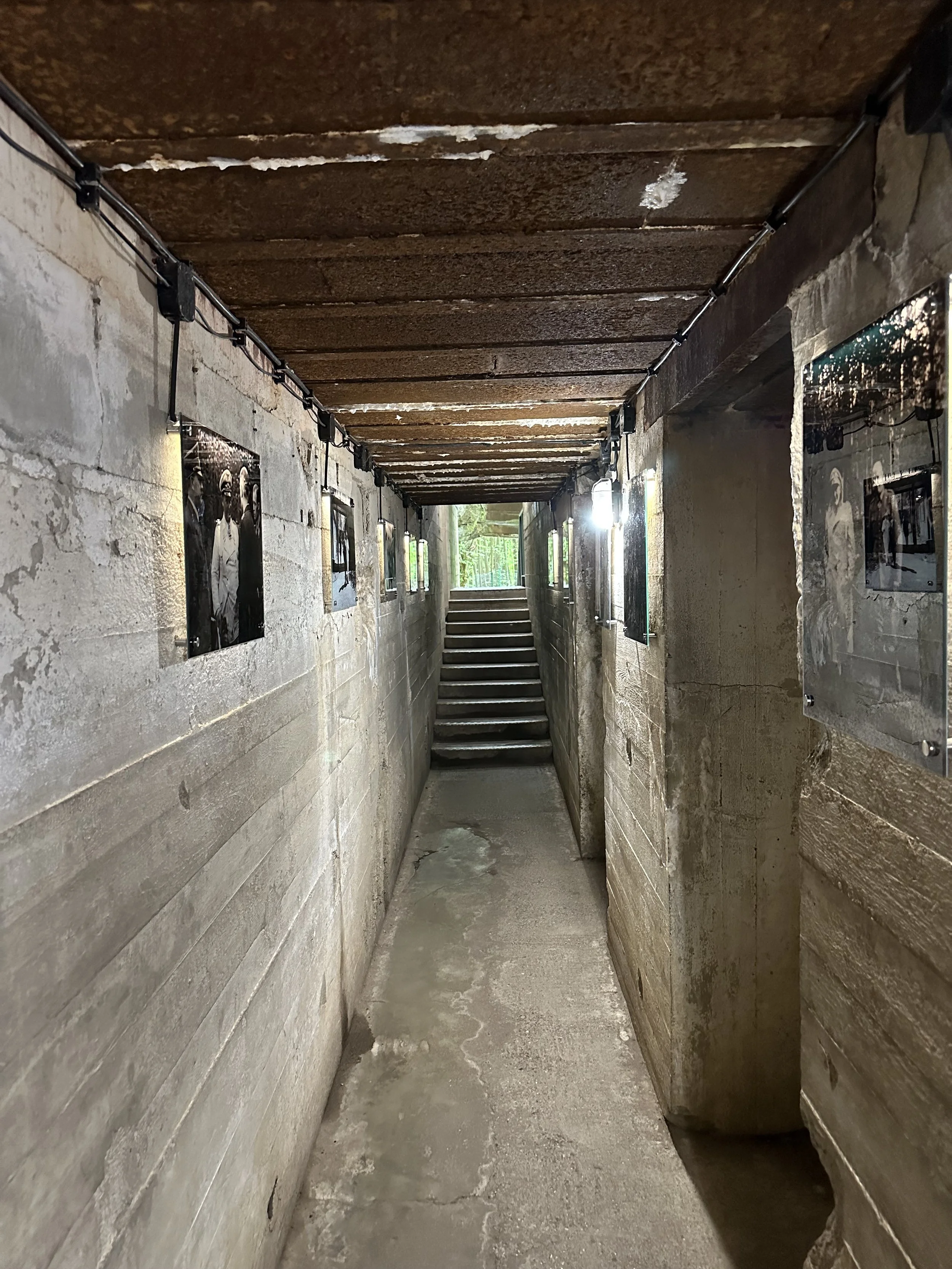
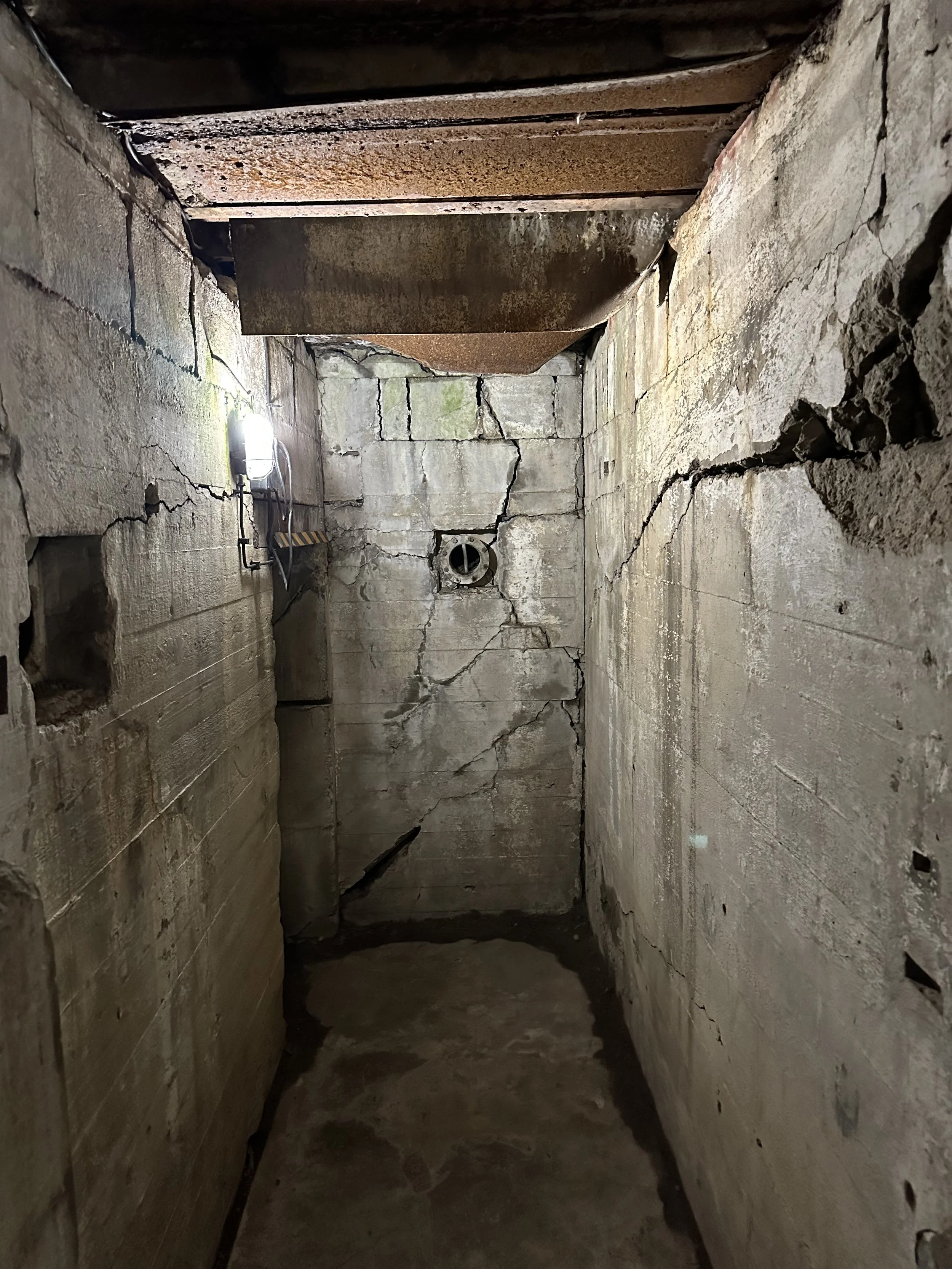
Inside the Goring’s bunker
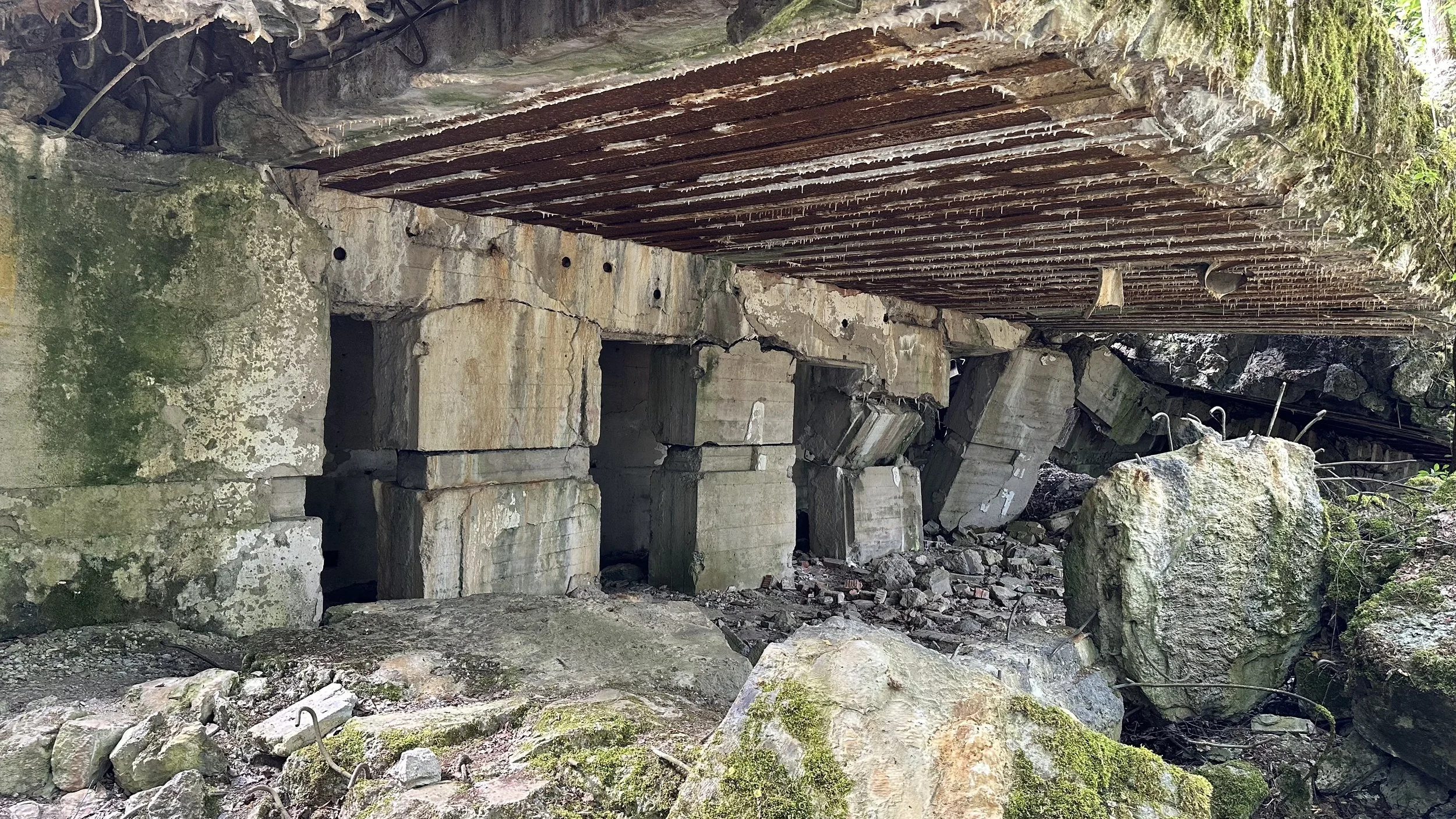
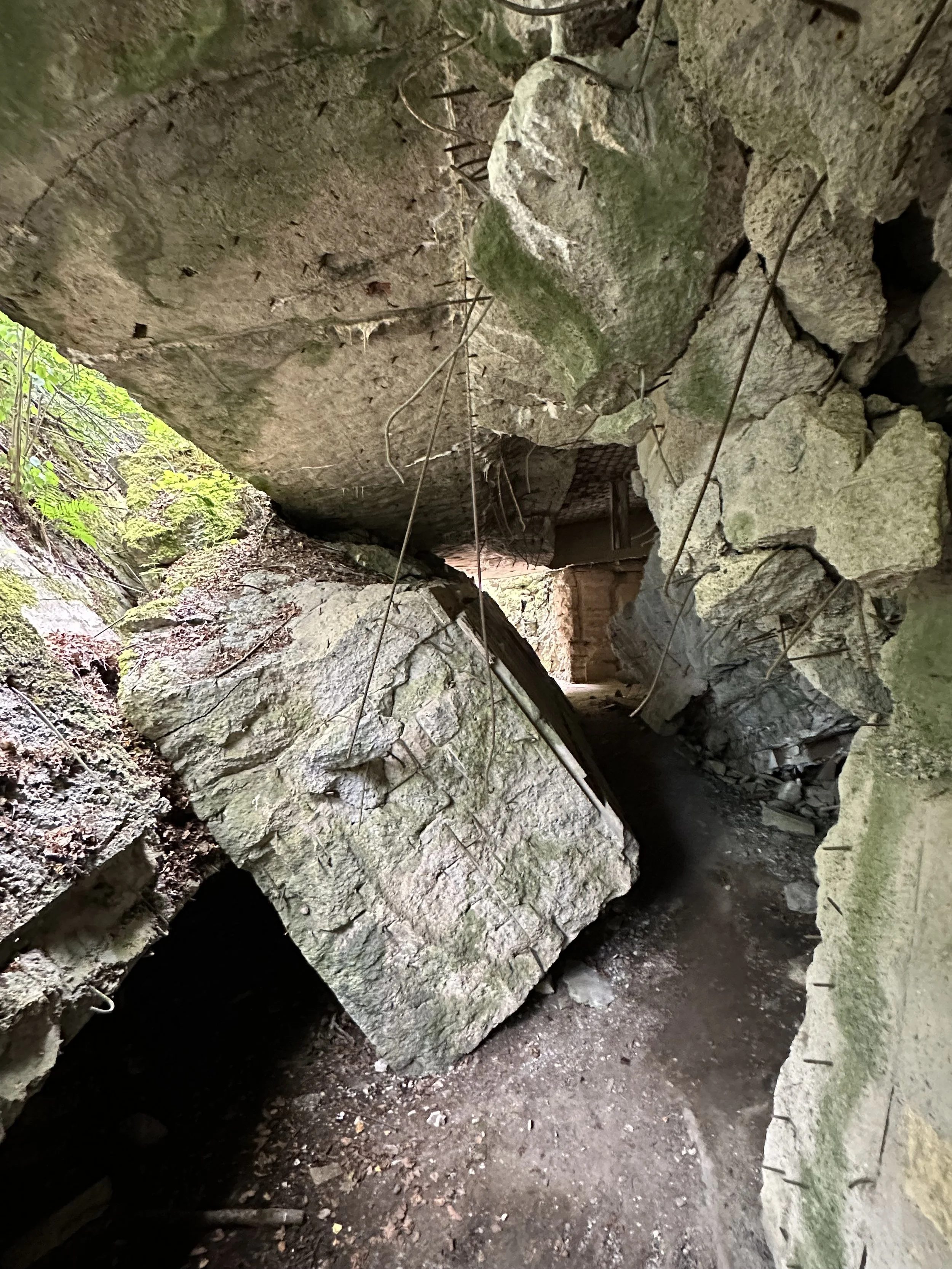
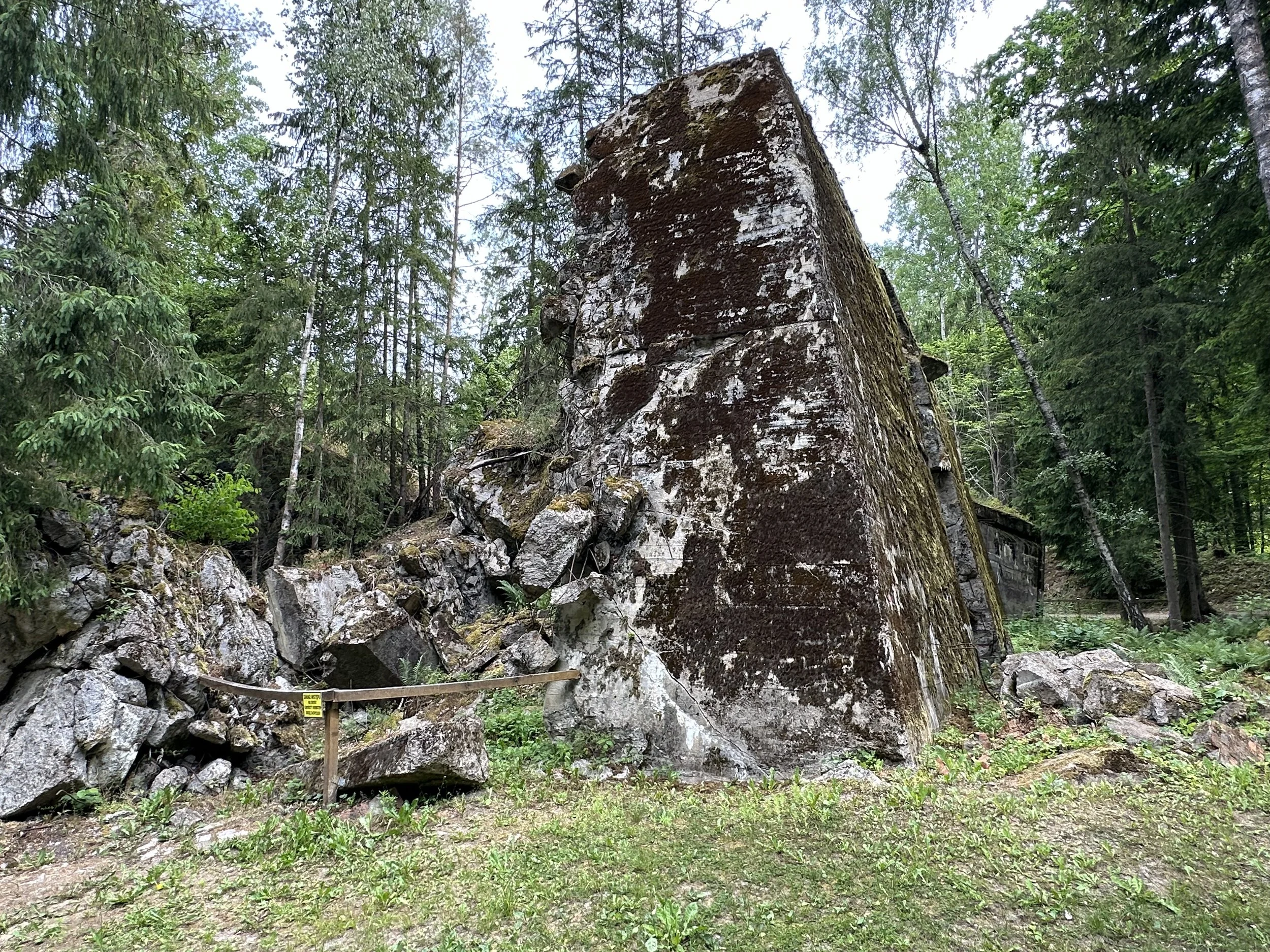
The other half of the Goring’s bunker has been blown up by the Soviet army
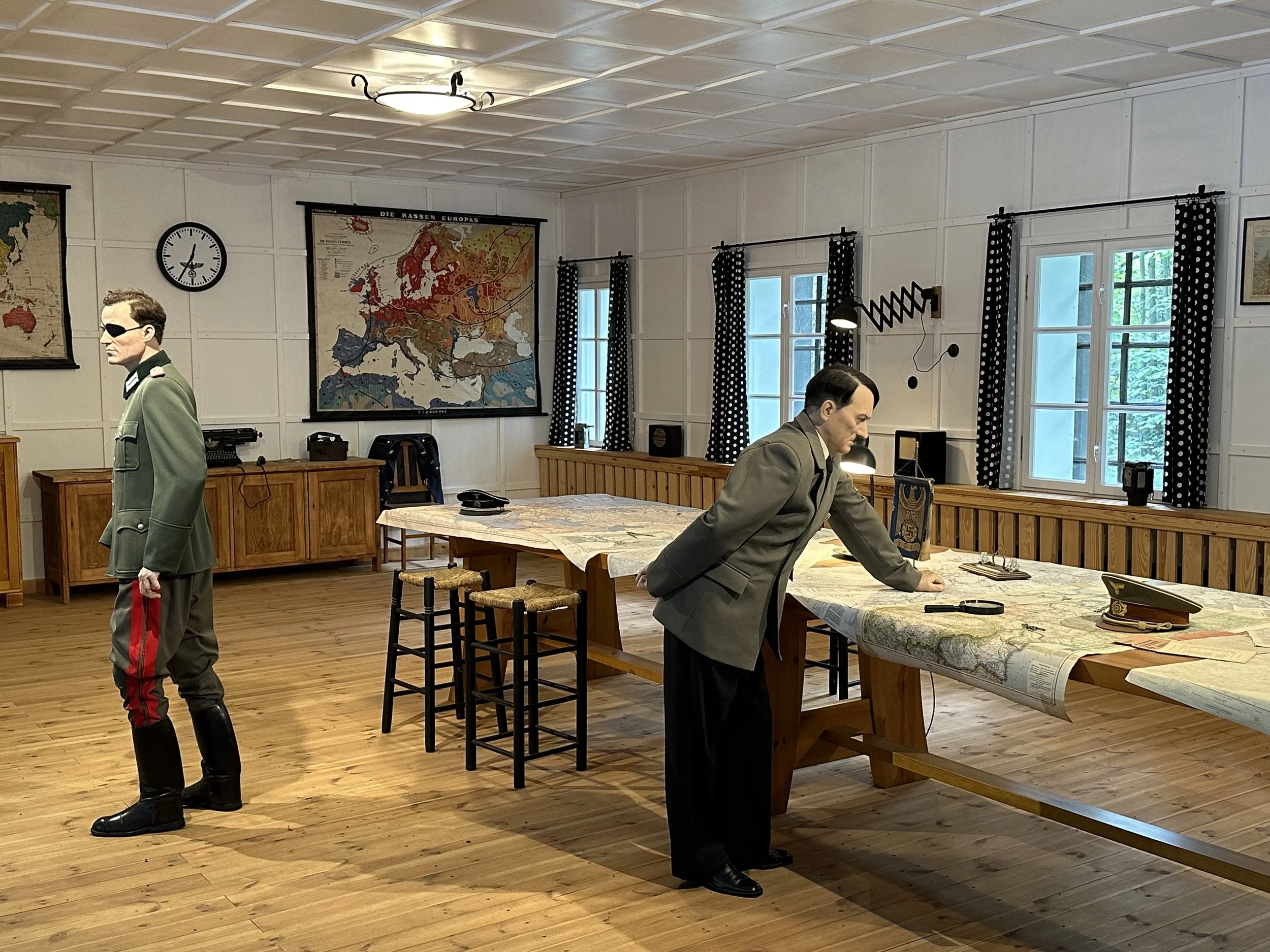
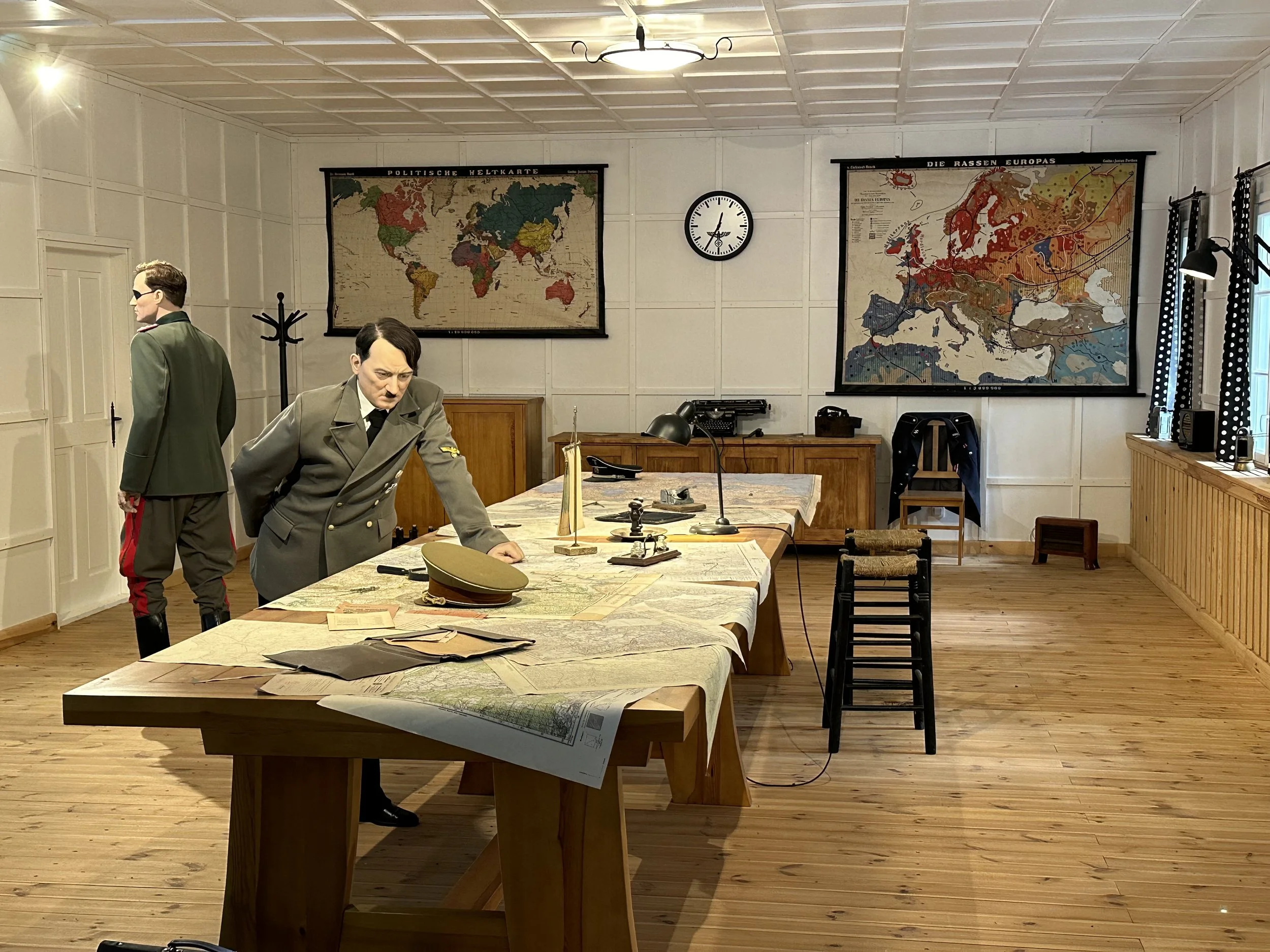
The reconstruction of the meeting room where the assassination attempt on Hitler took place. It is quite accurate comparing it to historical photographs.
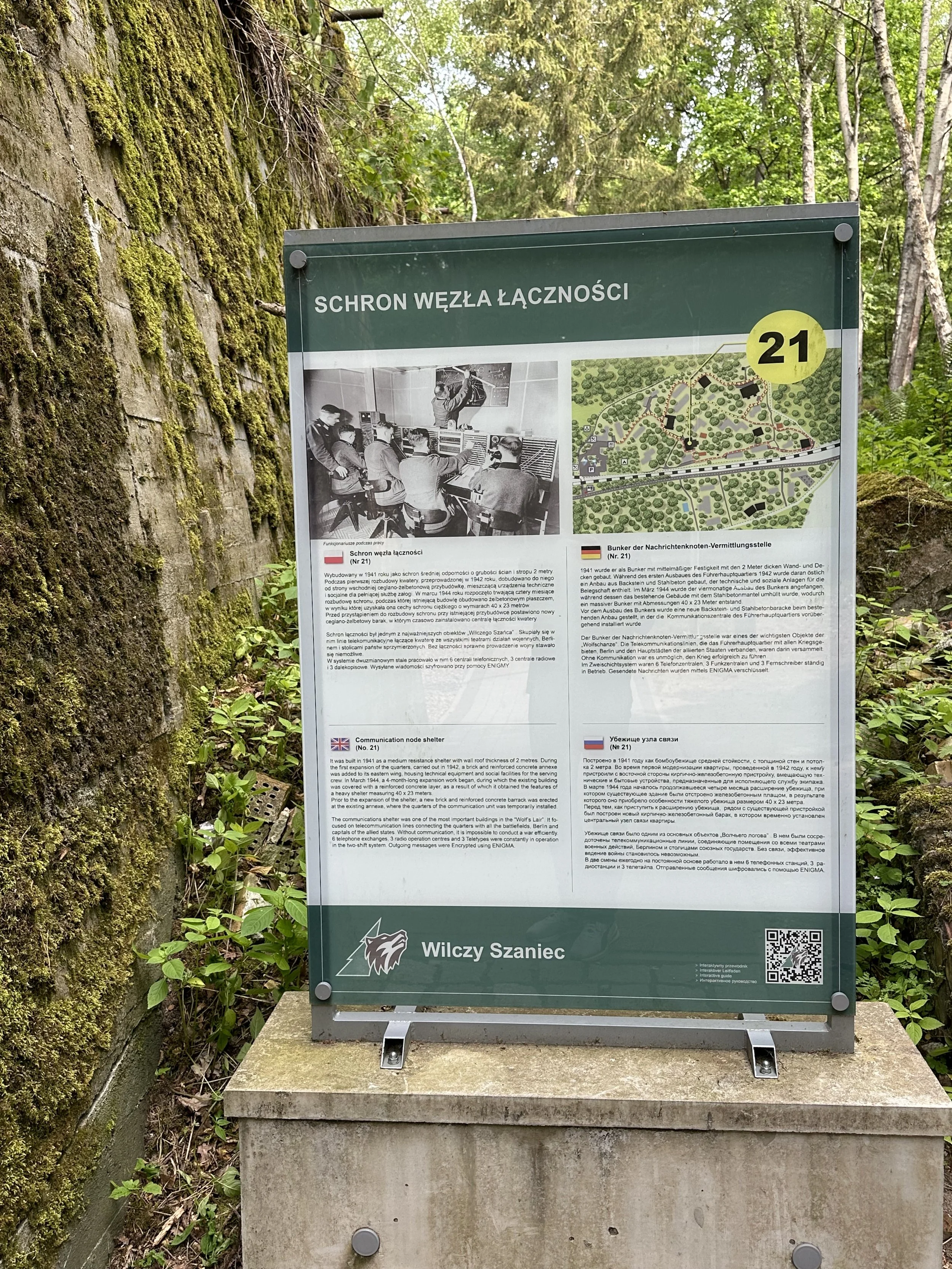
The communications bunker
The communications bunker from the outside.
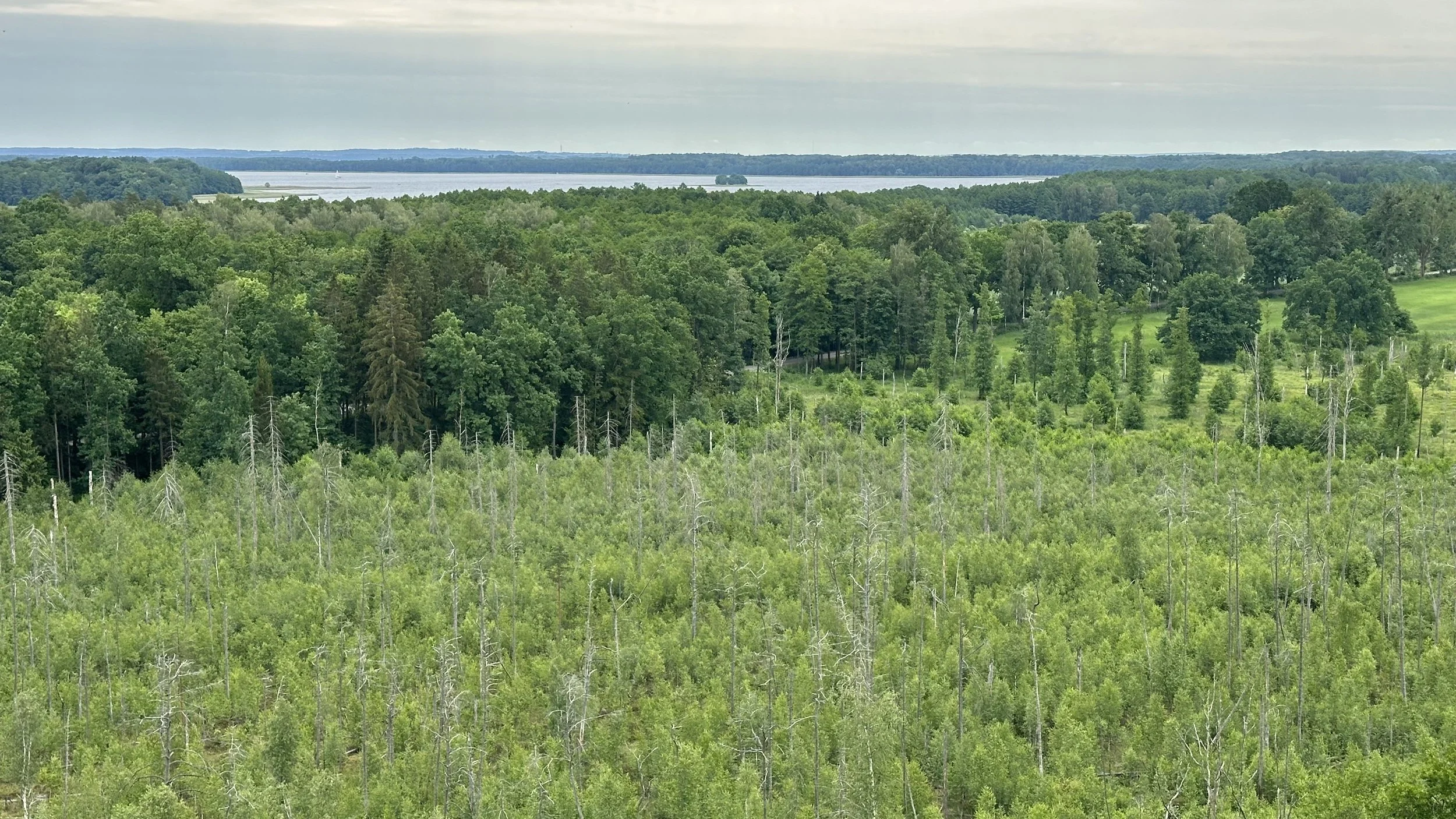
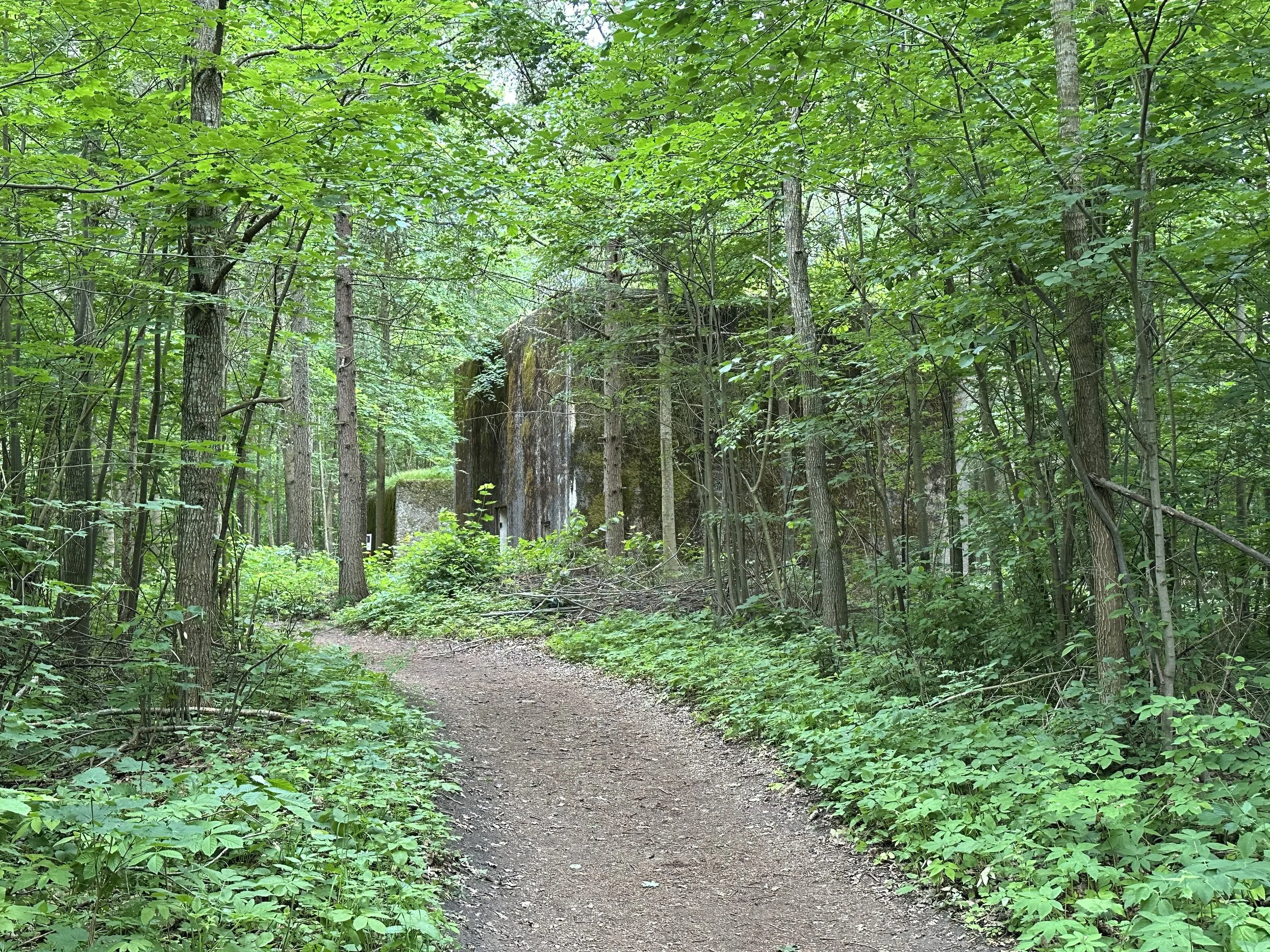
The area is quite remote and covered in thick forest (infested with mosquitoes). The entire area is also dotted with lakes and marshes.
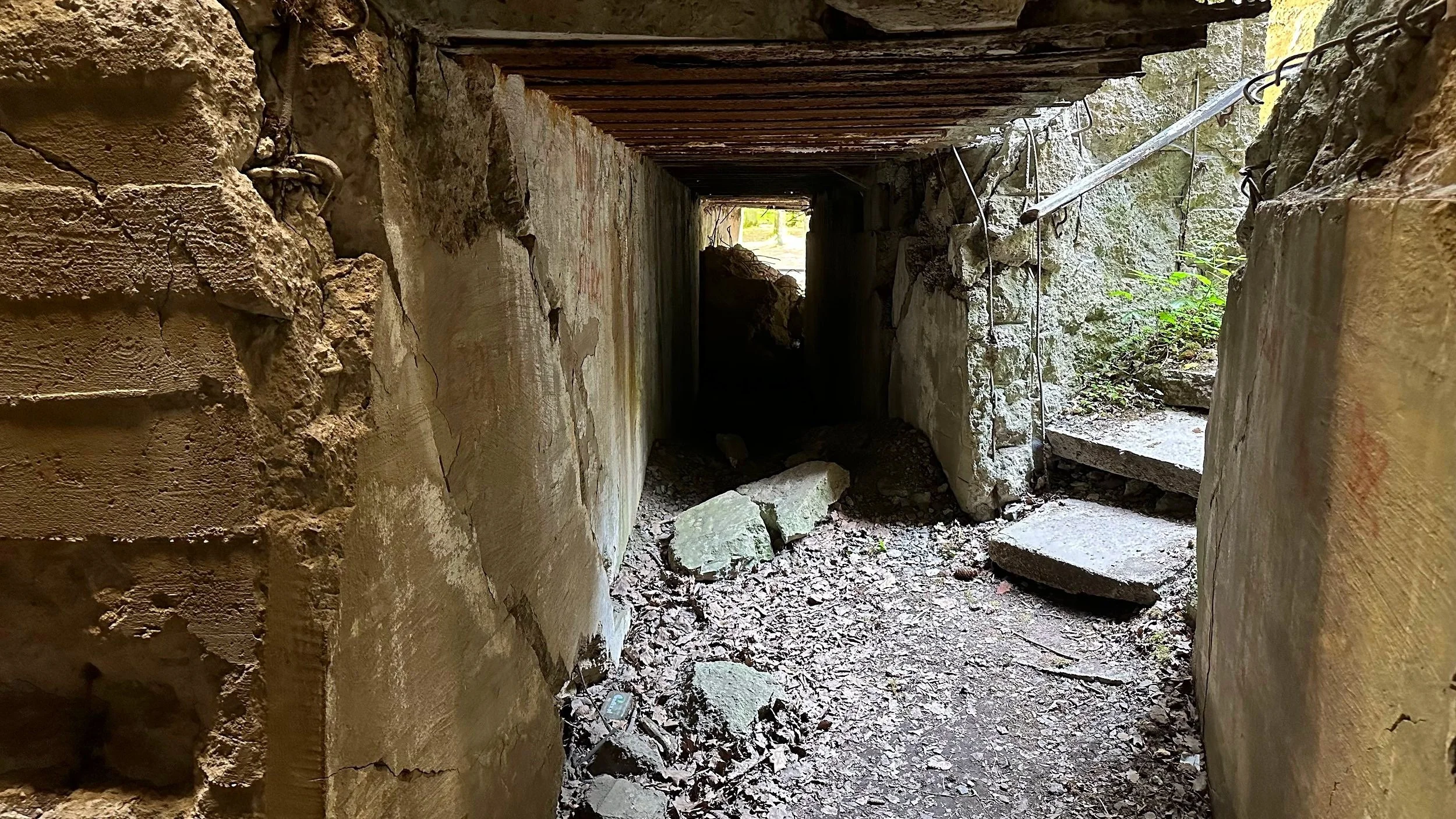
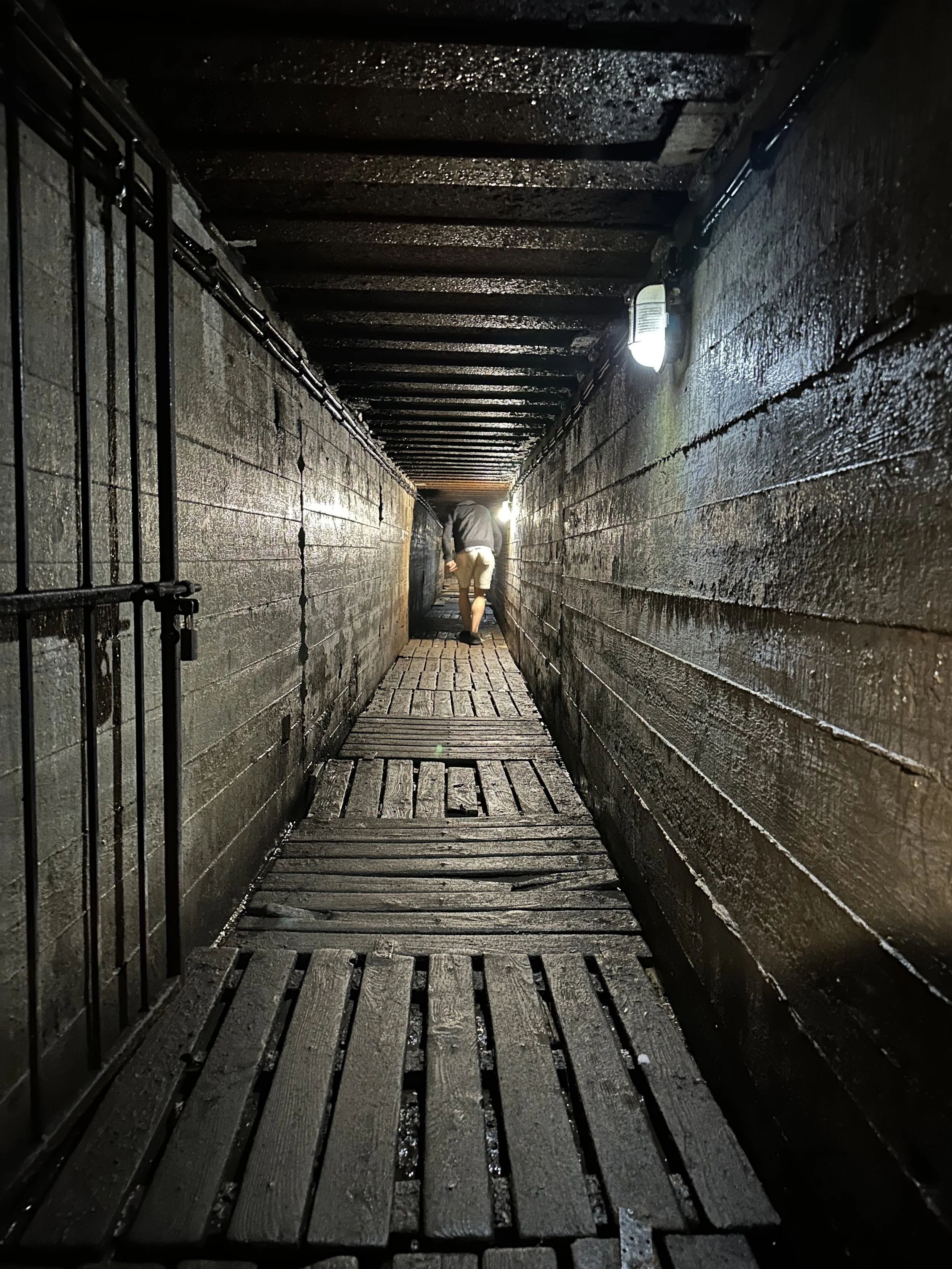
There is a smaller and better preserved private zone near Wolfsschanze. The bunkers are intact. They are connected by underground tunnels that are fun to explore.
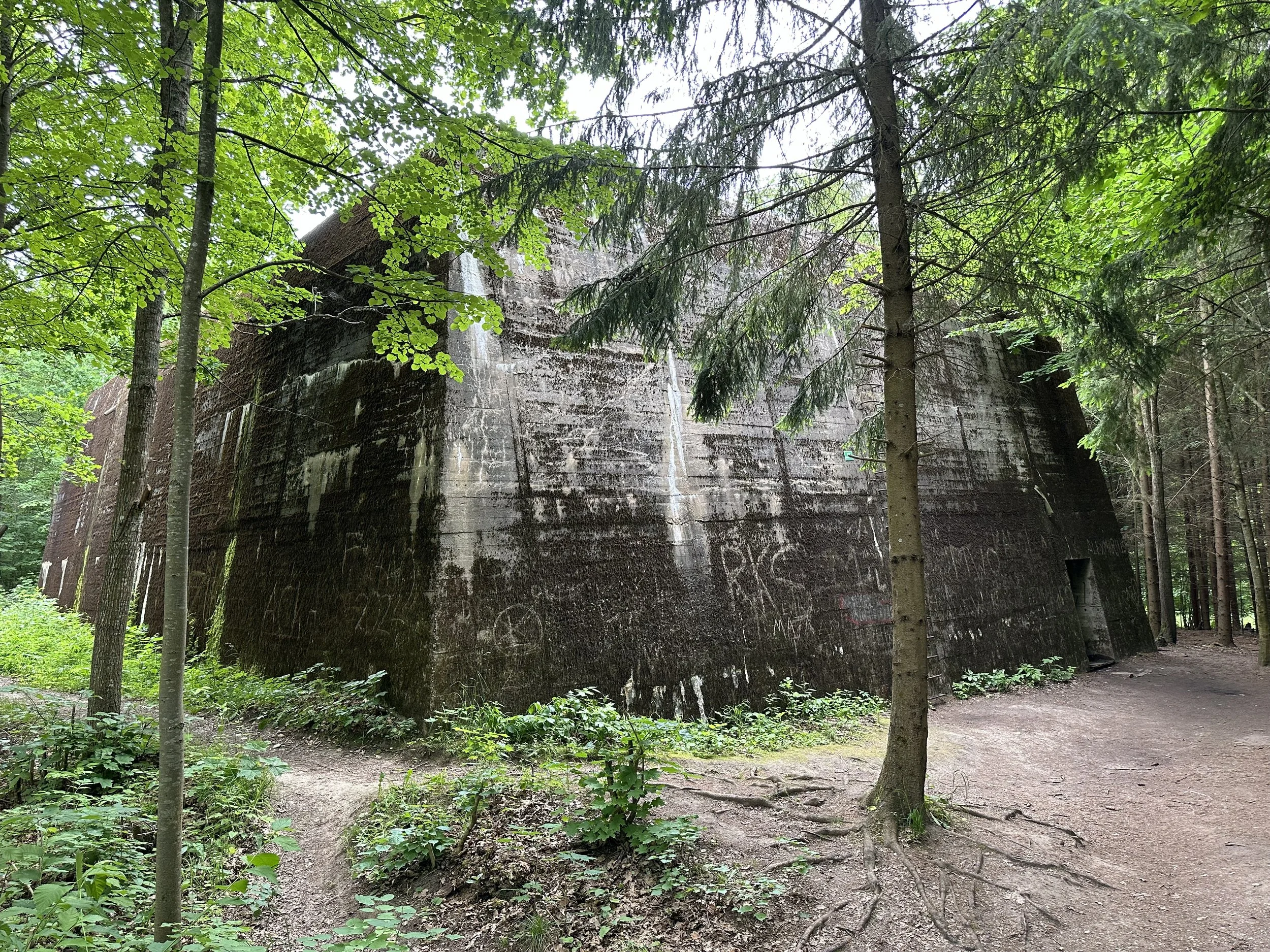
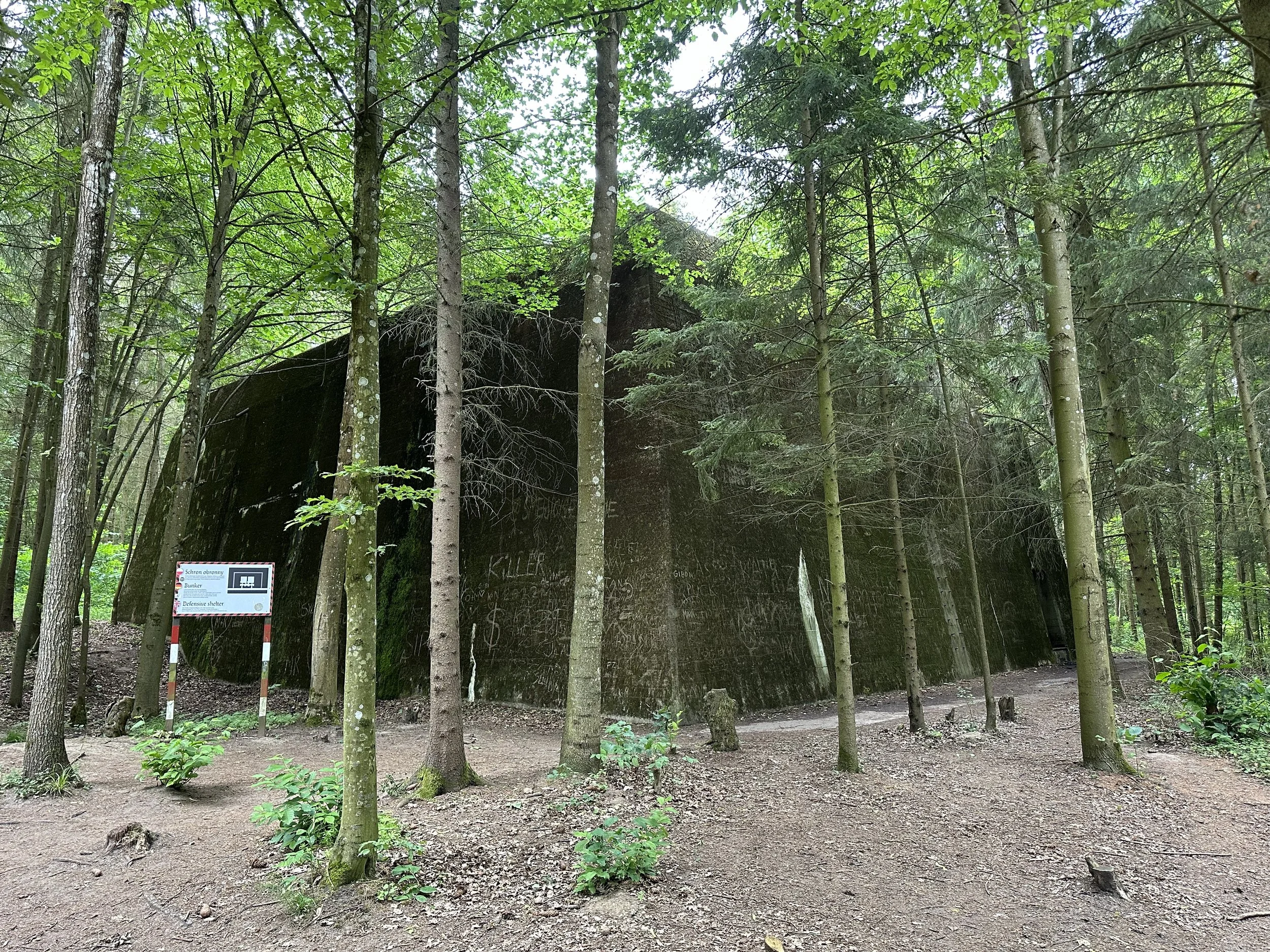
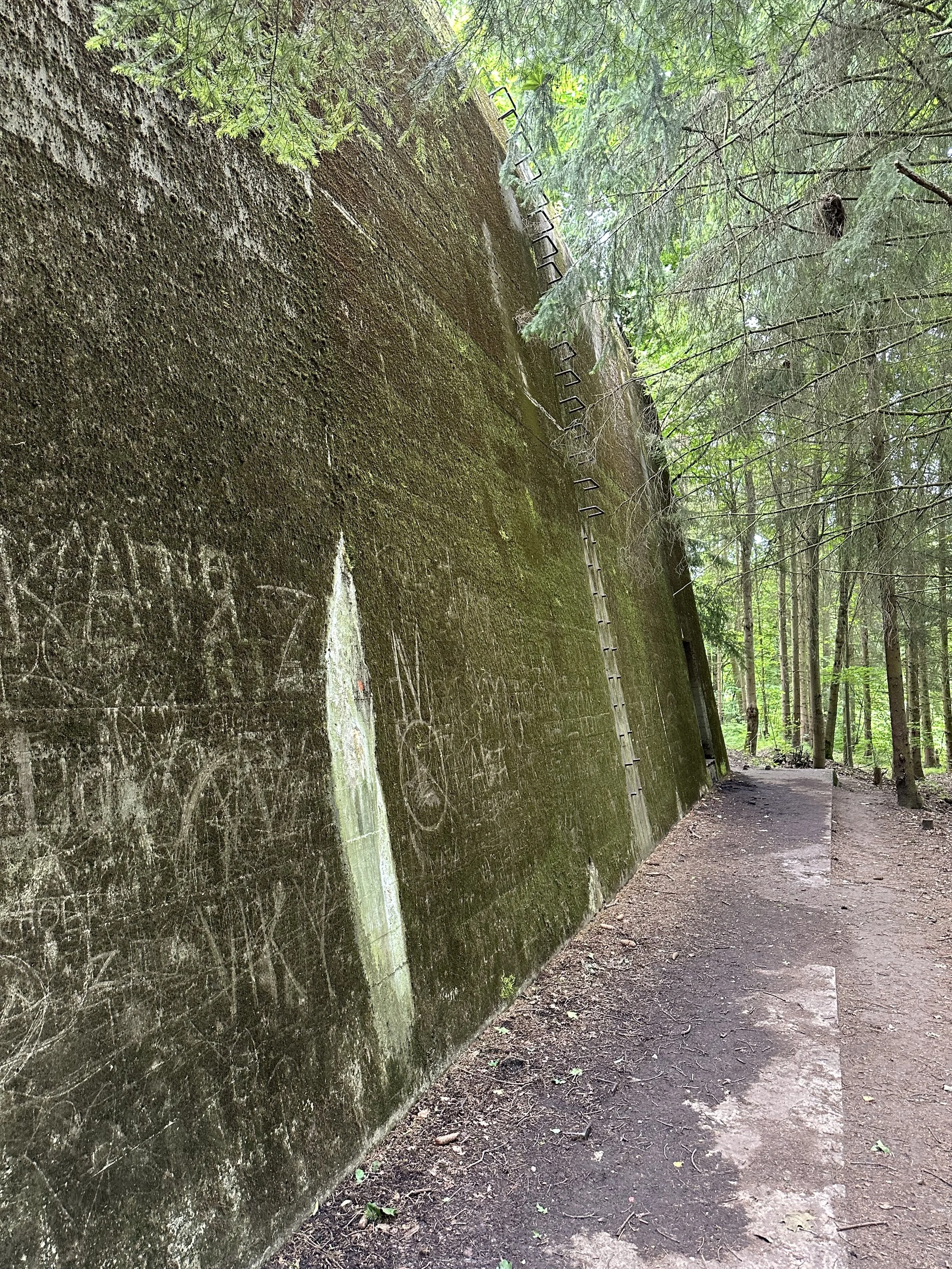
Massive bunkers are hidden in the forest.
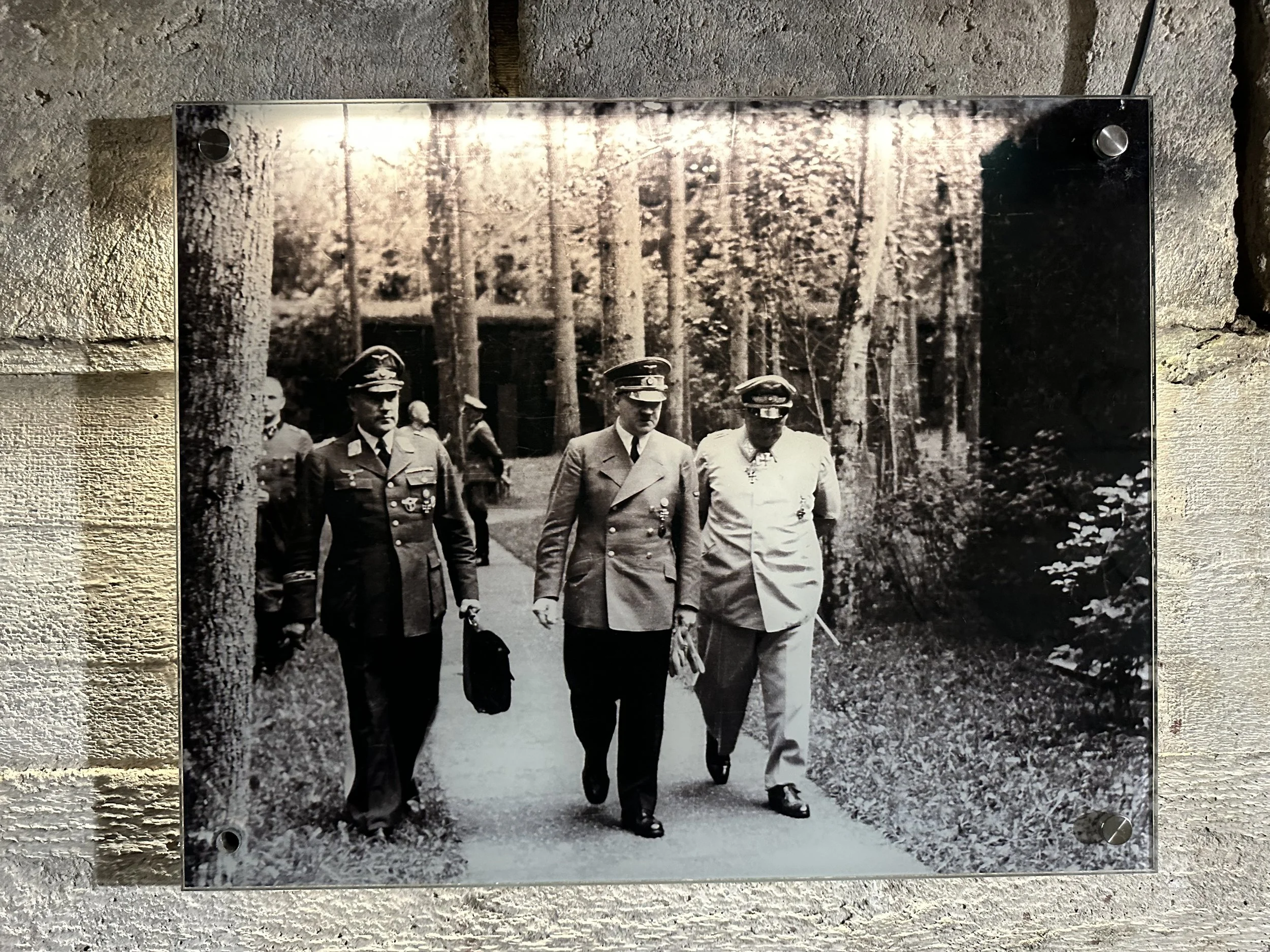
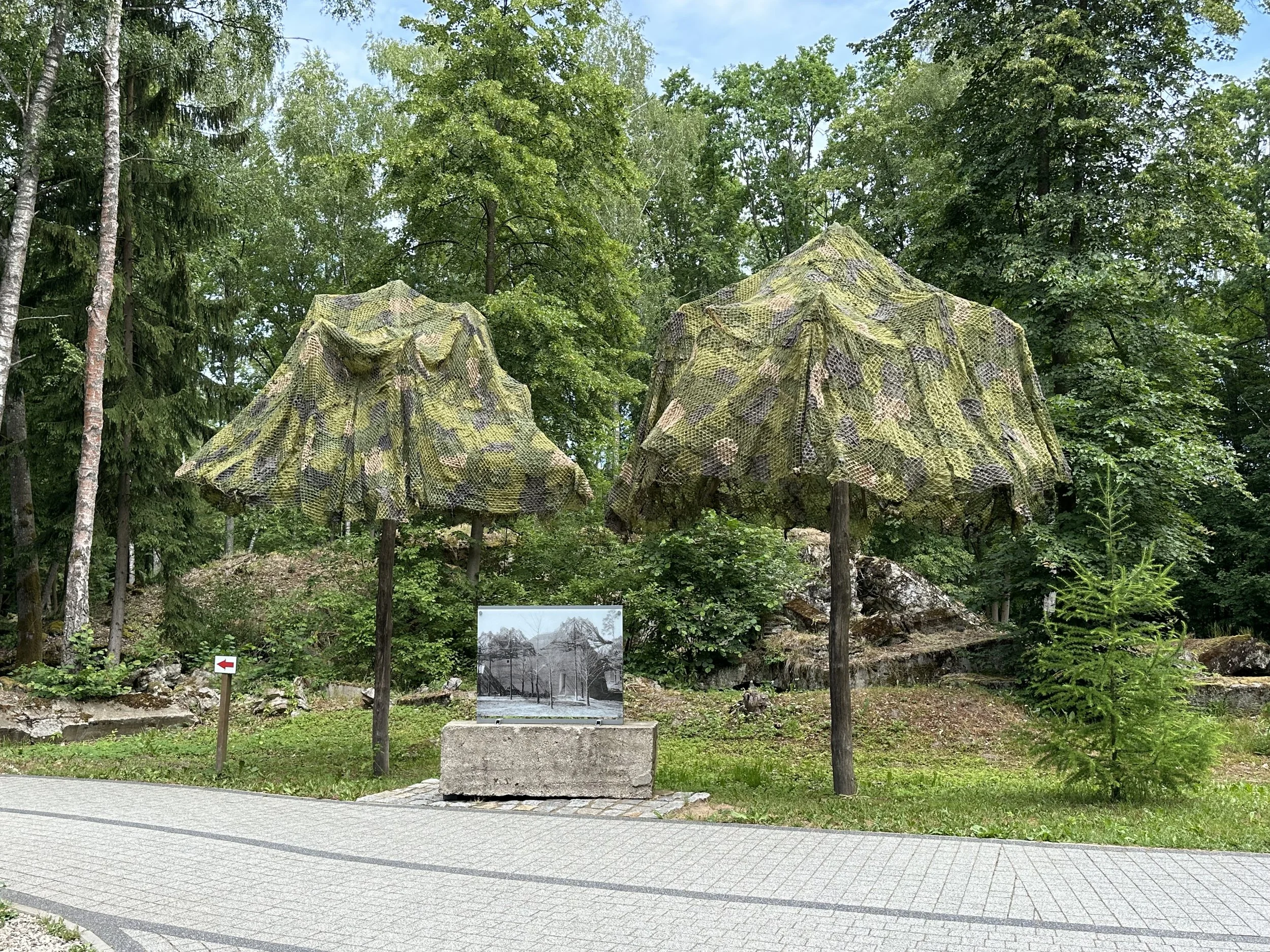
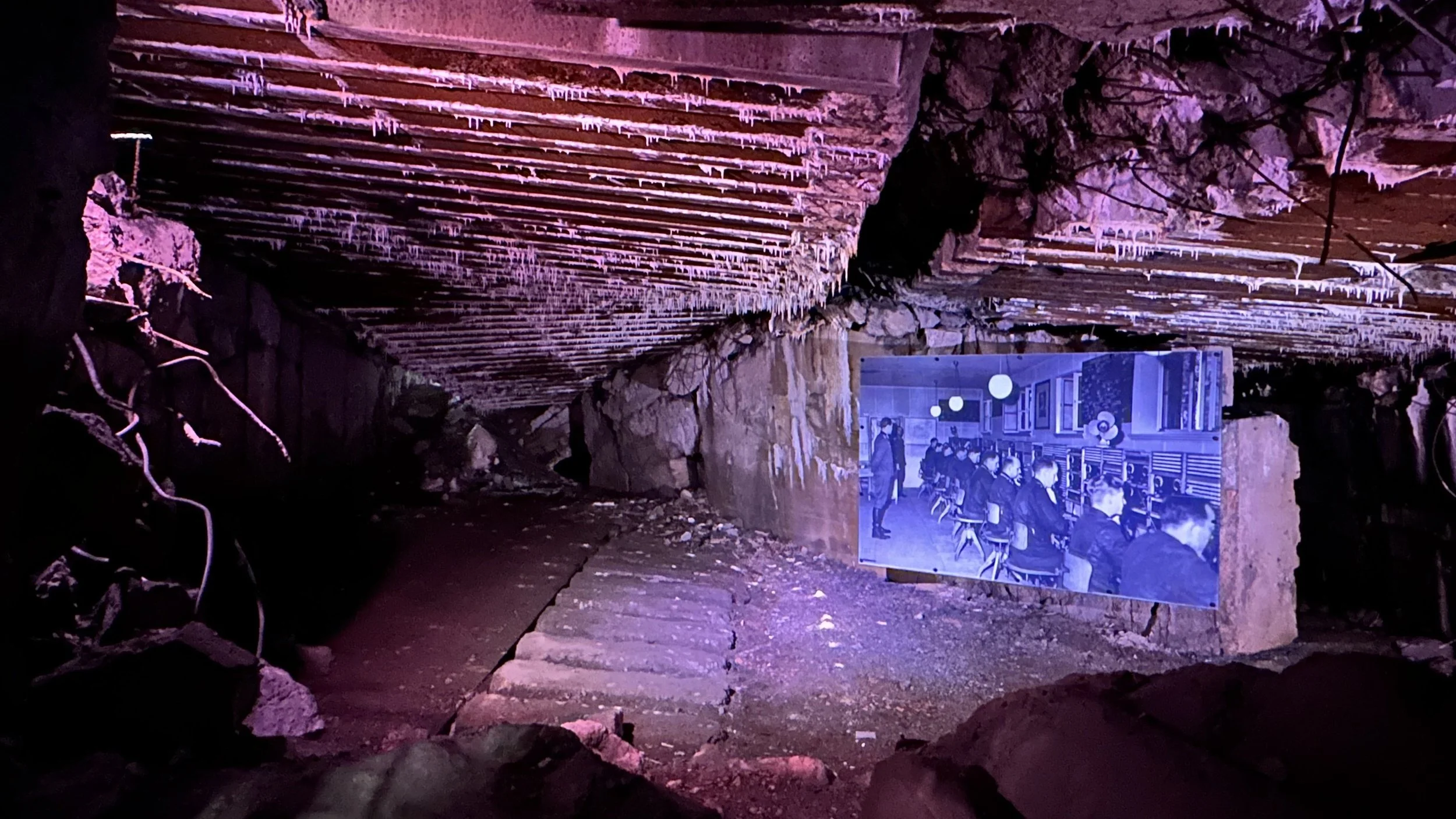
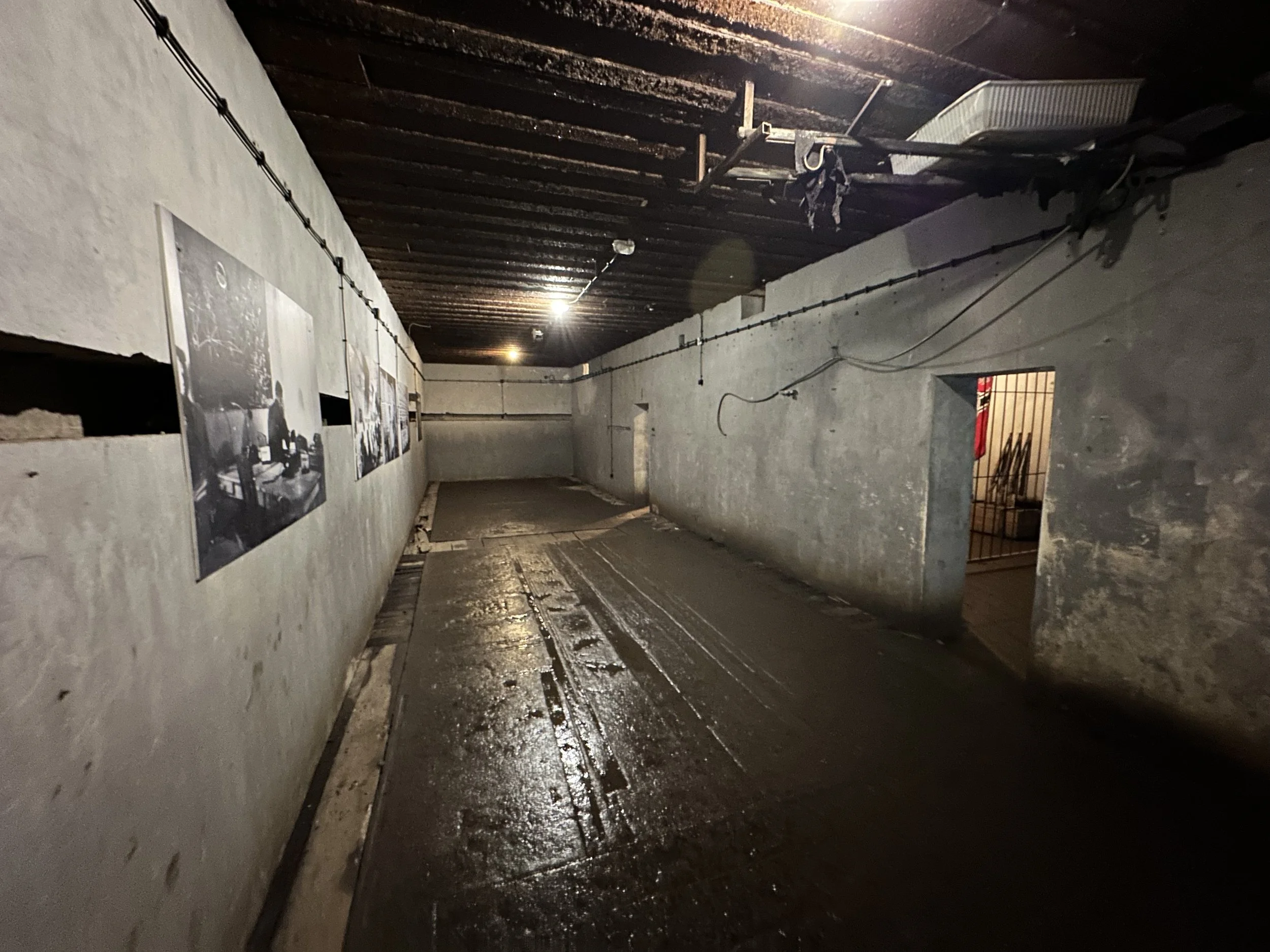
Historical photos help to visualize the life inside during the war. It was damp, dark and cramped.
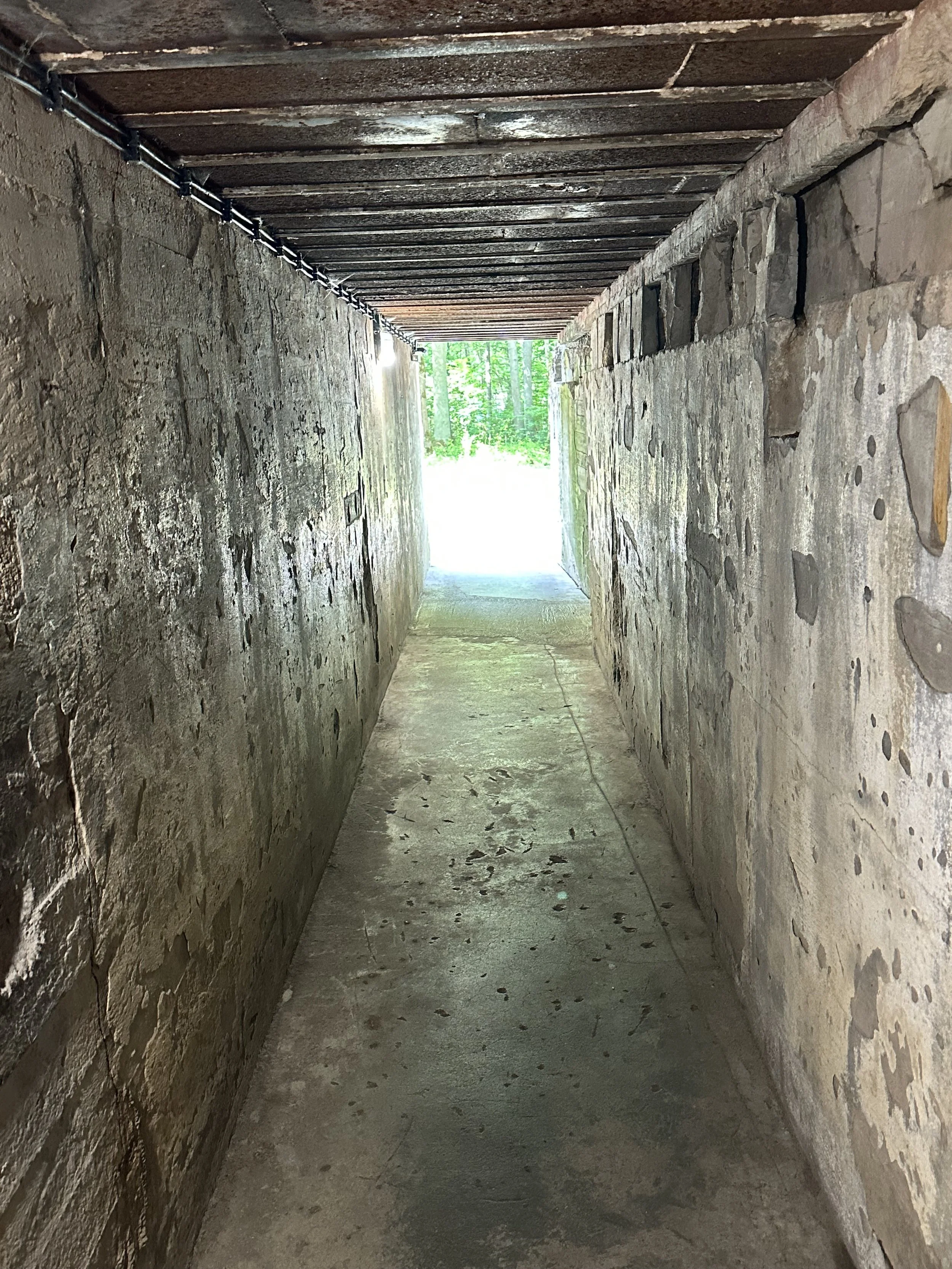
One of the tunnels connecting bunkers.
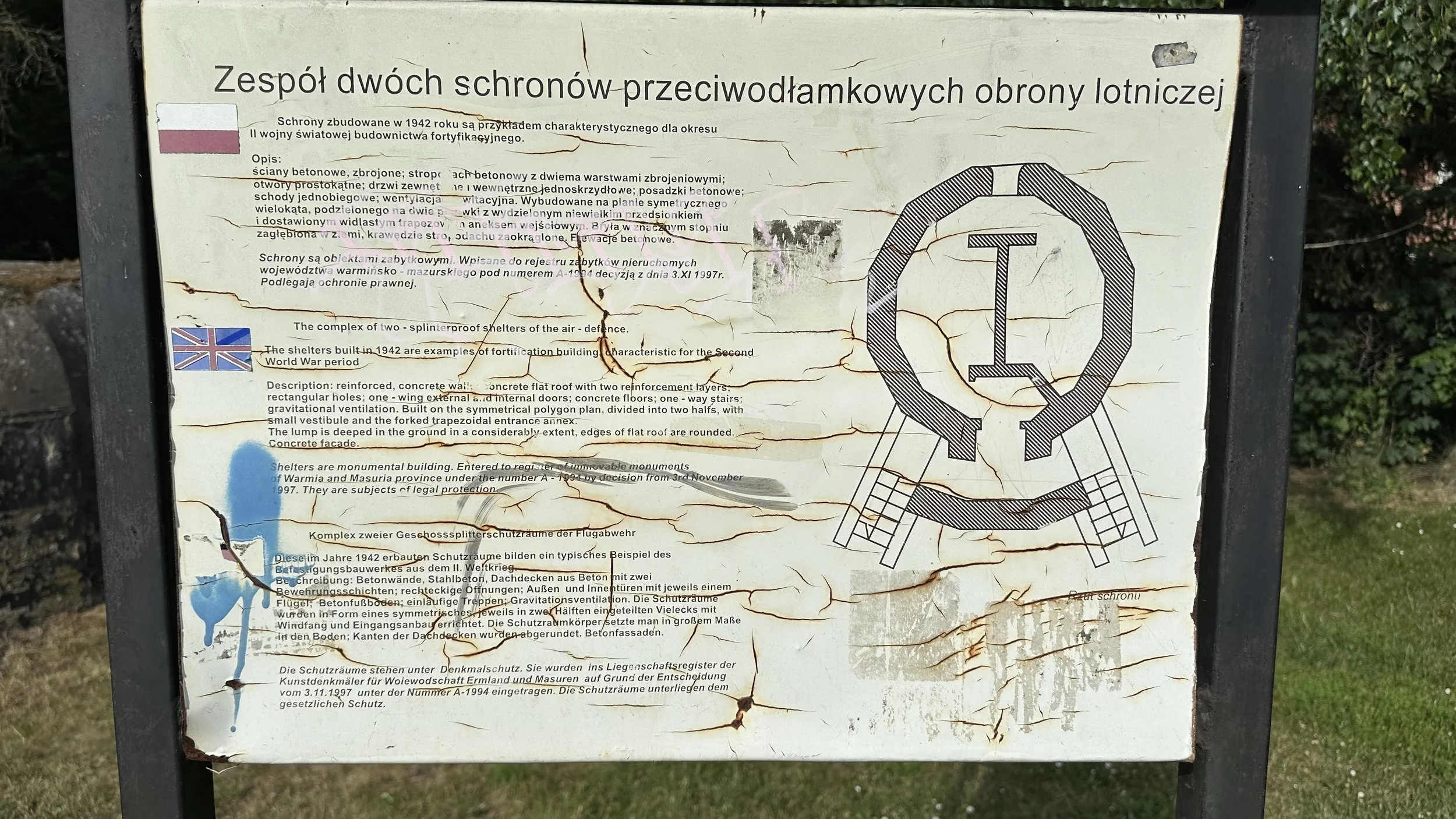
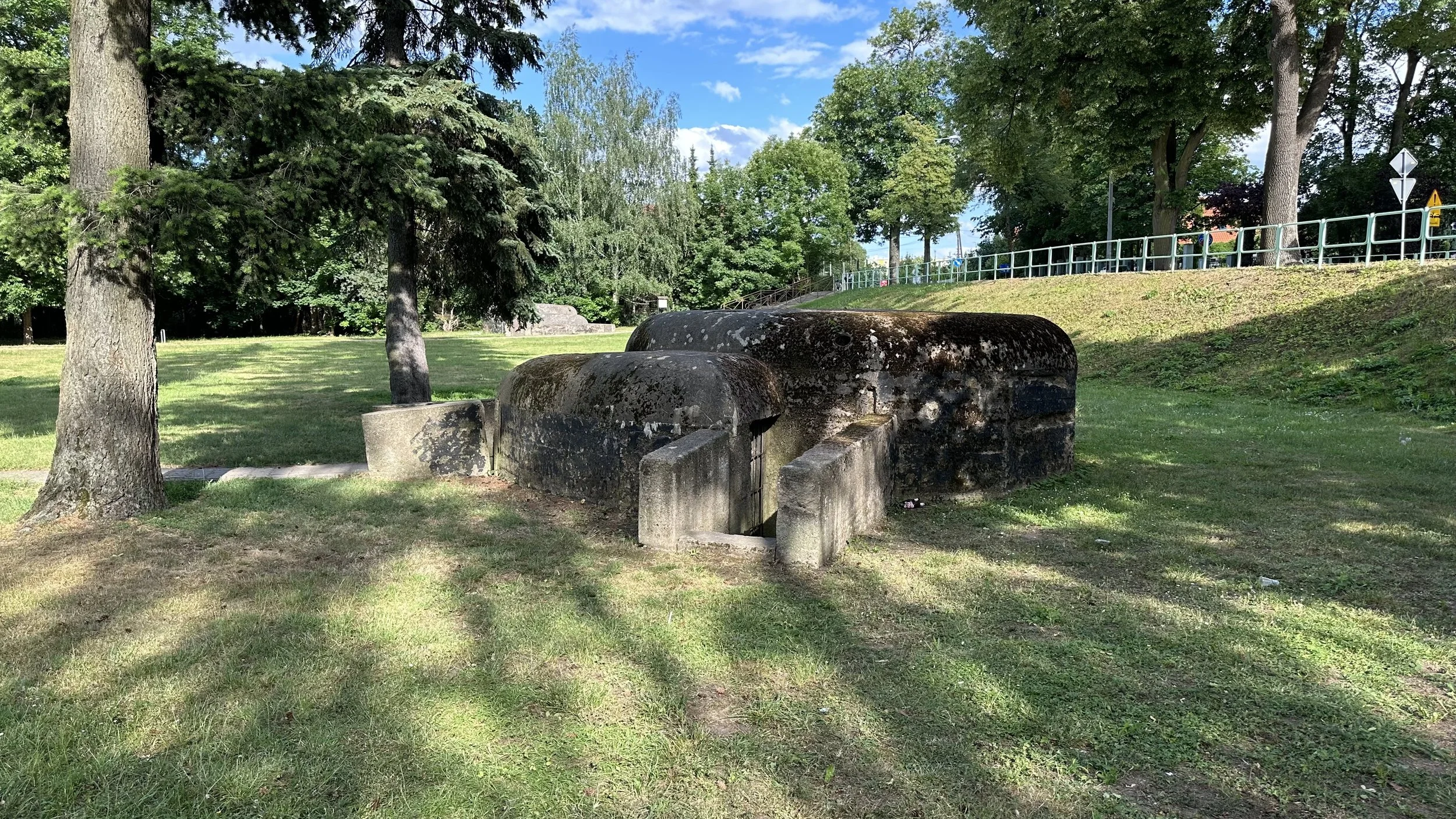
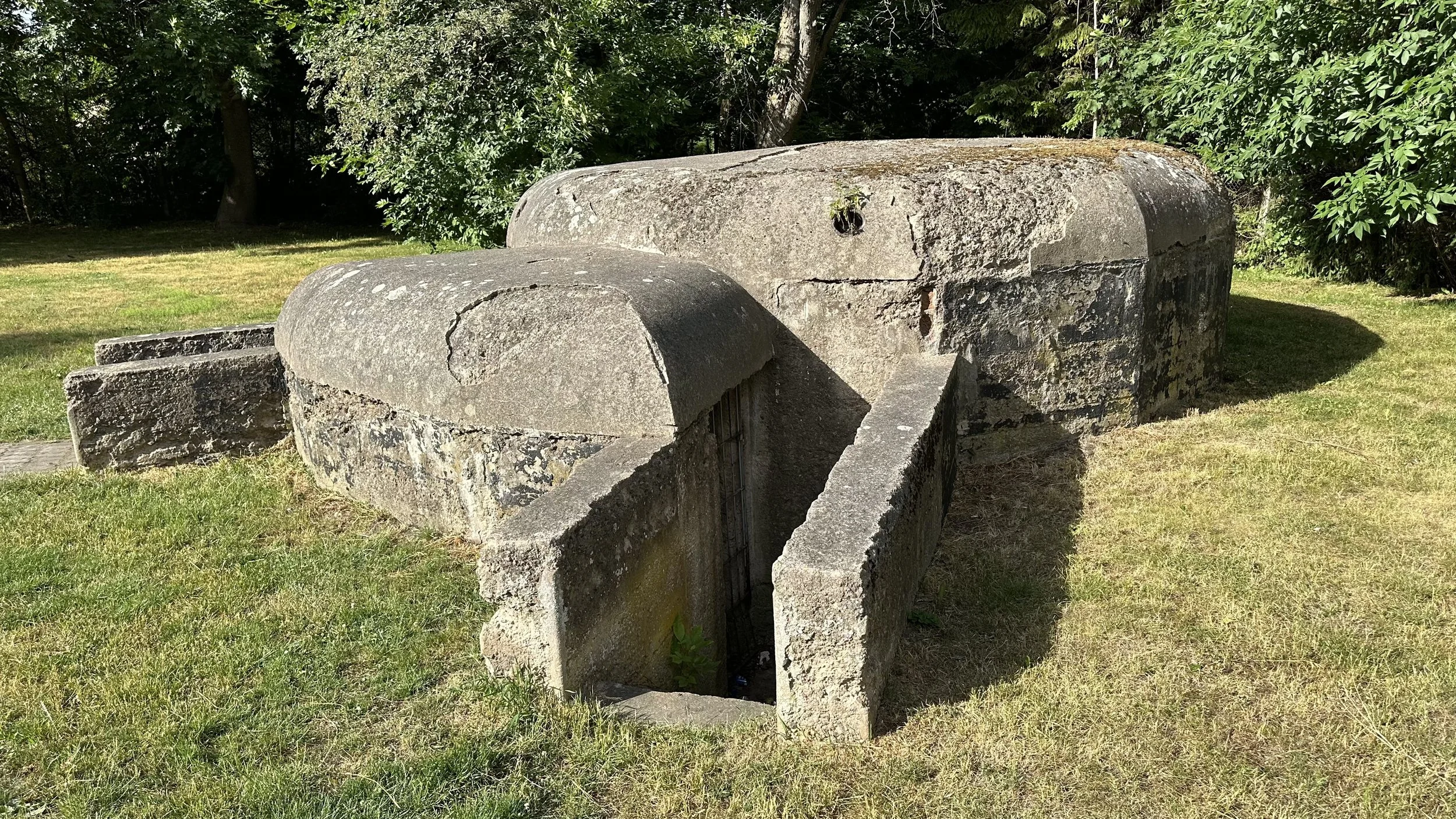
Some of the well preserved civilian bunkers in Ketrzyn.
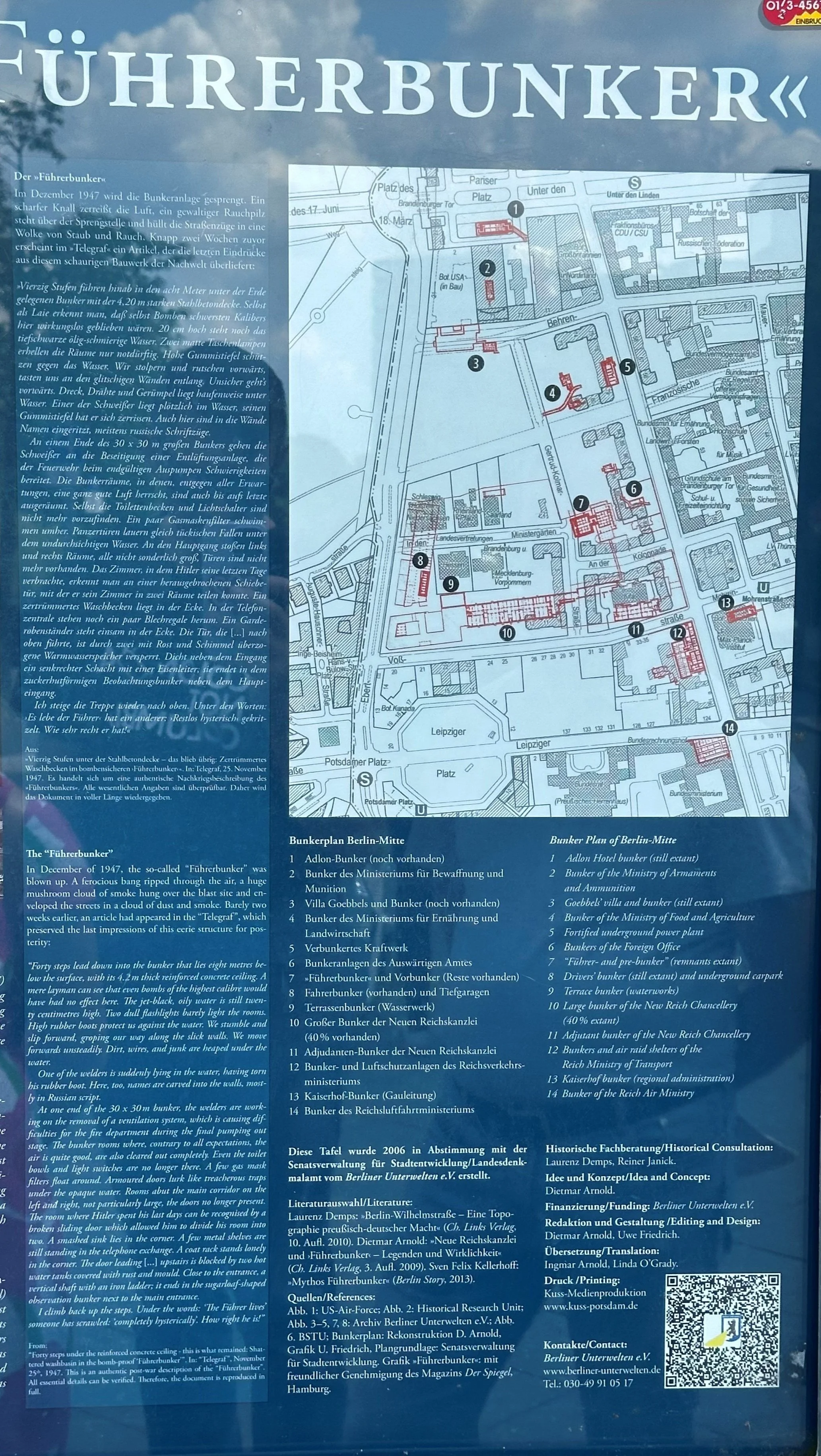
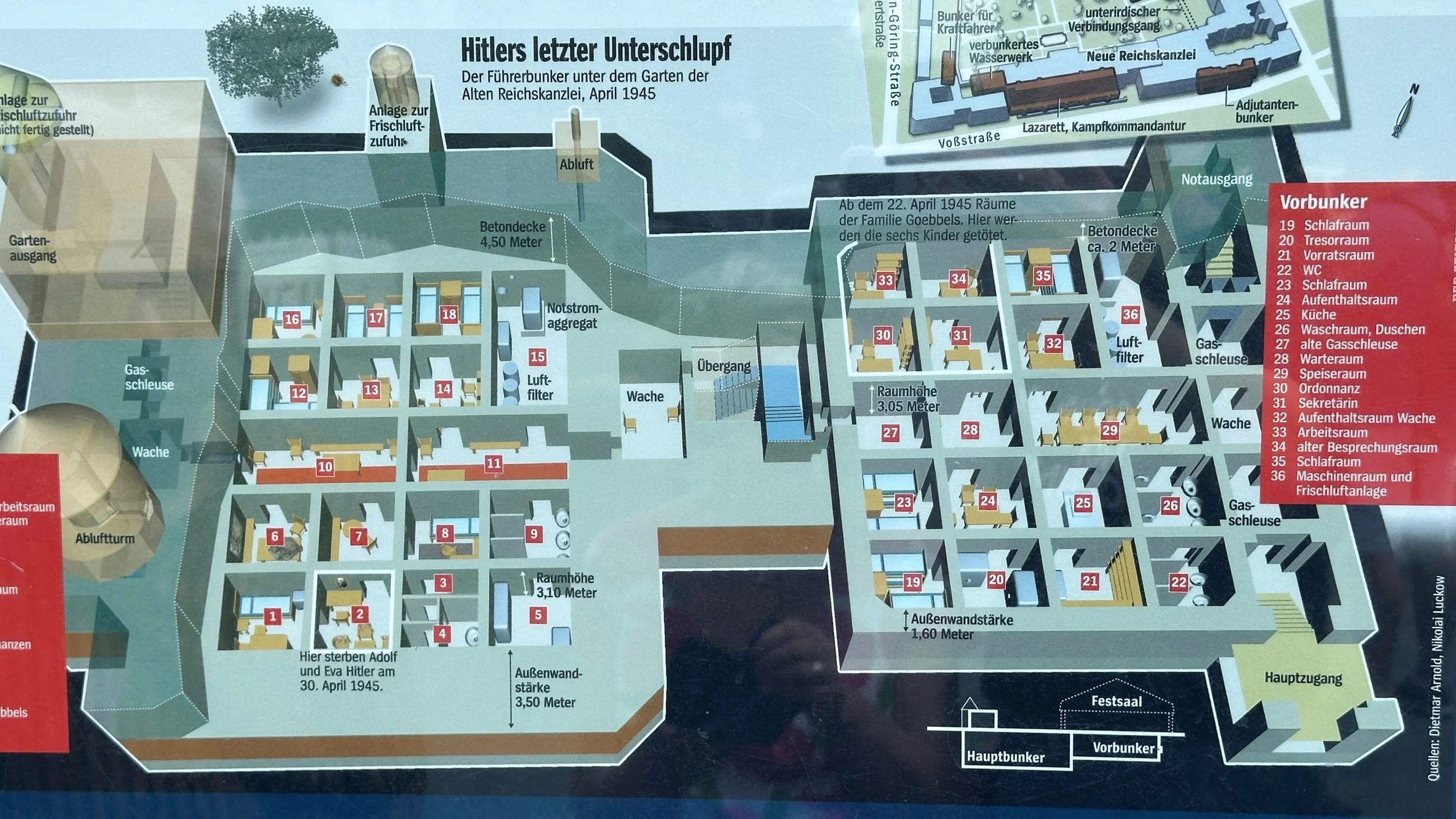
Another famous bunker - the Hitler’s Bunker in Berlin where he committed suicide at the end of WW2.
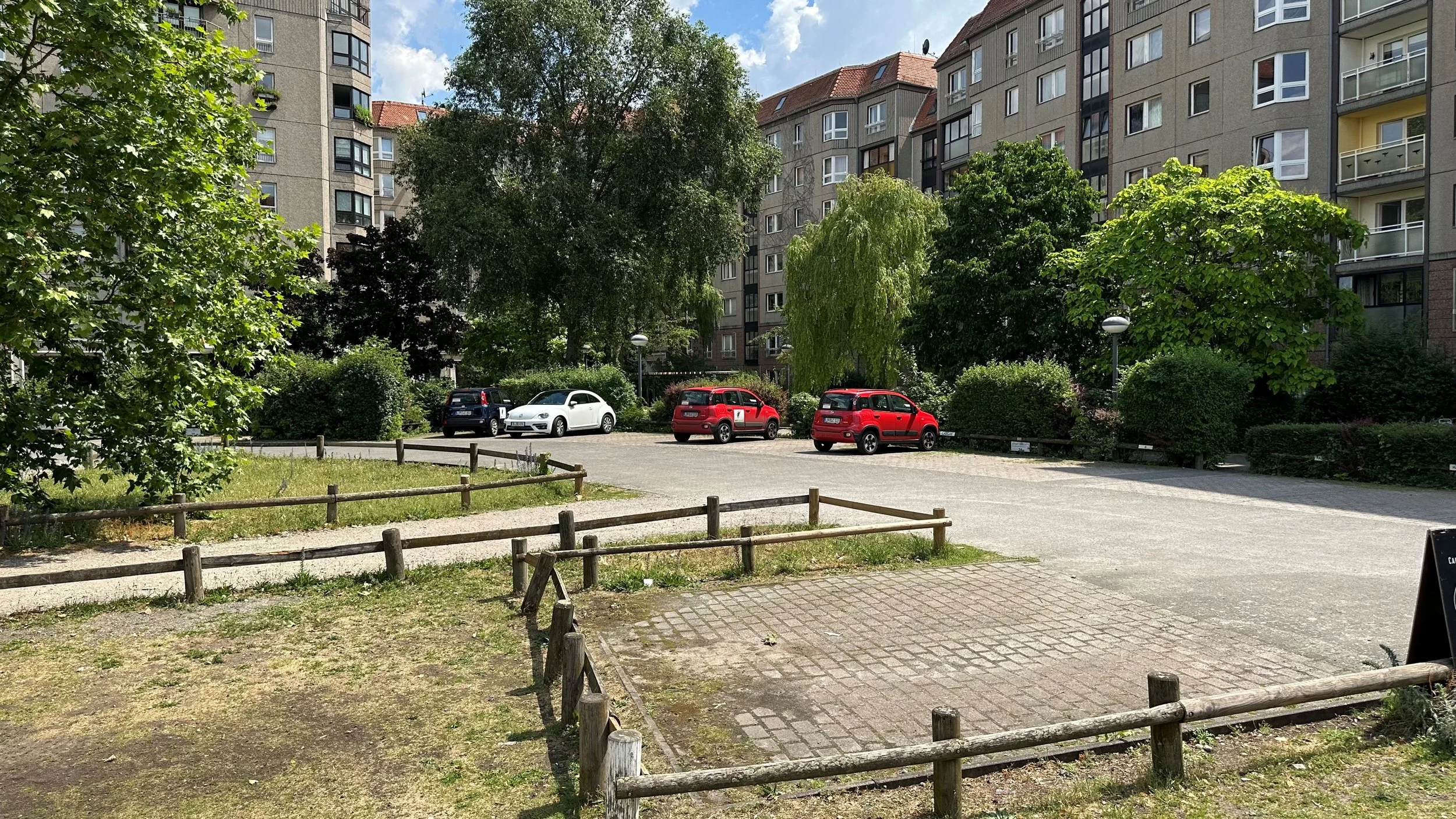
This is what remains - a parking lot
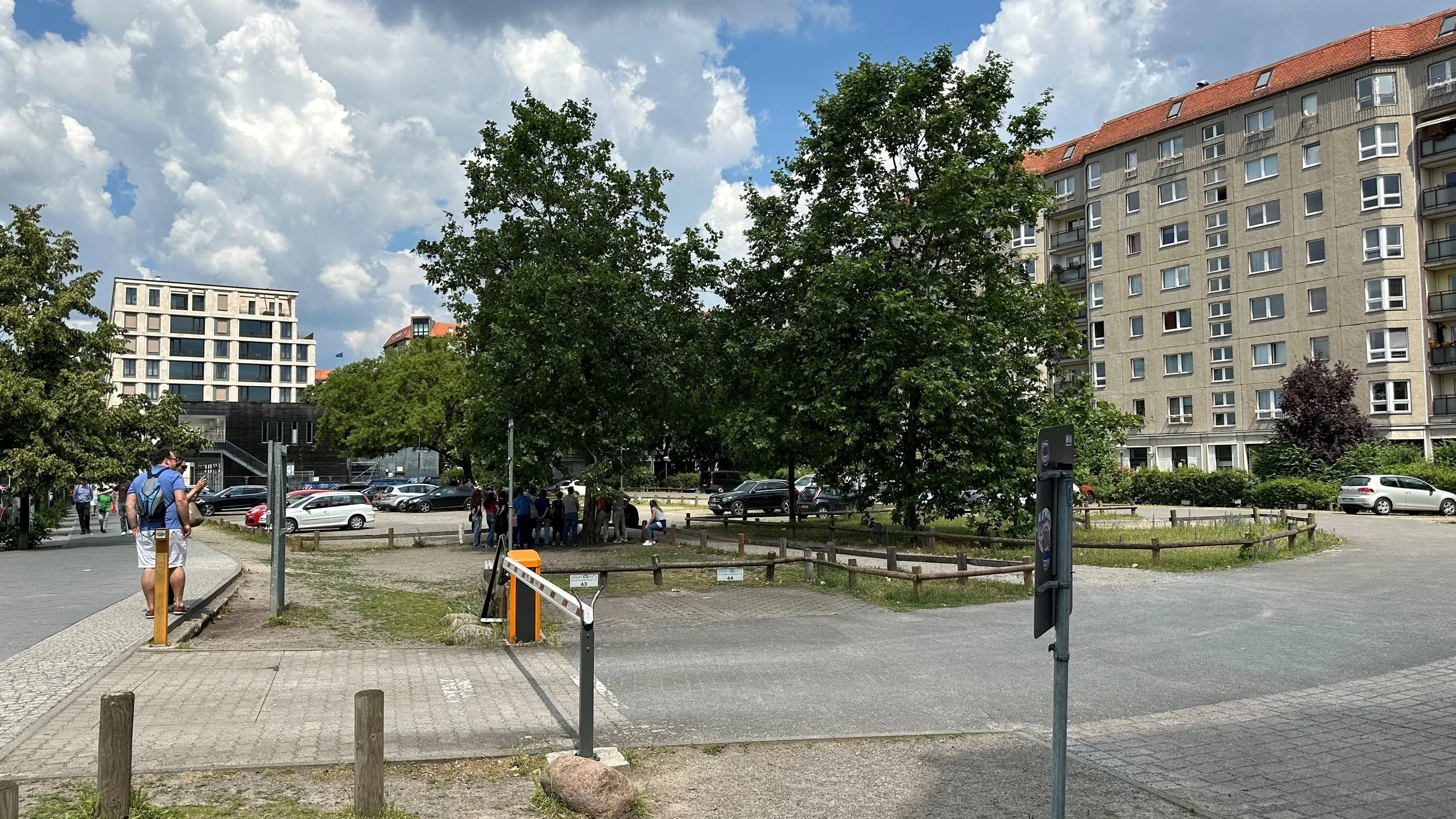
The location of Hitler’s bunker in Berlin
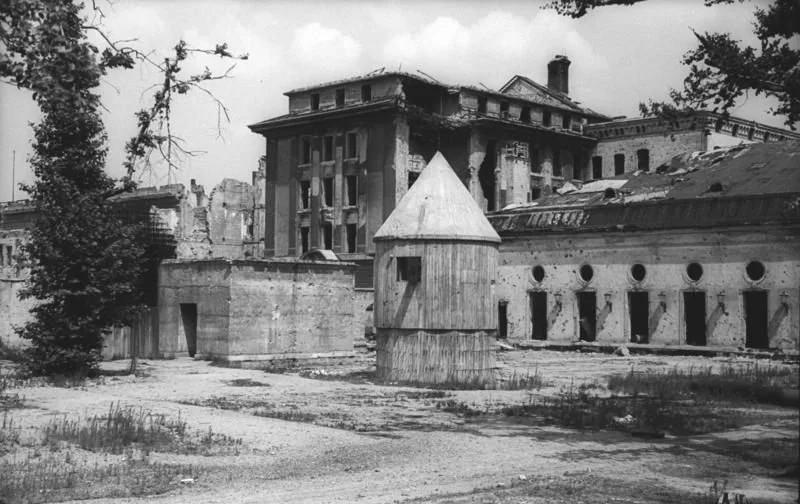
The photo of the bunker from after WW2
The Soviets razed the Chancellery buildings and also attempted to destroy the bunker, without much luck. The site would sit unused and neglected until after the fall of the Berlin Wall, when development of the area prompted the discovery of several underground sections. These were promptly destroyed, although there is rumor that some rooms (sealed to the public) remain. Not wanting the space to become a Neo-Nazi shrine, the German government kept the location of the bunker undisclosed for many years. Nondescript apartment and office buildings, as well as the parking lot, were erected on the site and the bunker went unmentioned. The space was not officially recognized as the place of Hitler’s death until June of 2006, when a plaque including historical background and a schematic diagram of the bunker was quietly placed at the intersection of In den Ministergärten and Gertrud-Kolmar-Straße.
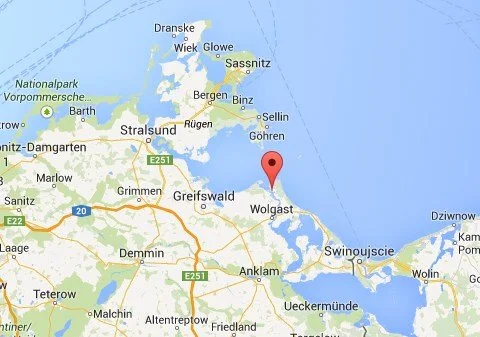
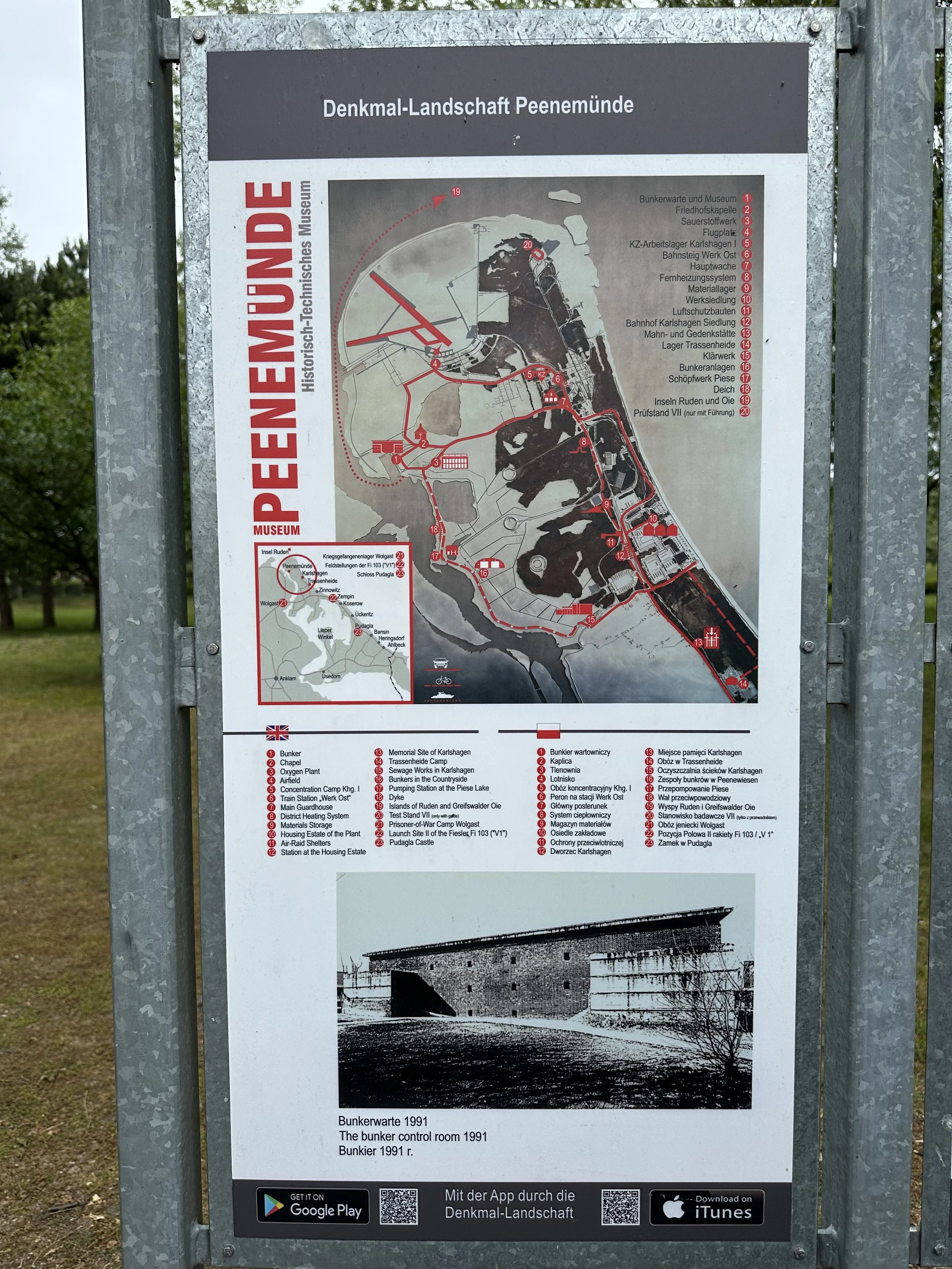
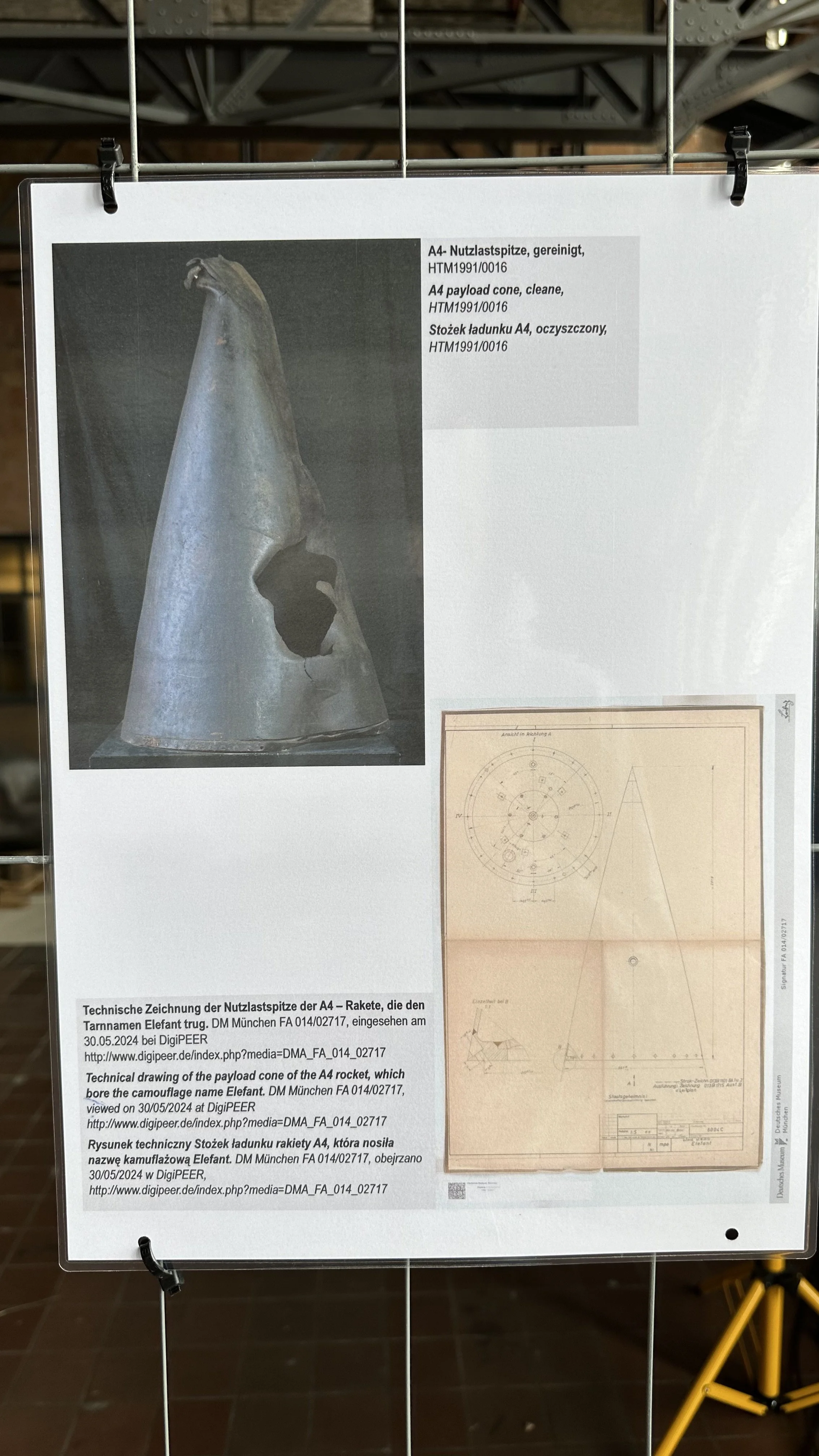
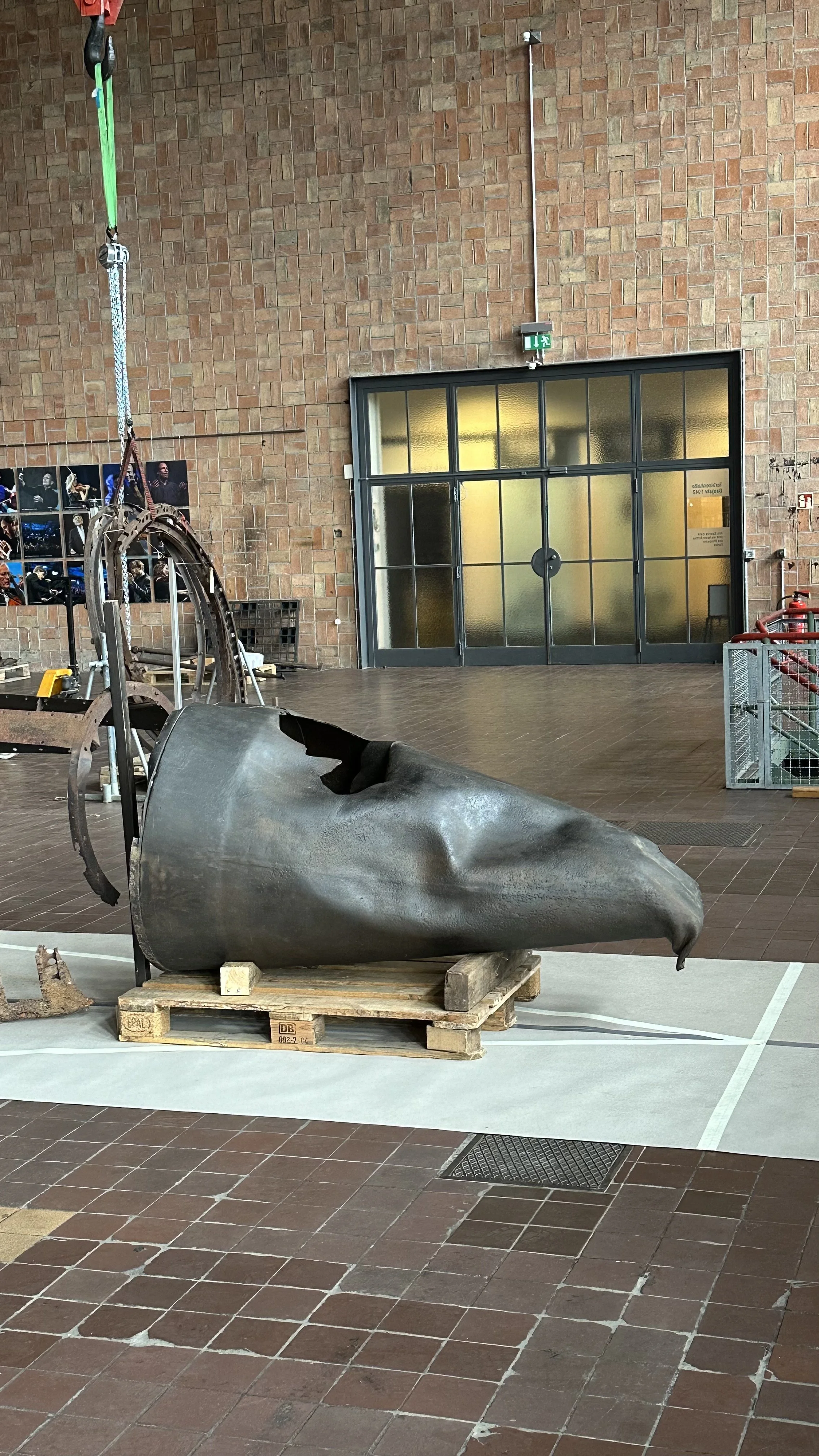
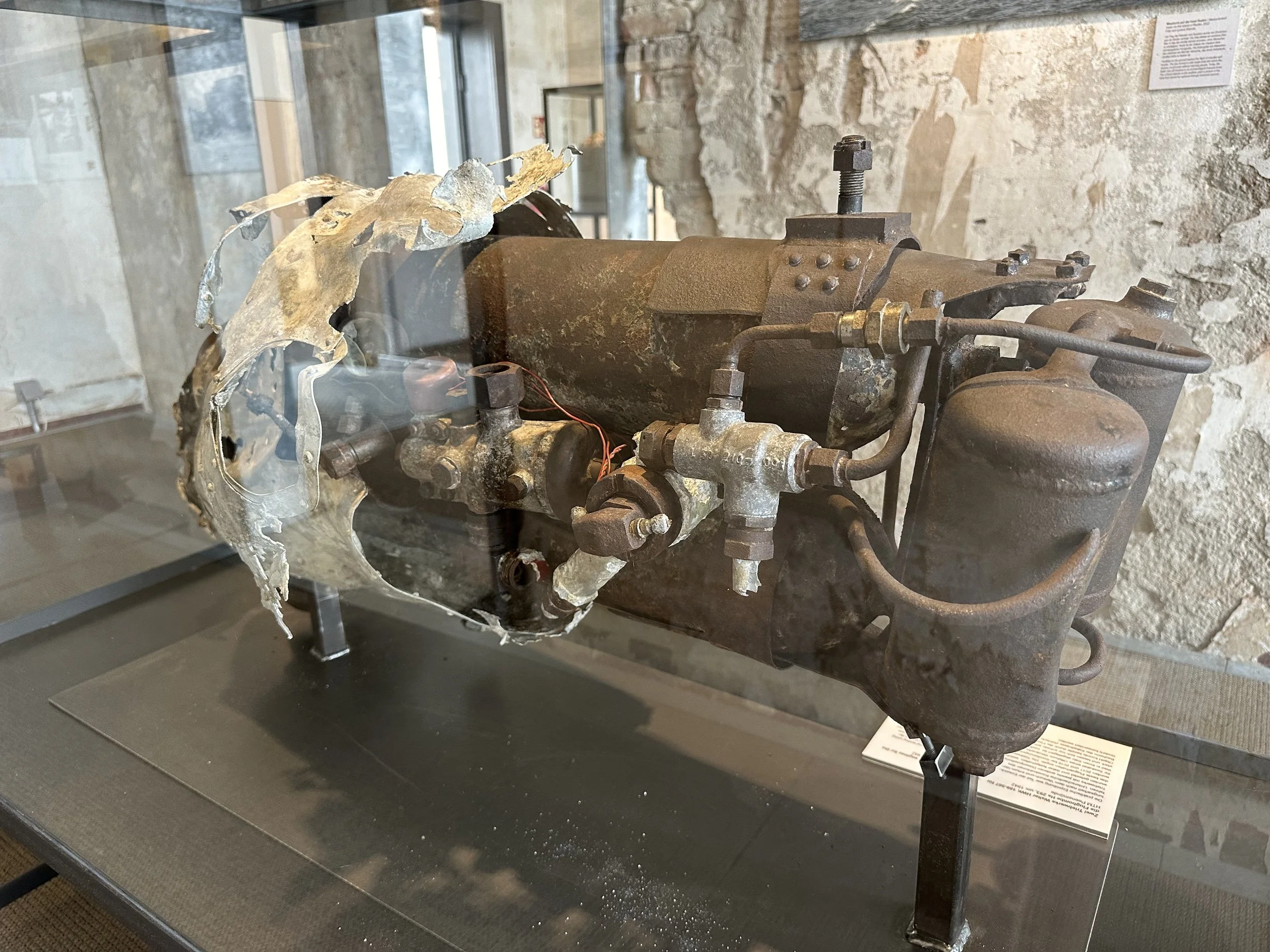
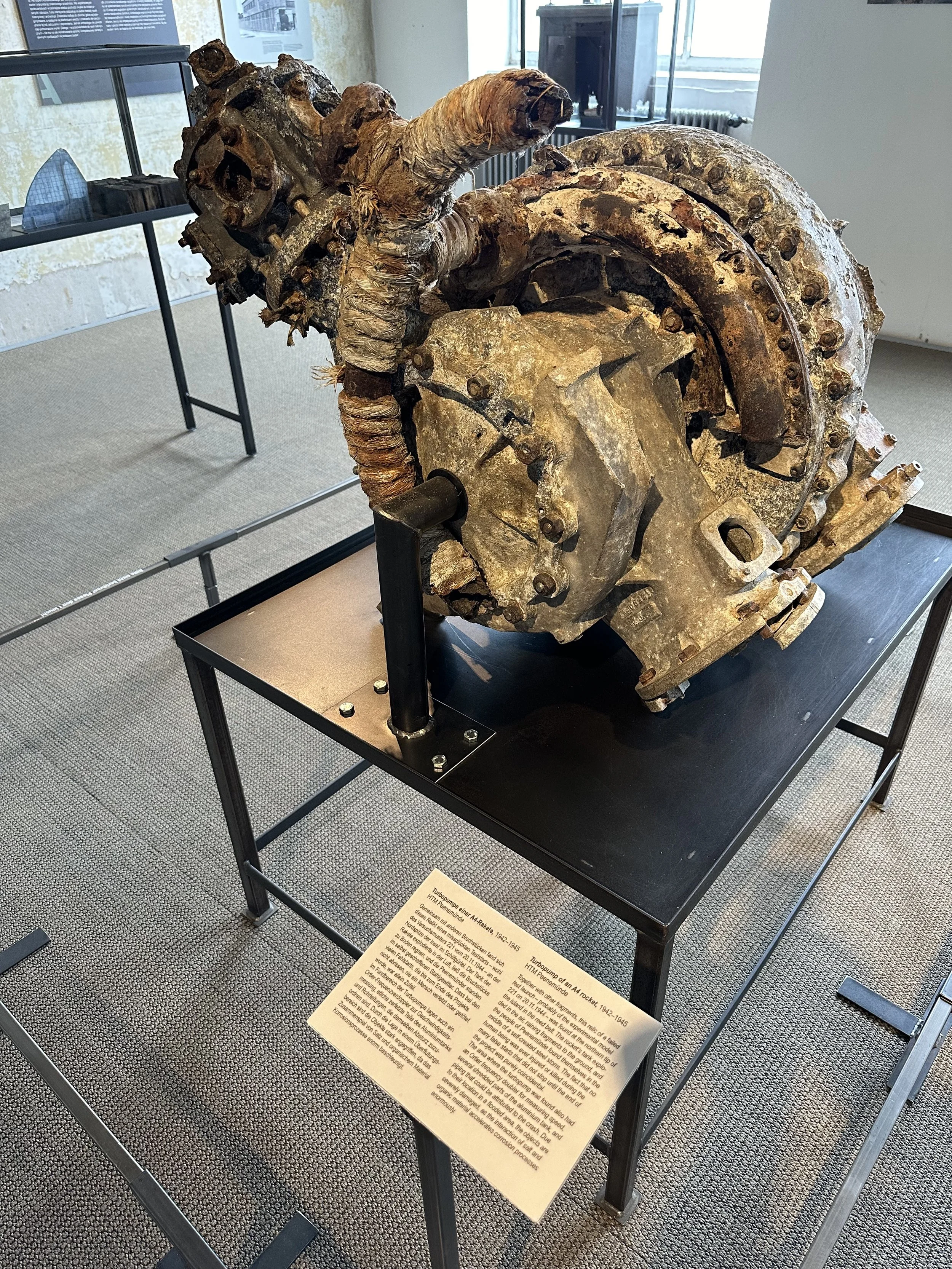
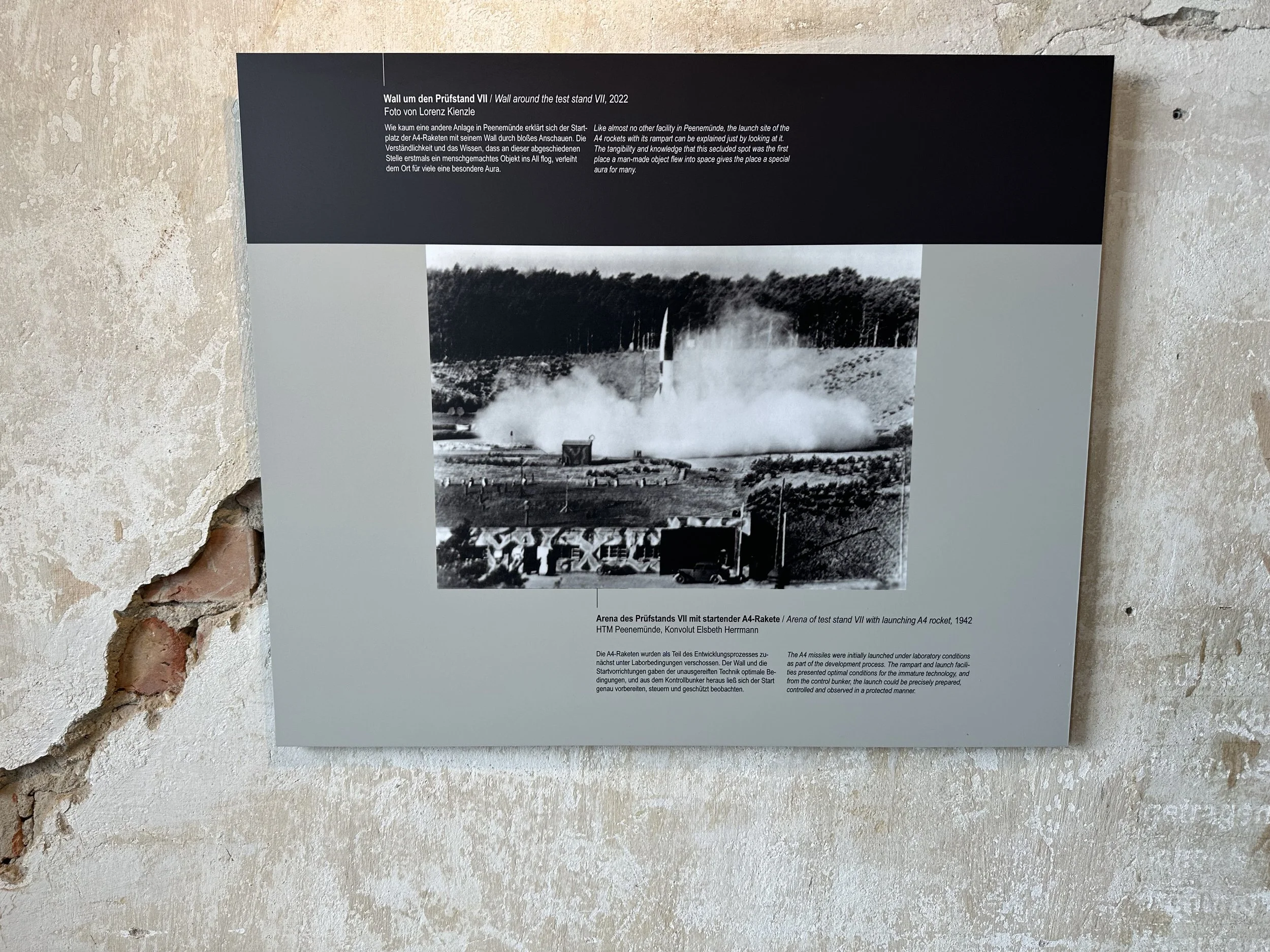
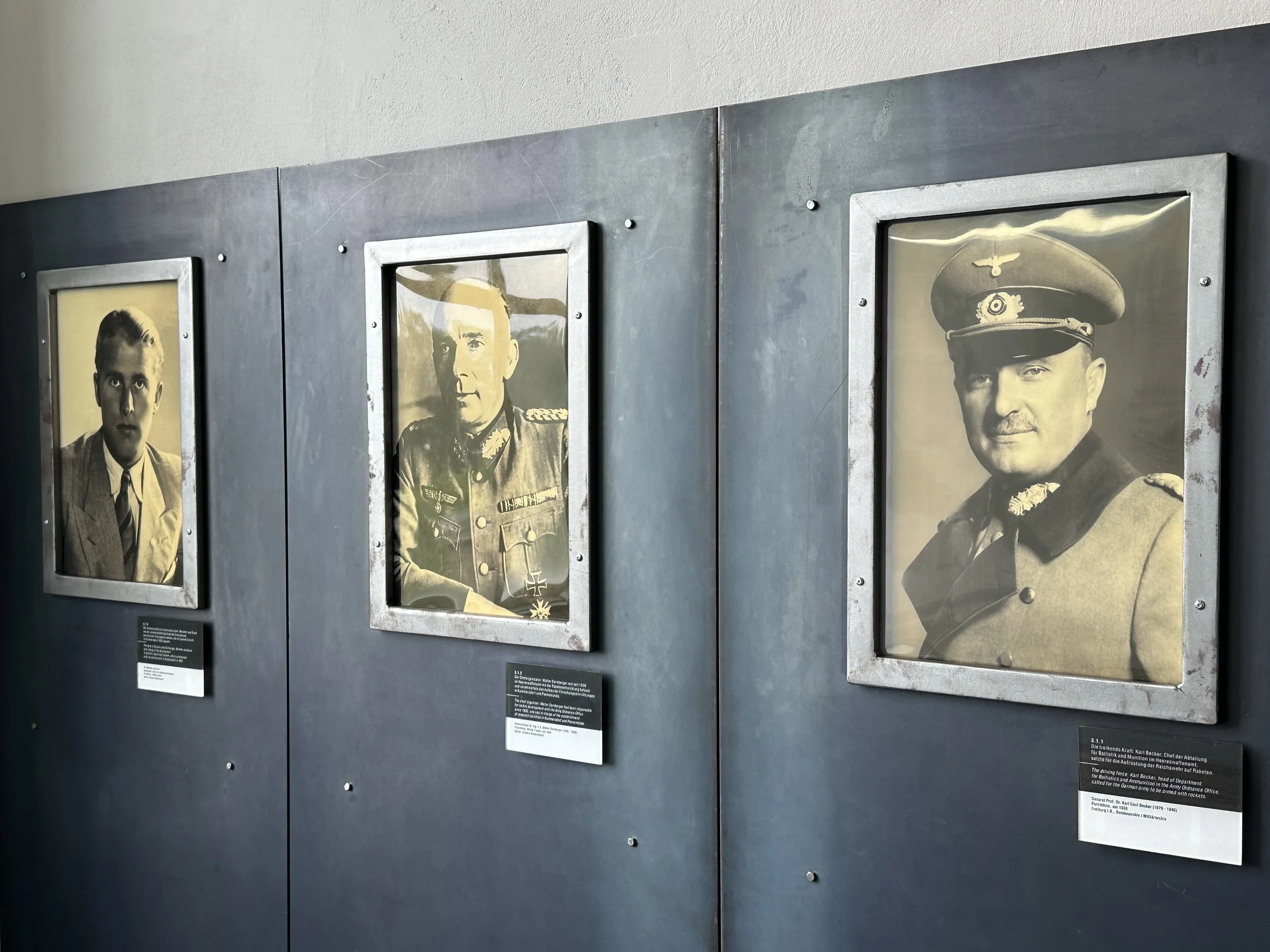
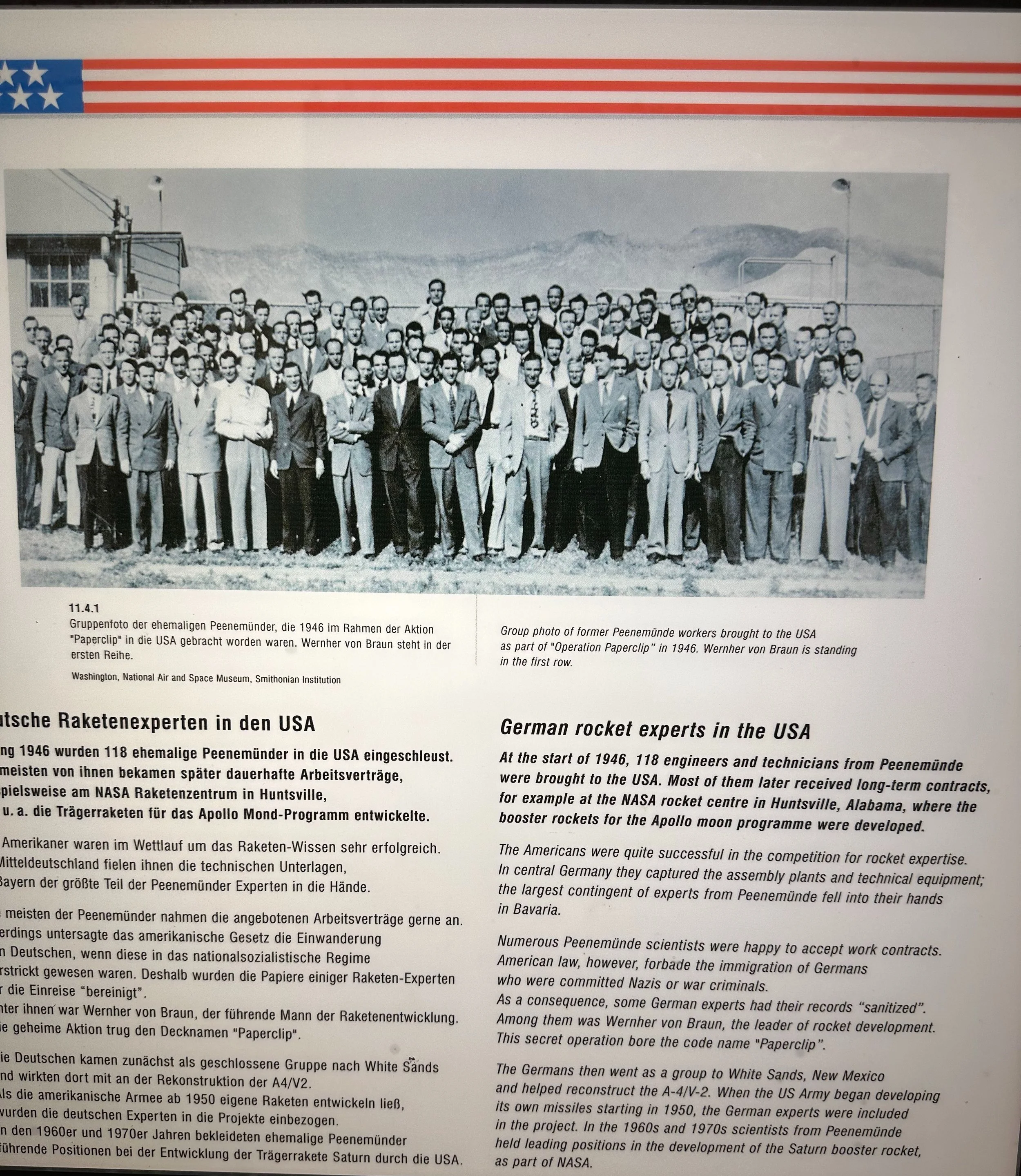
Peenemunde is a peninsula in northern Germany on the Baltic coast. It was here from 1936 that the Nazi regime opened the Peenemünde Army Research Centre and under Wernher von Braun it was where the development of the first rockets took place: the V1 ‘Doodlebug’ and latterly the V2 rocket.
The site was heavily bombed once the Allies realised the importance of the site and the RAF launched several raids using Lancster bombers: the remains of one of them can be seen in a lake at Peenemünde.
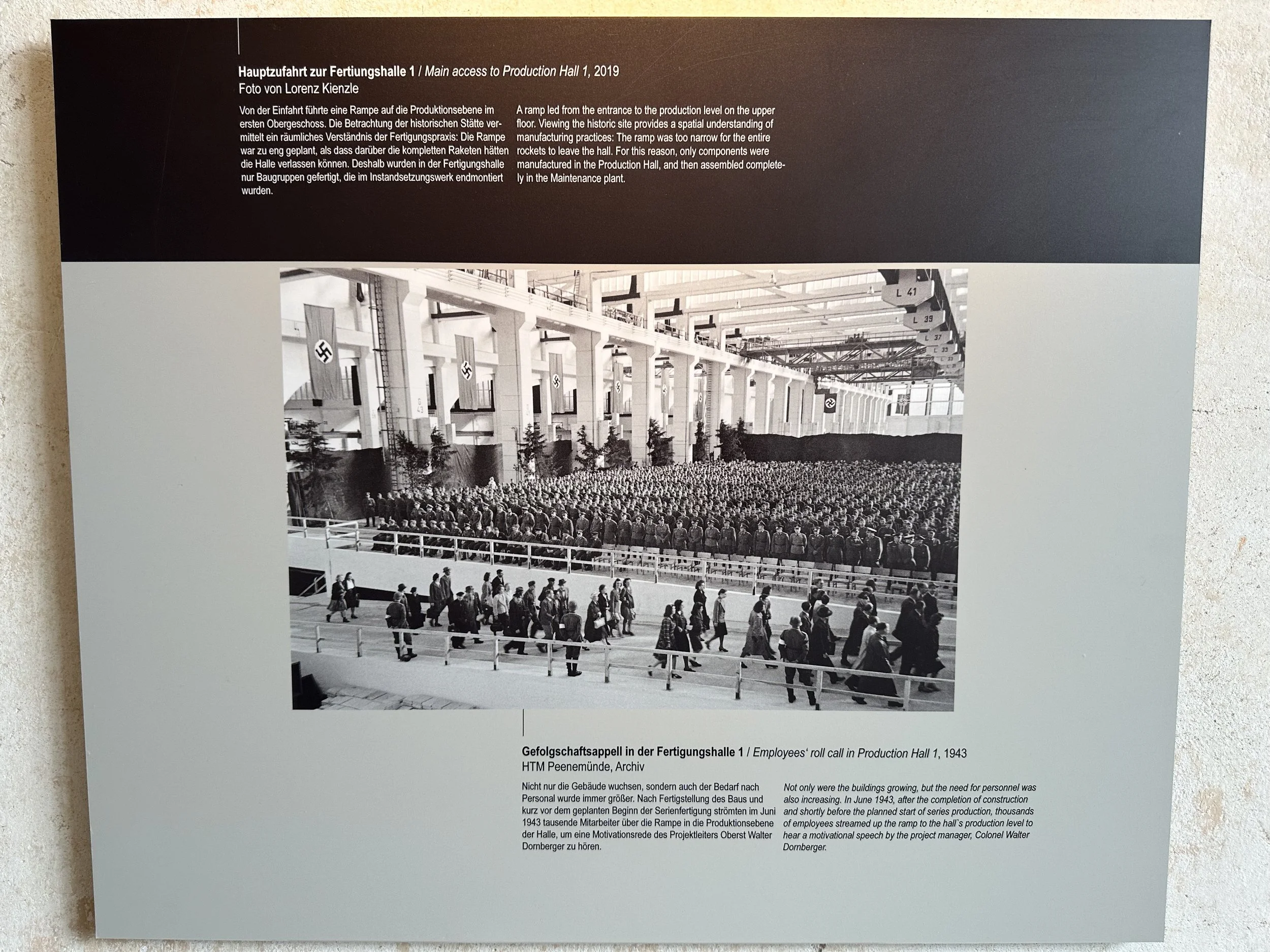
In November 1938, Walther von Brauchitsch ordered construction of an A-4 production plant at Peenemünde, and in January 1939, Walter Dornberger created a subsection of Wa Pruf 11 for planning the Peenemünde Production Plant project. By midsummer 1943, the first trial runs of the assembly-line in the Production Works at Werke Süd were made, but after the end of July 1943 when the enormous hangar Fertigungshalle 1 (F-1, "Mass Production Plant No. 1") was just about to go into operation, Operation Hydra bombed Peenemünde.
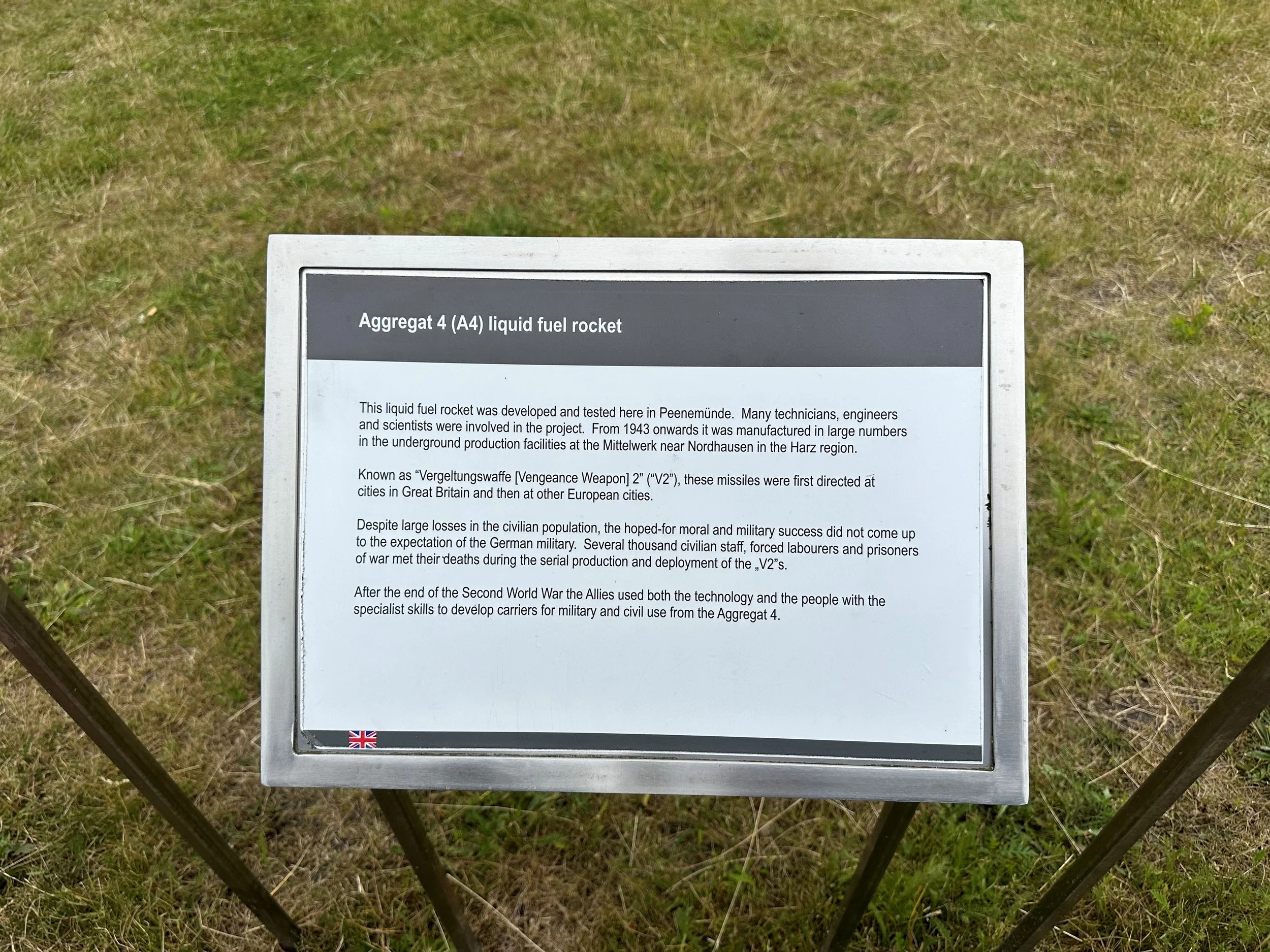
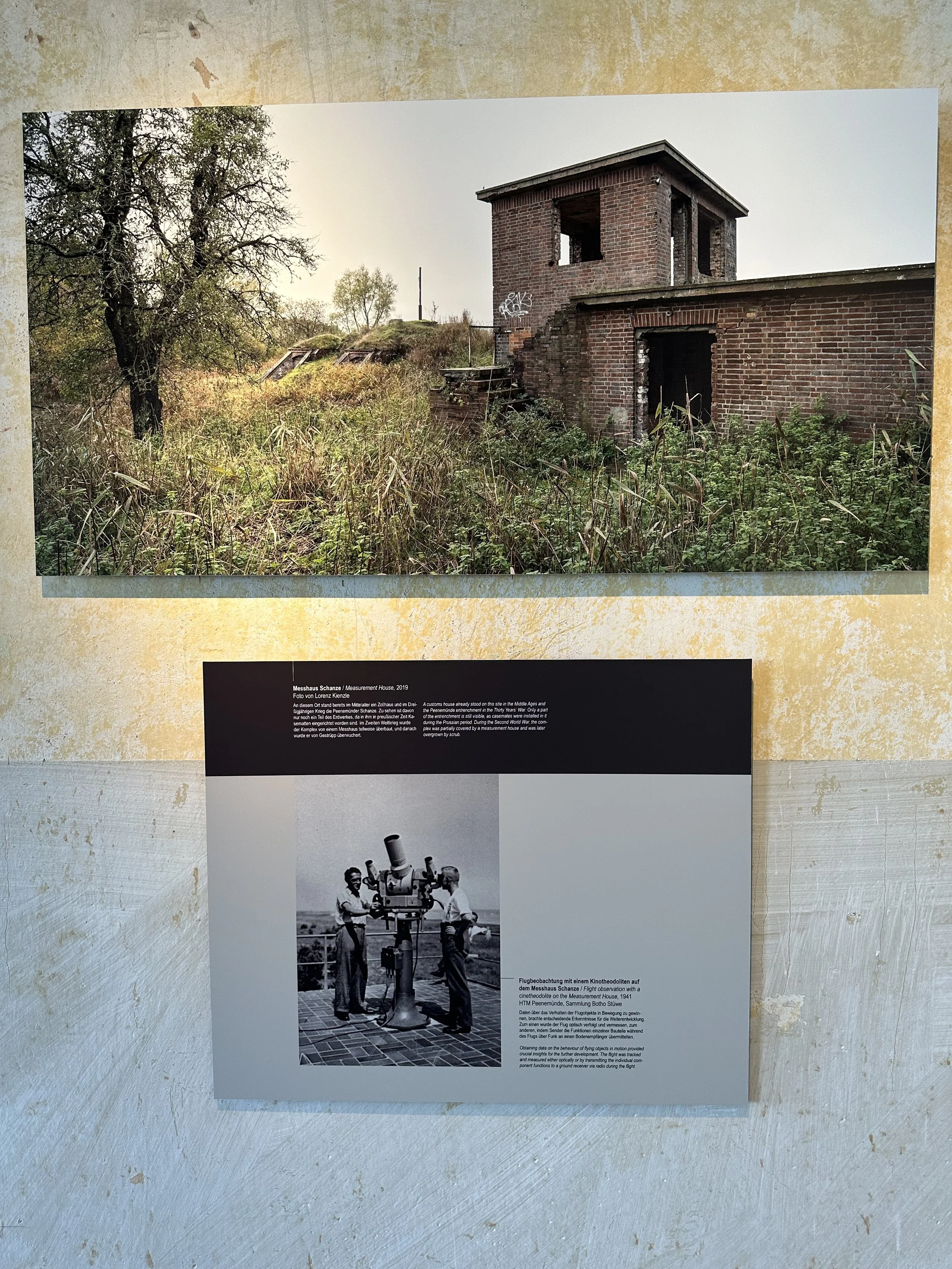
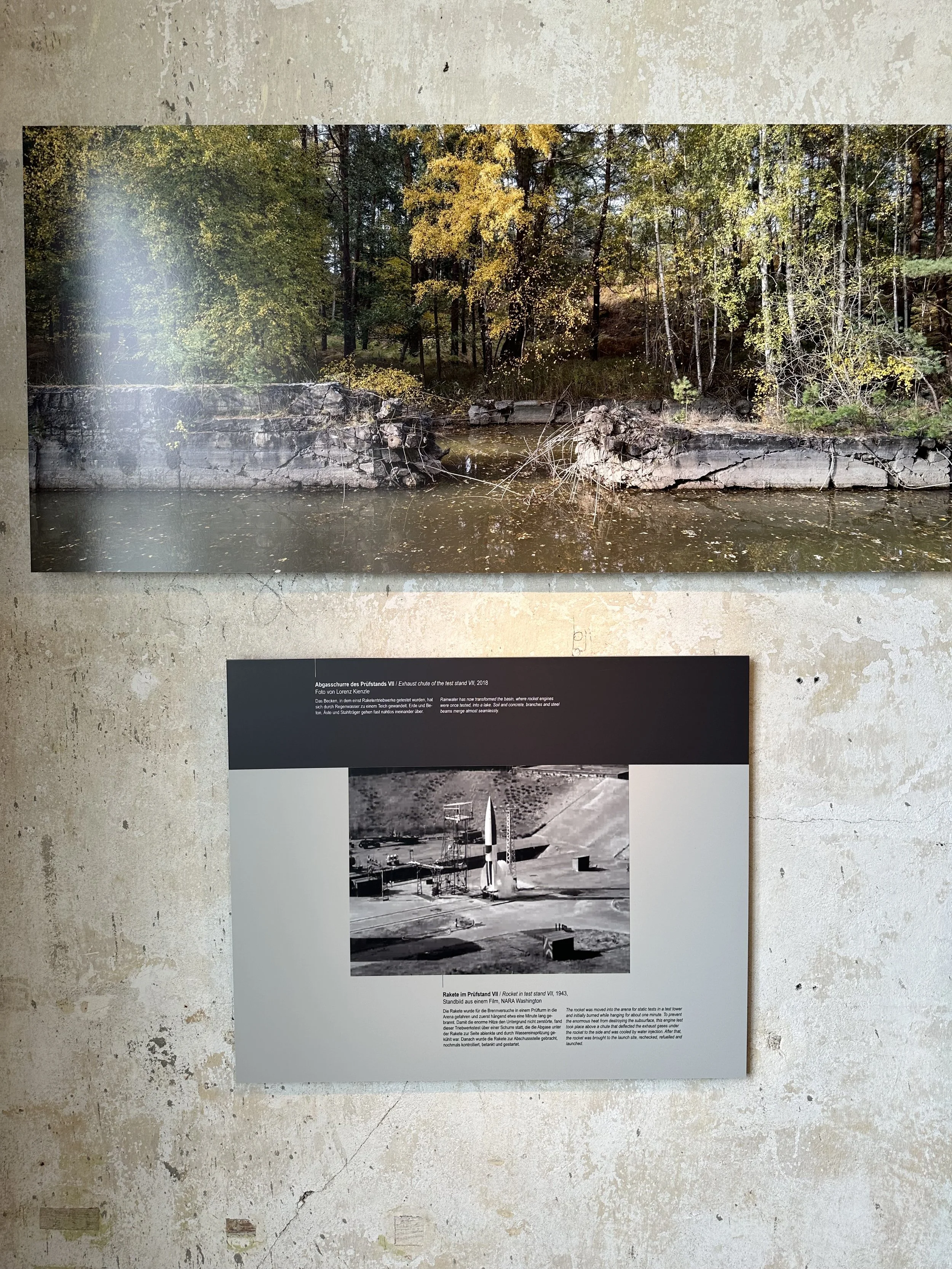
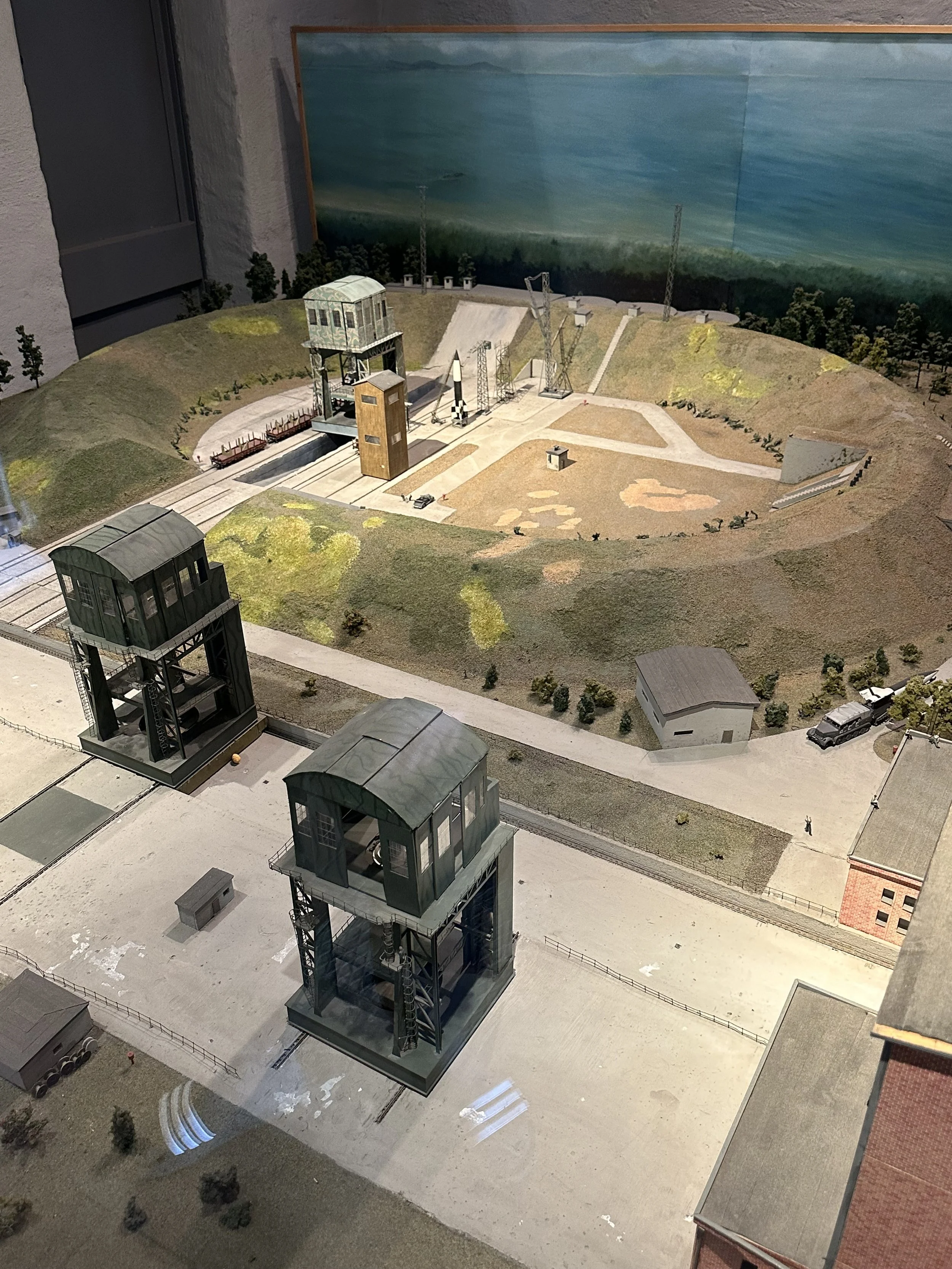
Several German guided missiles and rockets of World War II were developed by the facility in Peenemunde, including the V-2 rocket (A-4). The facility also performed preliminary design work on very-long-range missiles for use against the United States. That project was sometimes called "V-3" and its existence is well documented. The Peenemünde establishment also developed other technologies such as the first closed-circuit television system in the world, installed at Test Stand VII to track the launching rockets.
The supersonic wind tunnel at Peenemünde's "Aerodynamic Institute" eventually had nozzles for speeds up to the record speed of Mach 4.4 (in 1942 or 1943), as well as an innovative desiccant system to reduce the condensation clouding caused by the use of liquid oxygen, in 1940.
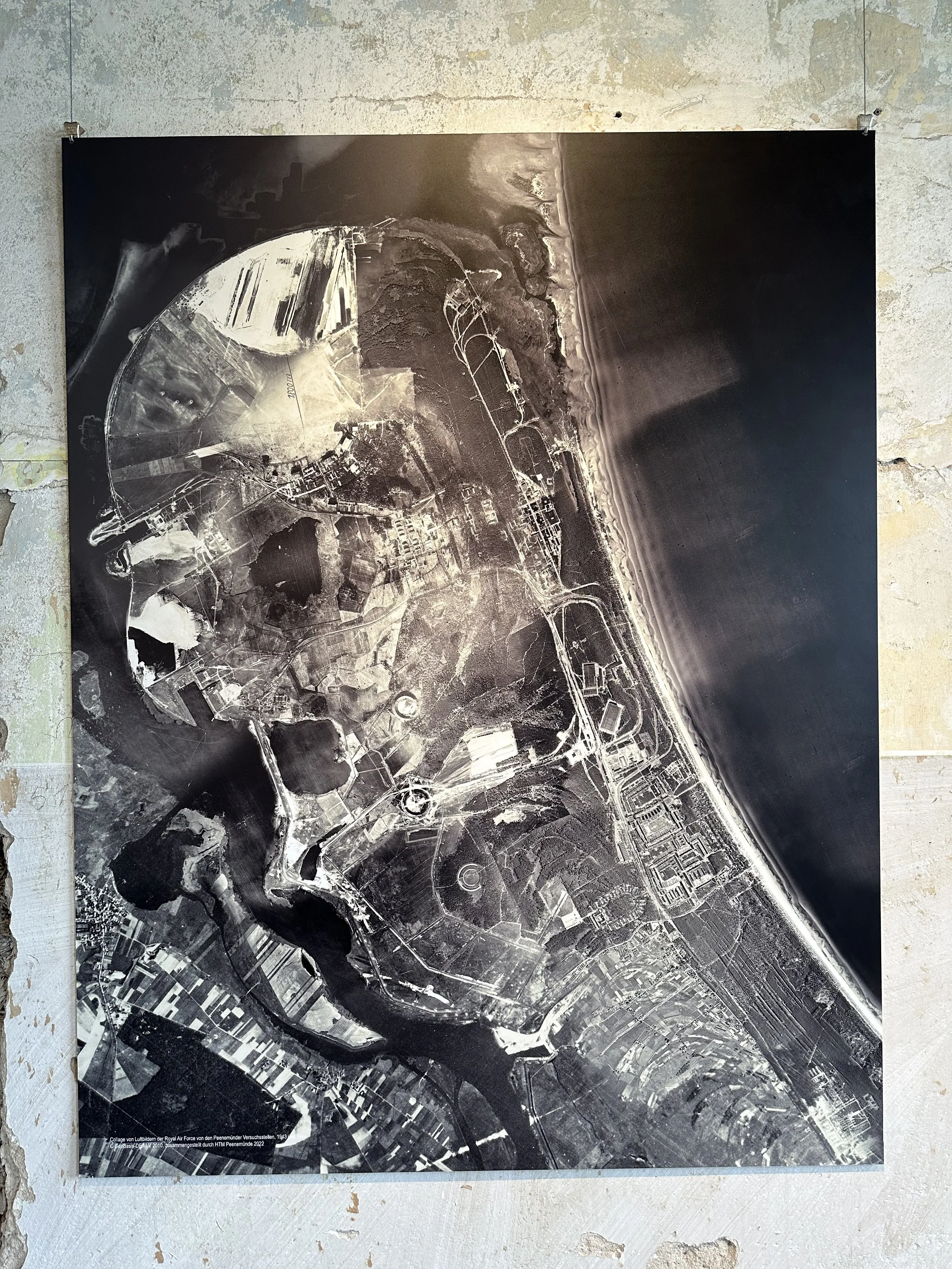
The RAF Bomber Command attacked the Peenemunde facility on the night of 17/18 August 1943 in Operation Hydra. Hydra was the first operation against the German V-weapon programme. The British lost 40 bombers and 215 aircrew, and several hundred enslaved workers in the nearby Trassenheide forced labour camp were killed. The Luftwaffe lost twelve night-fighters and about 170 German civilian personnel were killed, including two V-2 rocket scientists.
For more information see the museum’s webpage: https://museum-peenemuende.de
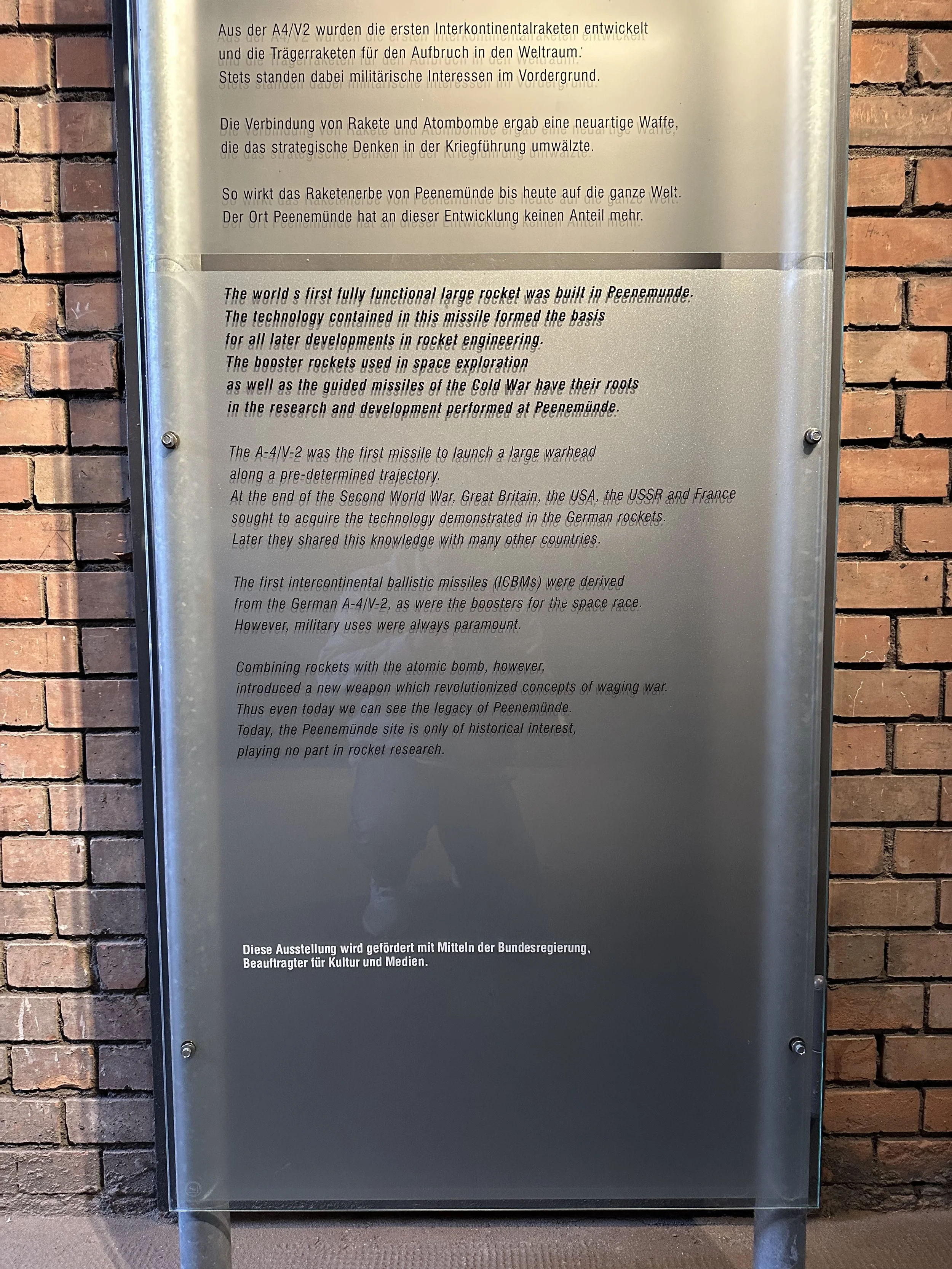
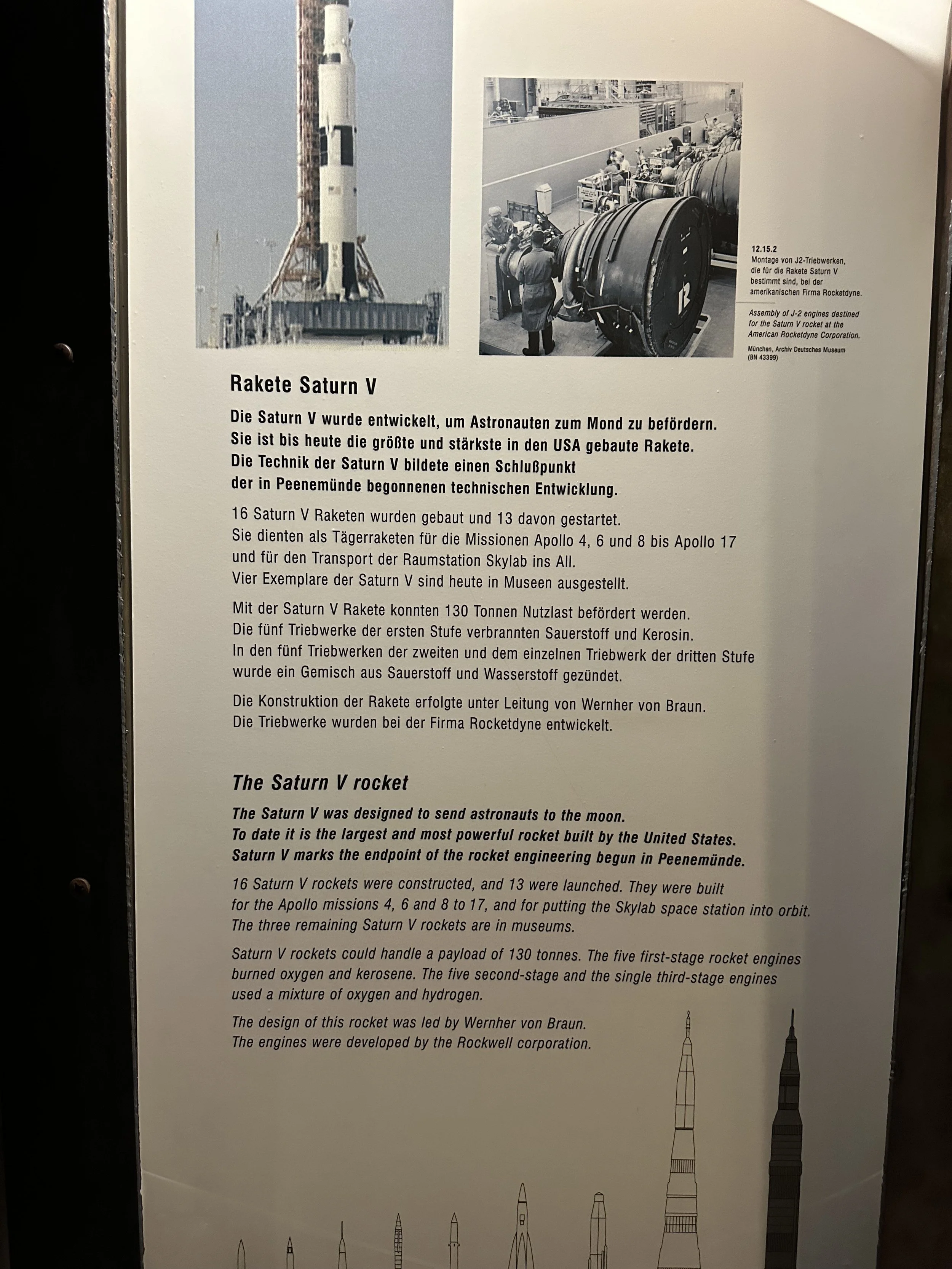
The research and development carried out in Peenemünde was not only crucial to the course of WWII, but impacted the future of weapons of mass destruction, as well as space travel.
The areal photos used by RAF in planning of bombing raids.
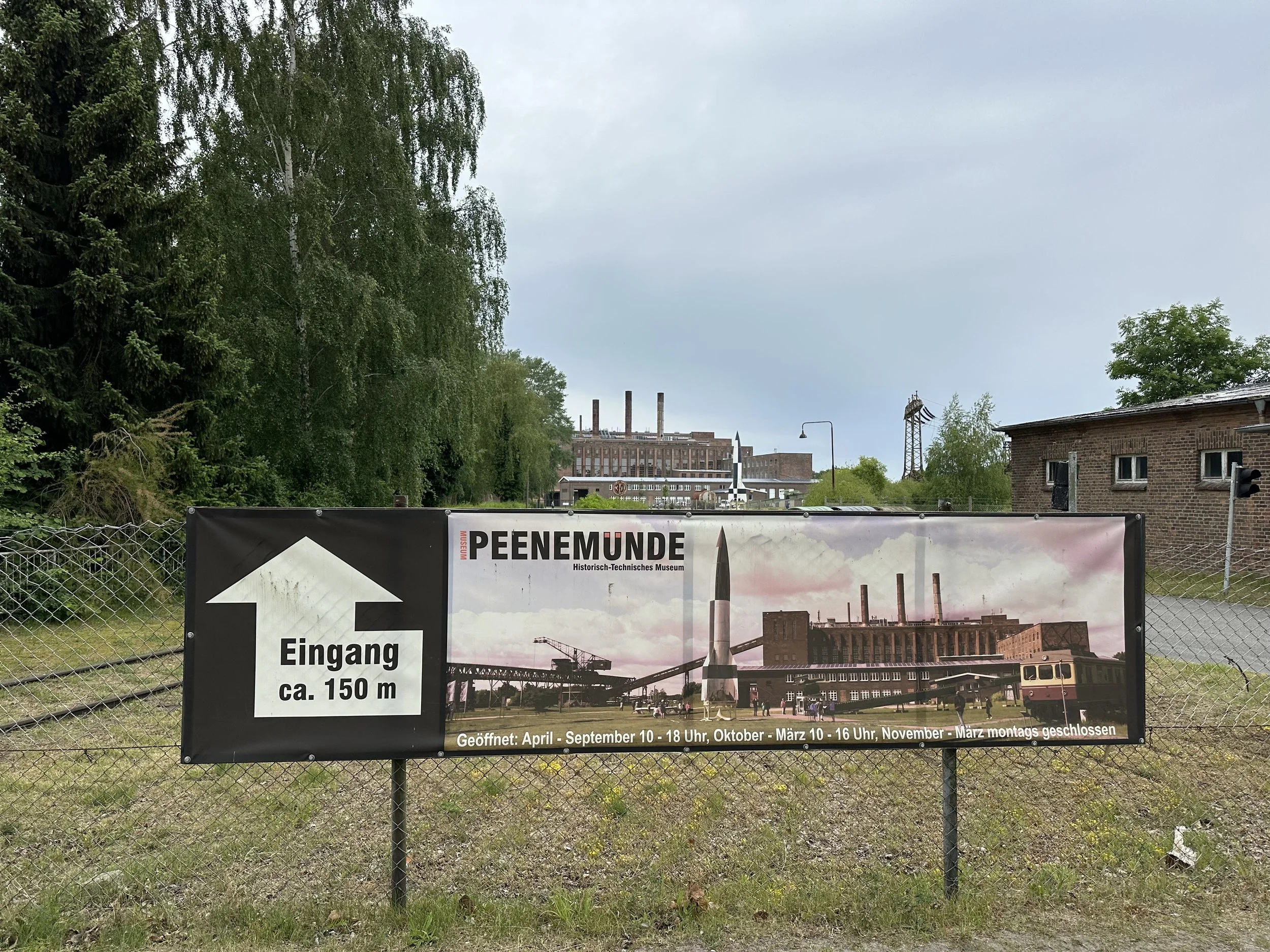
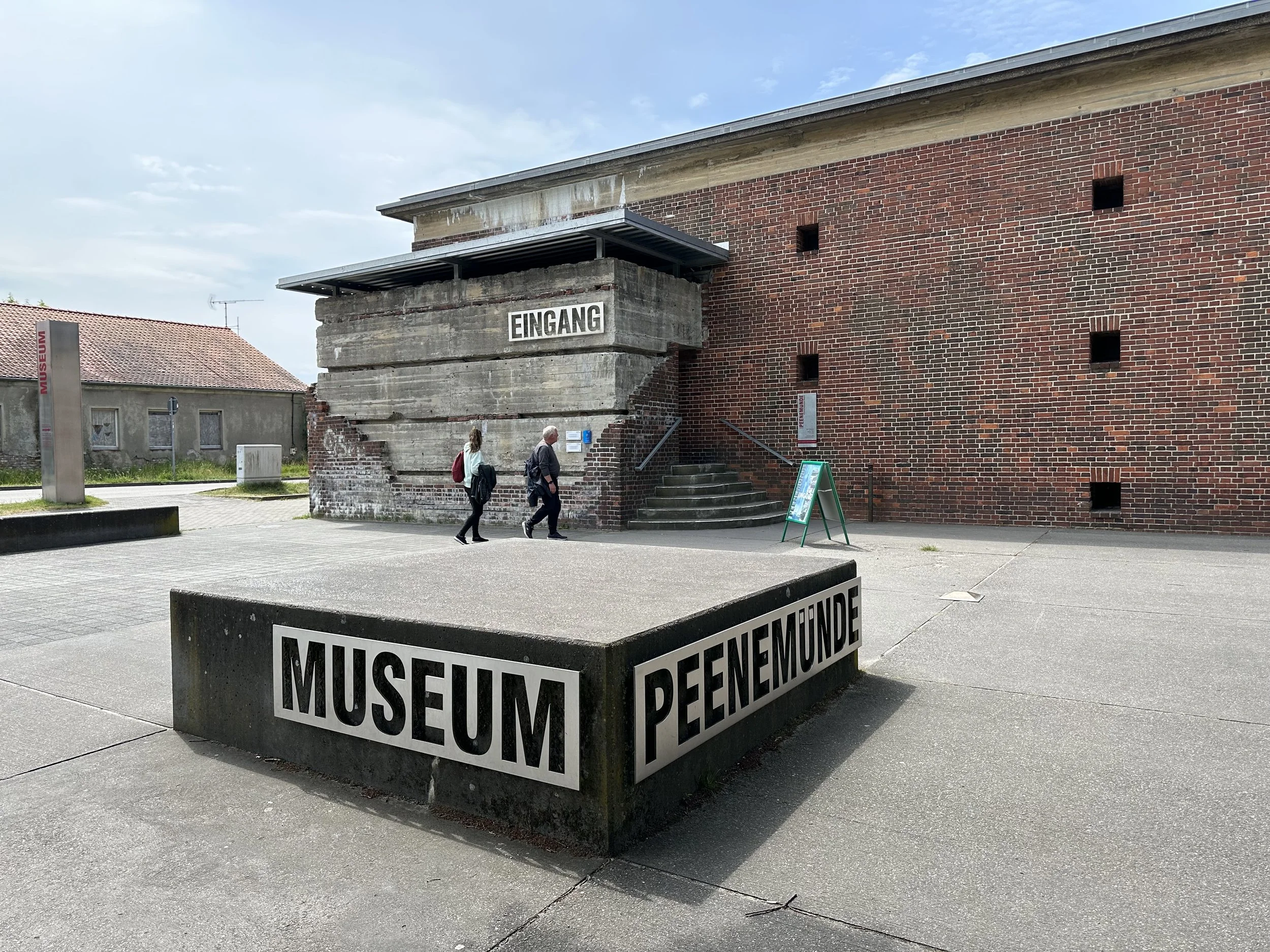
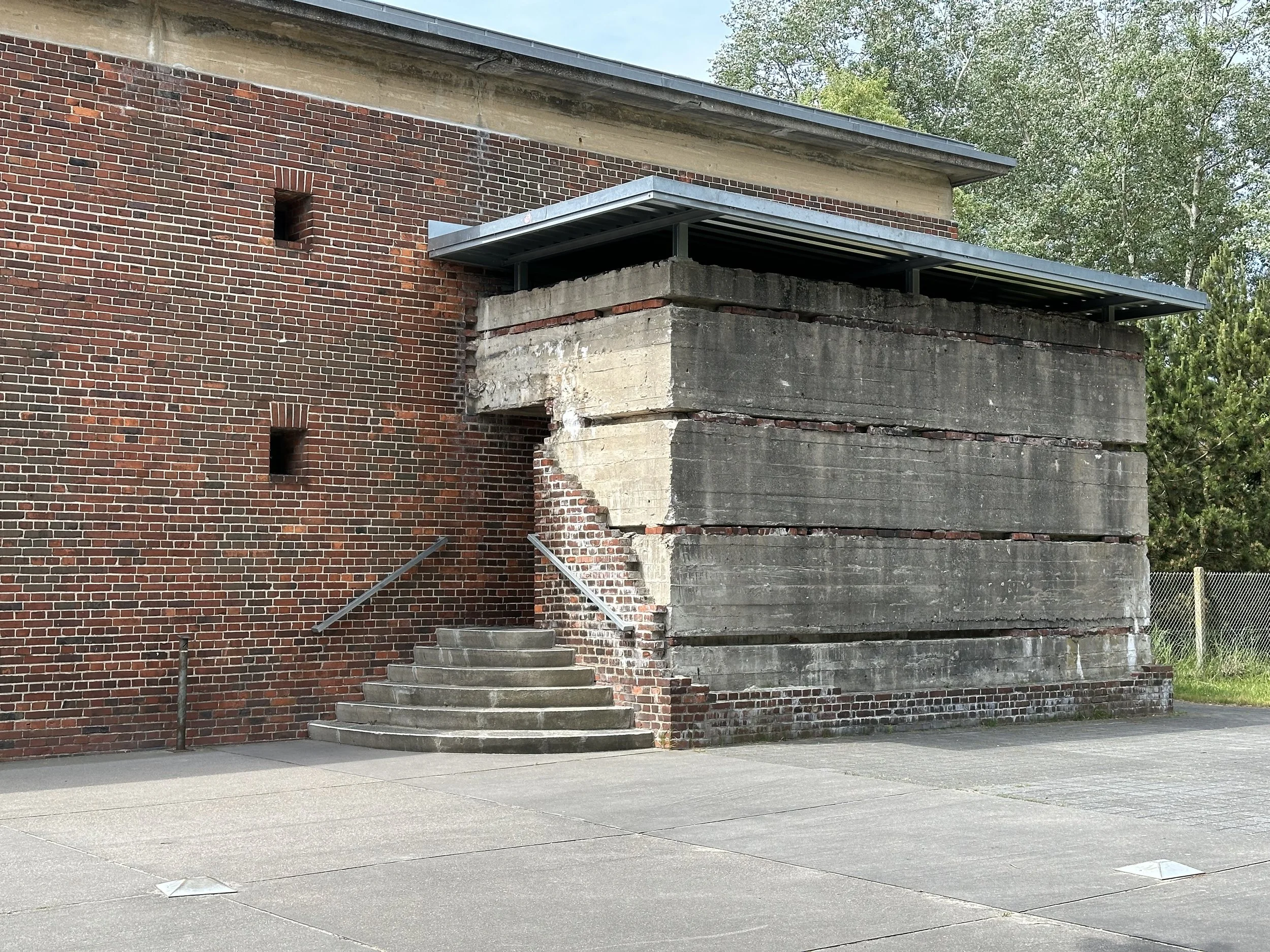
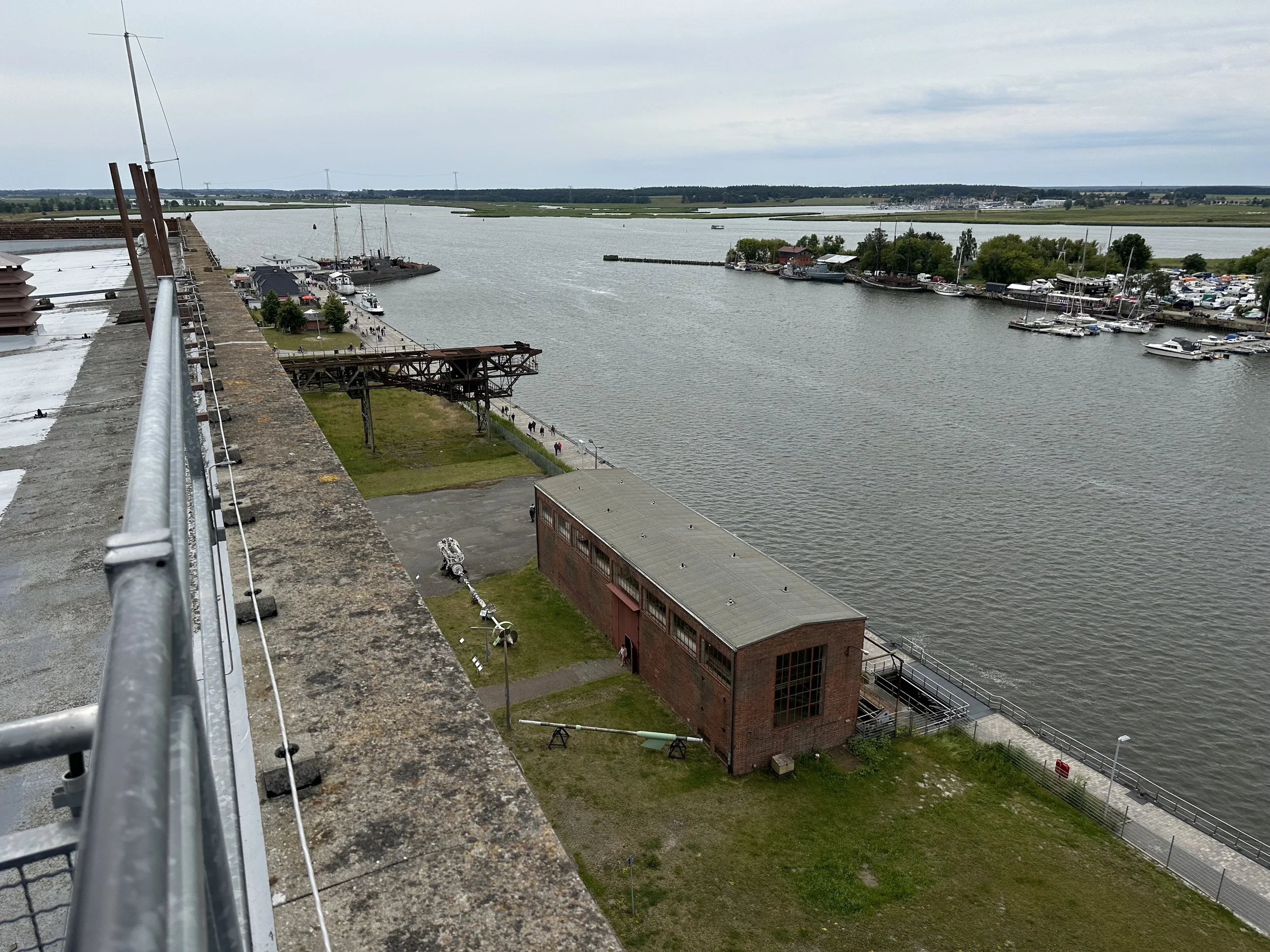
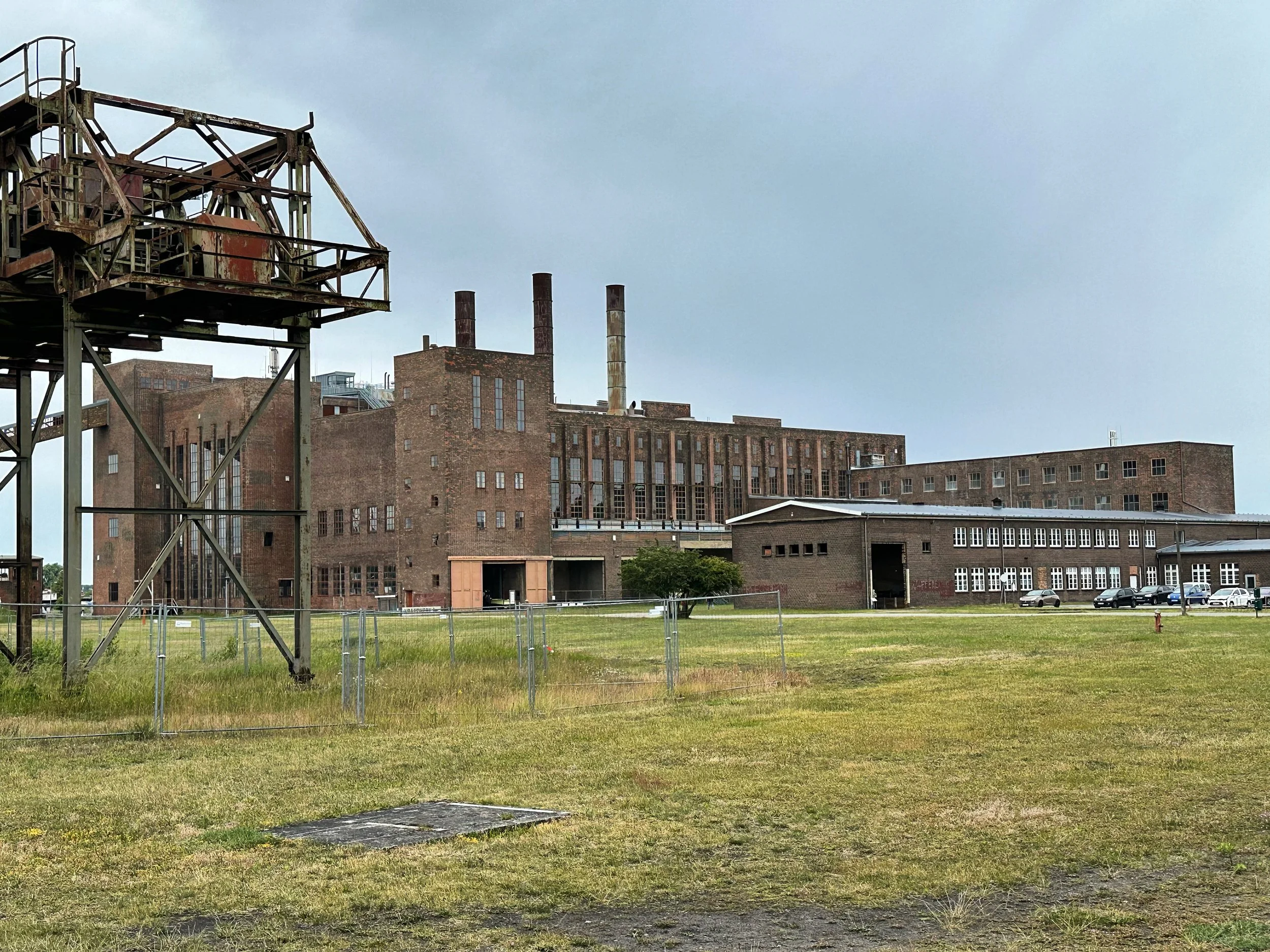
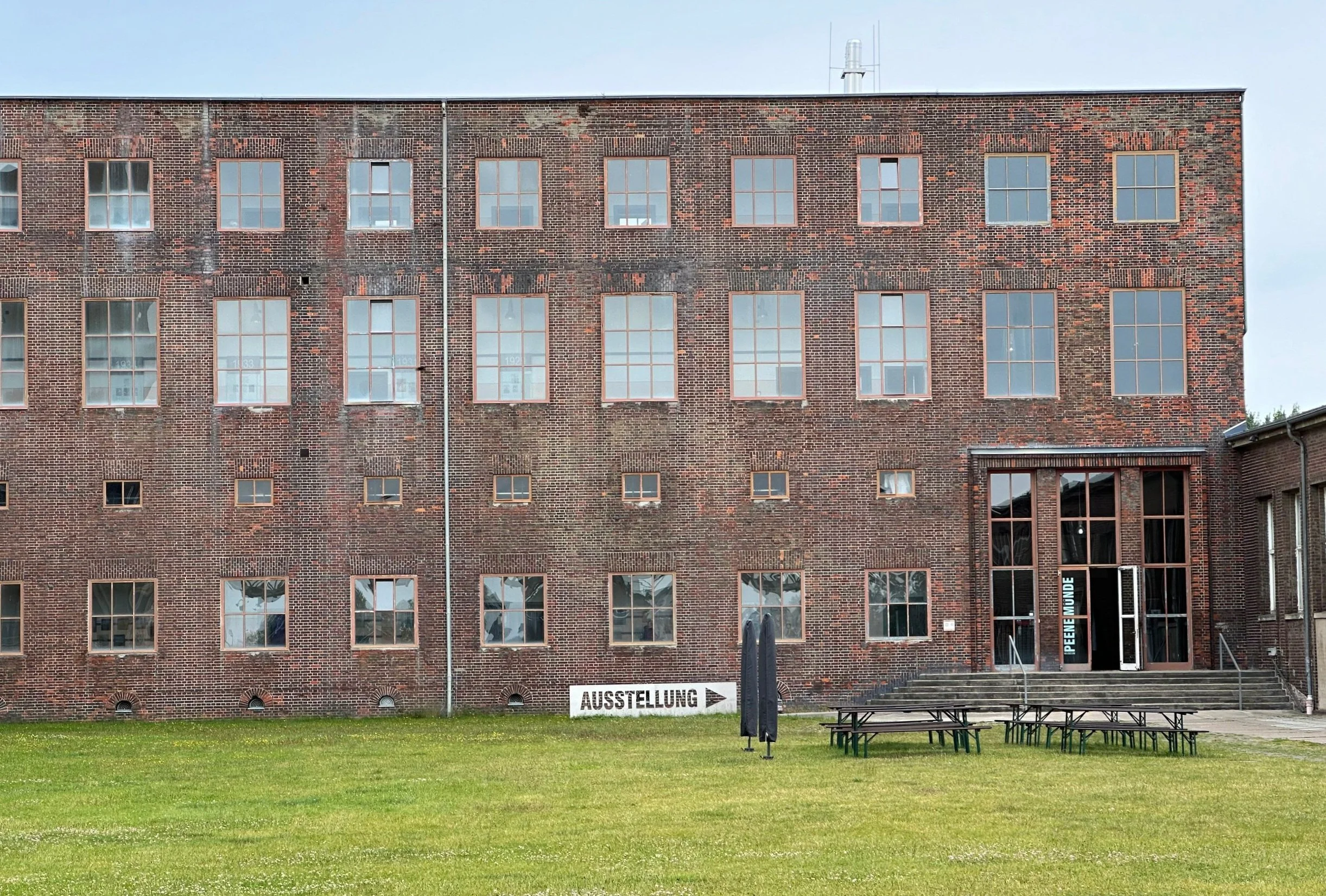
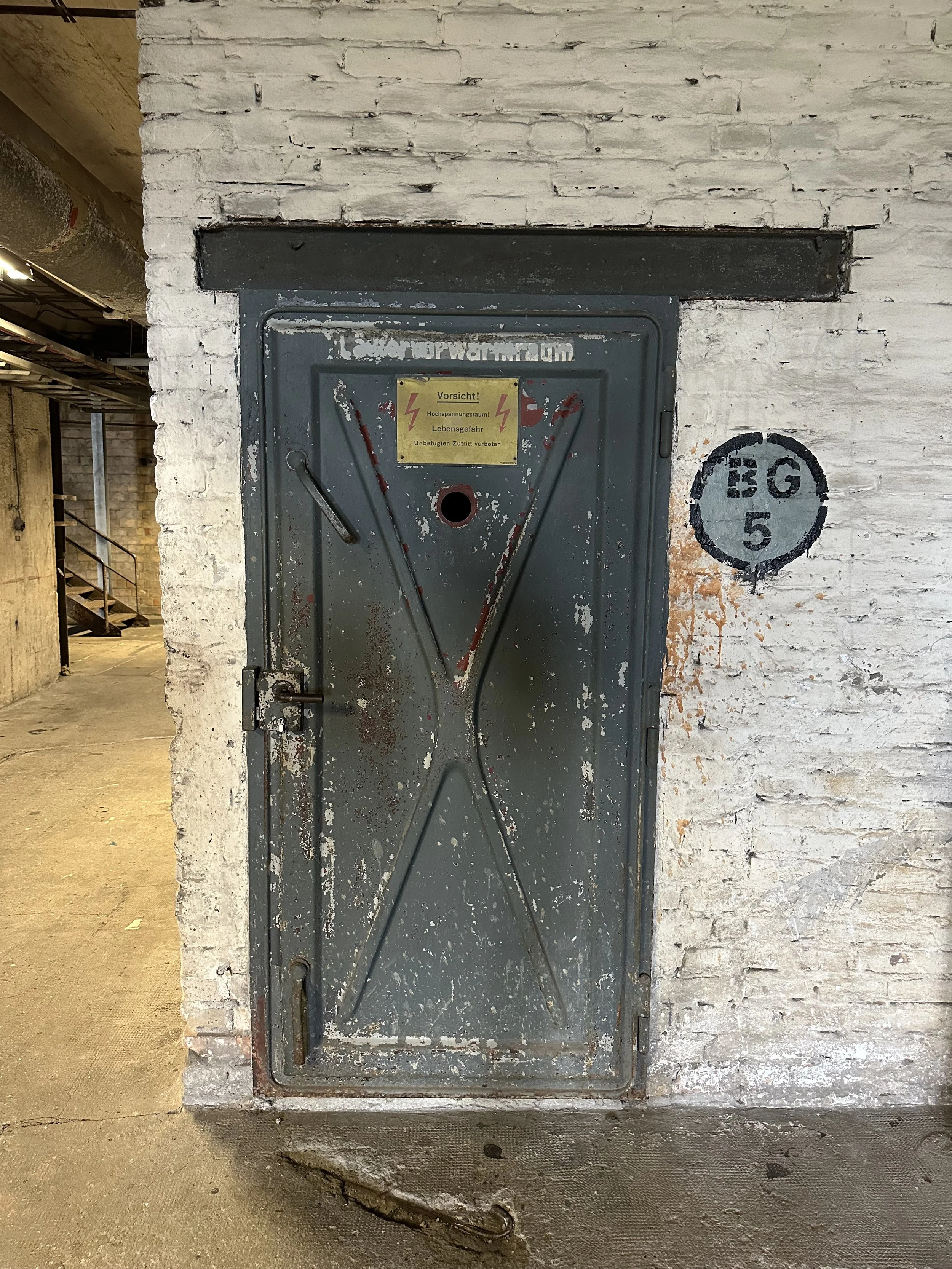
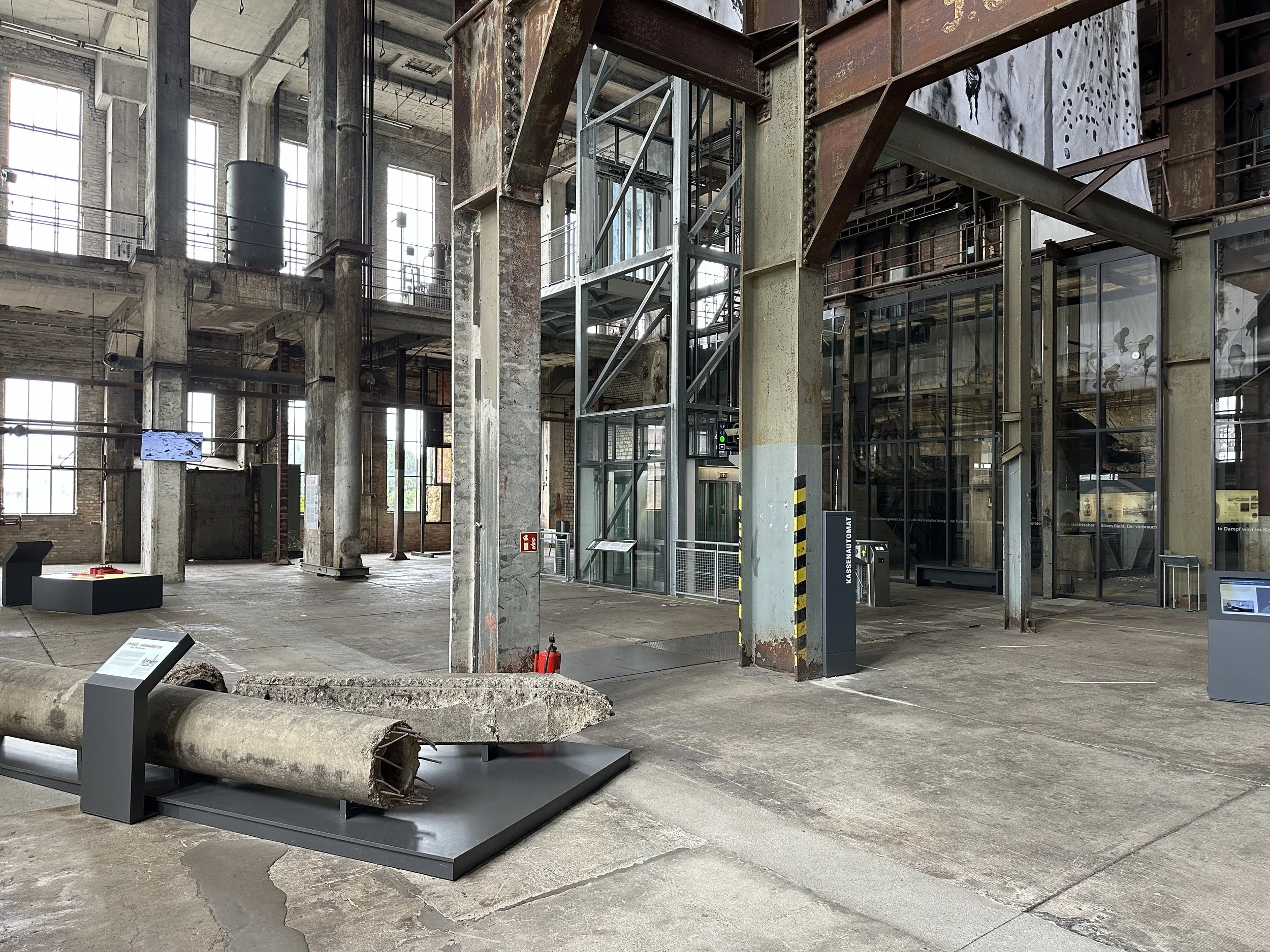
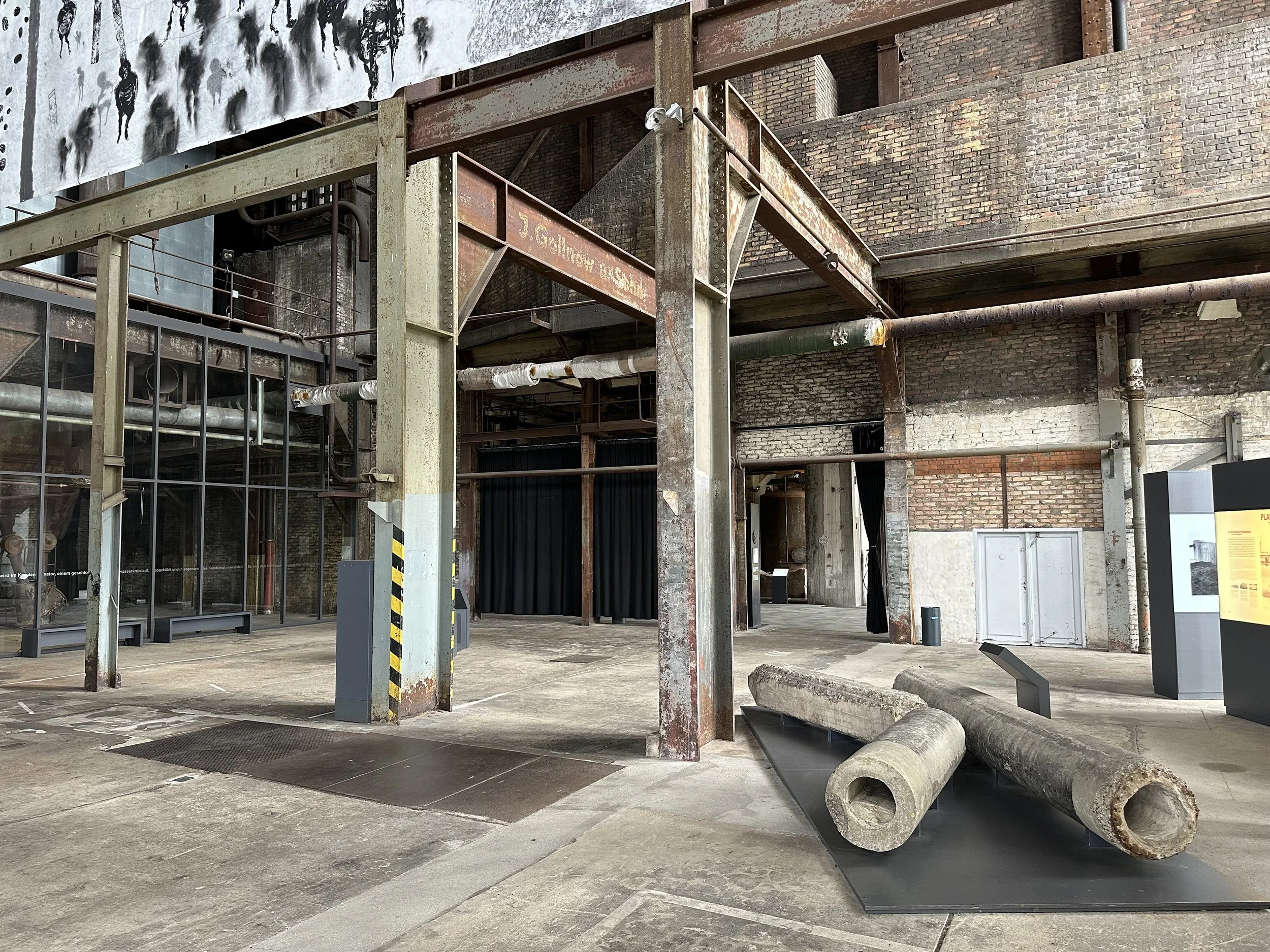
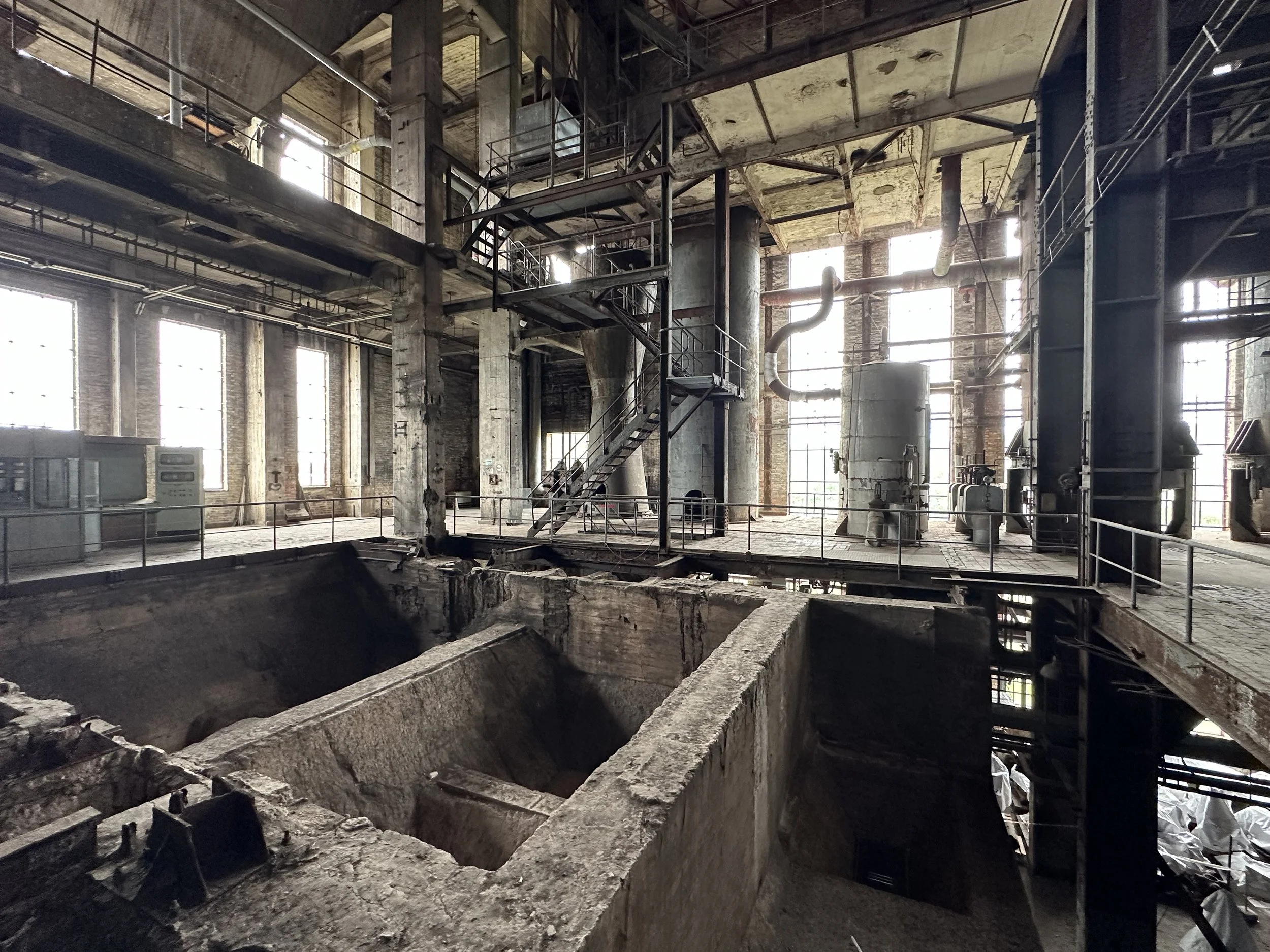
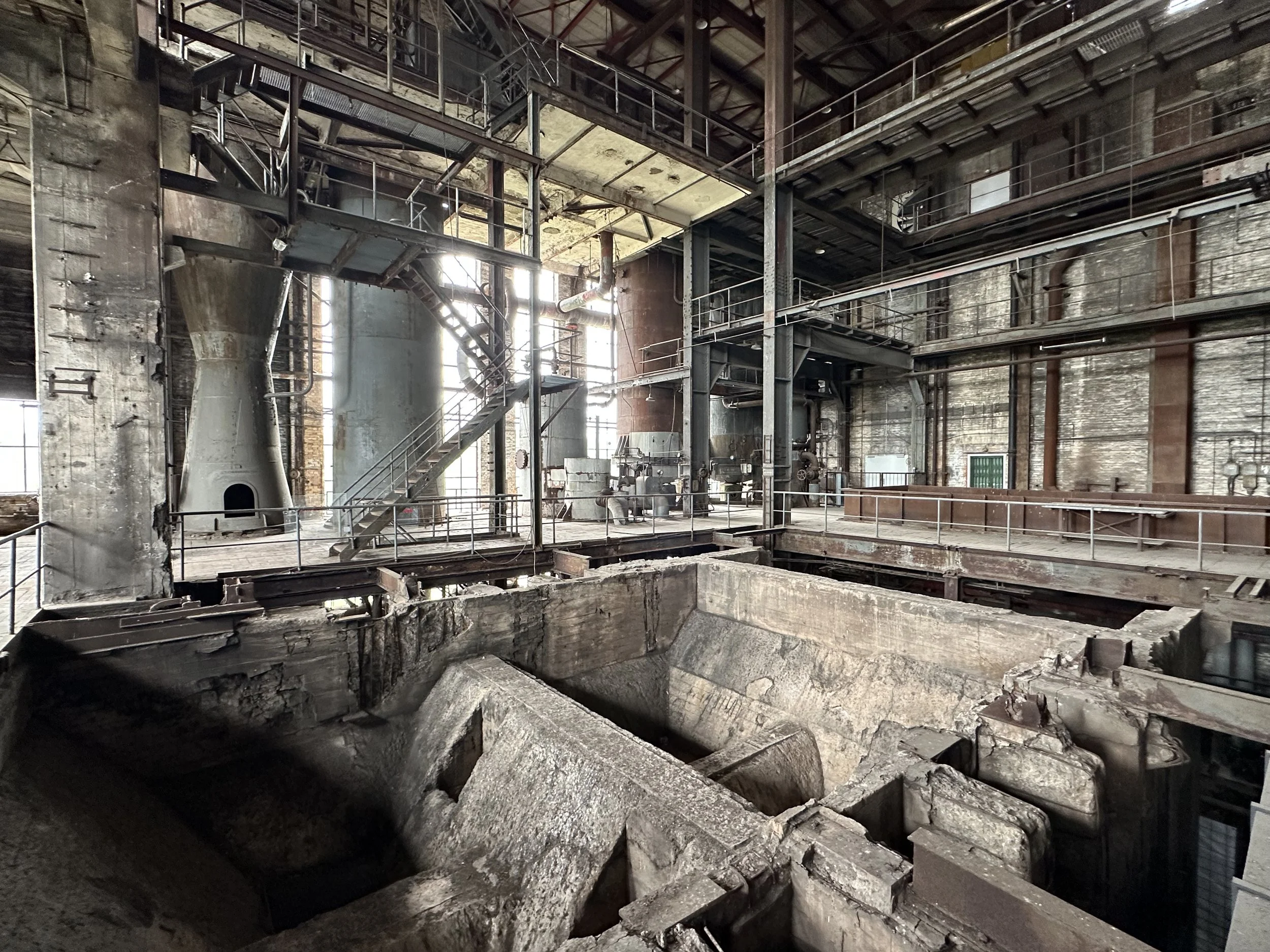
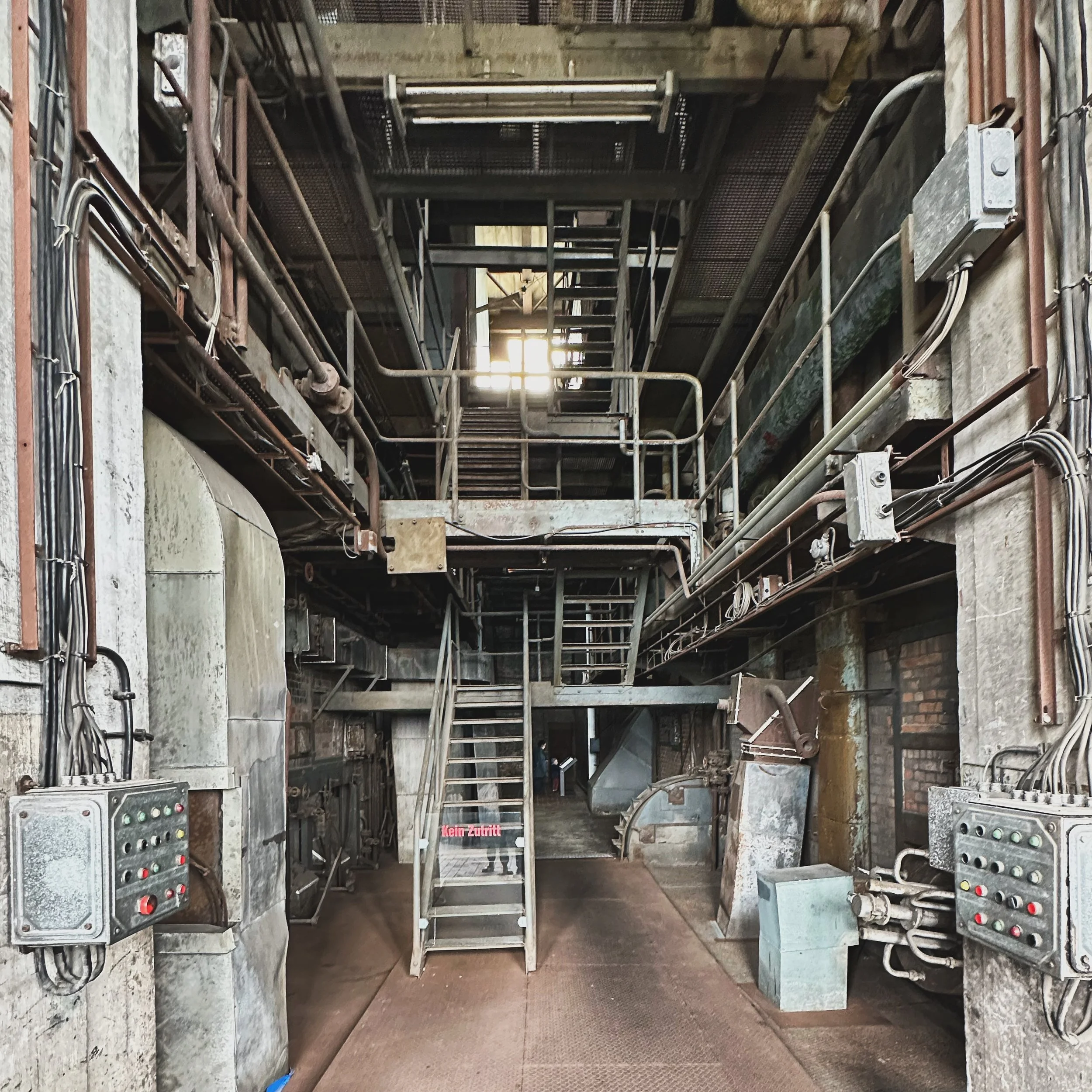
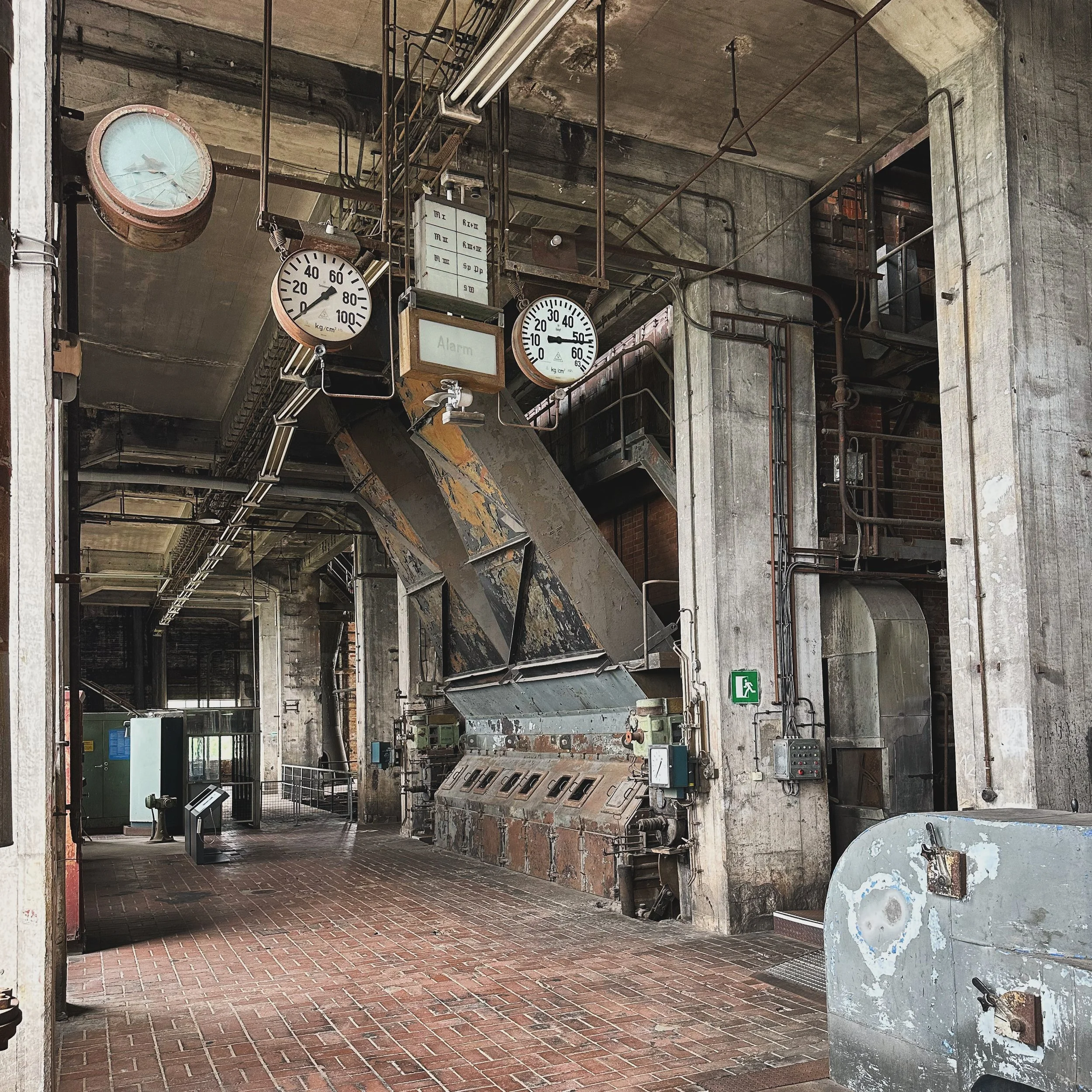
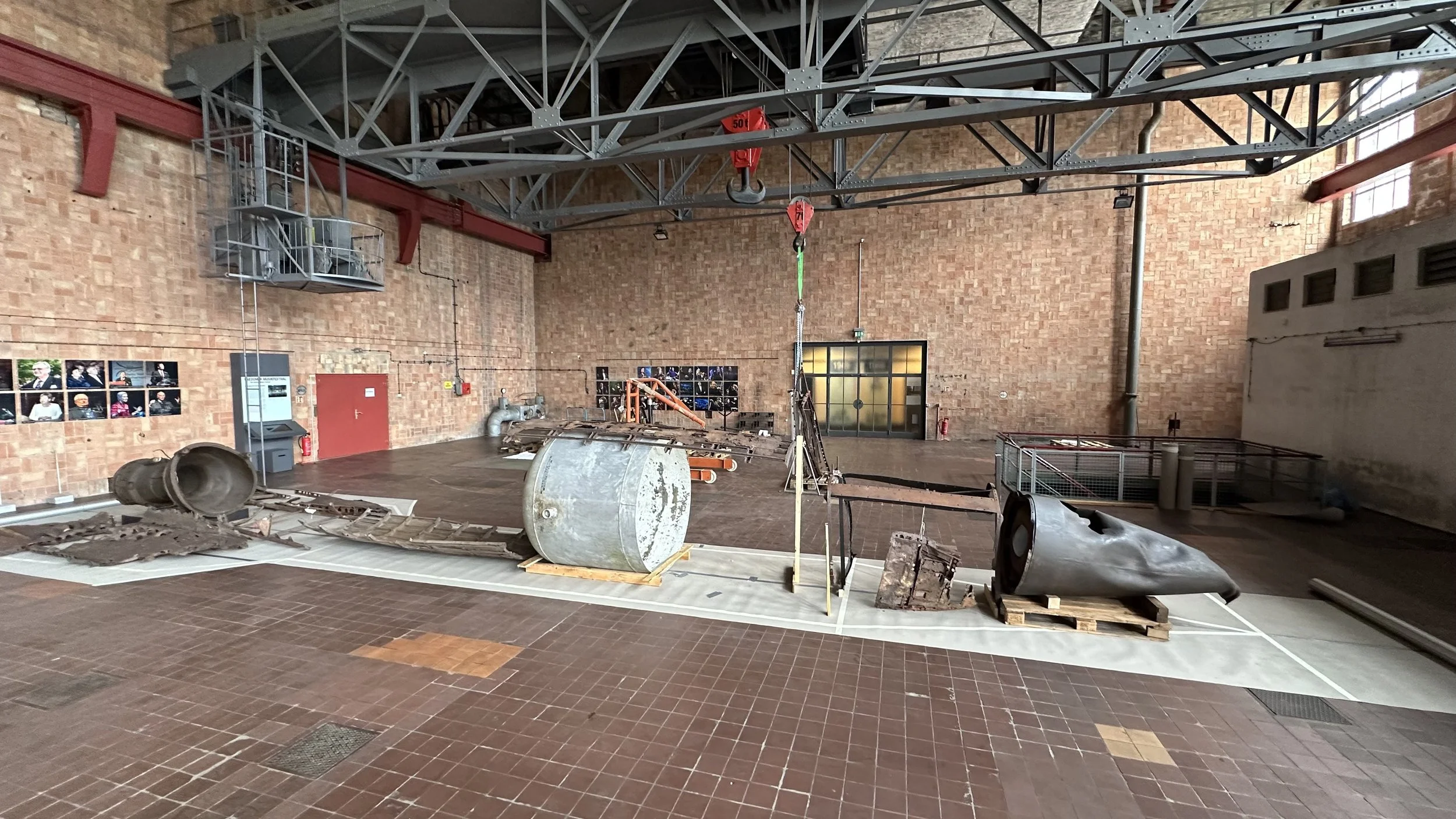
The former power plant is still intact and was in use up until 1990. It now houses a technical museum, the Peenemünde Historisch-Technisches Museum, devoted to the science, development and construction of the rockets at Peenemünde.
The building housing main exhibits of the museum.
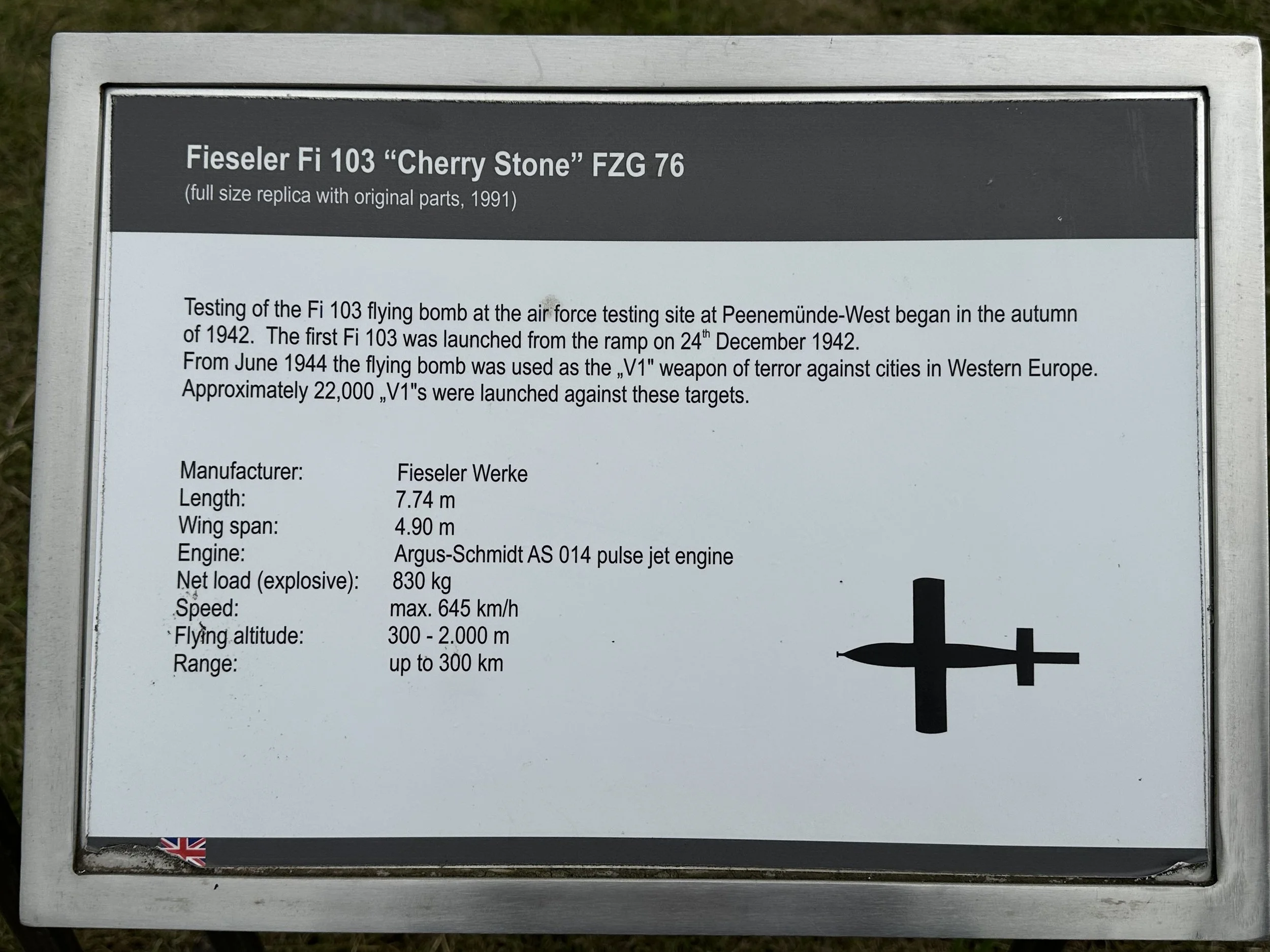
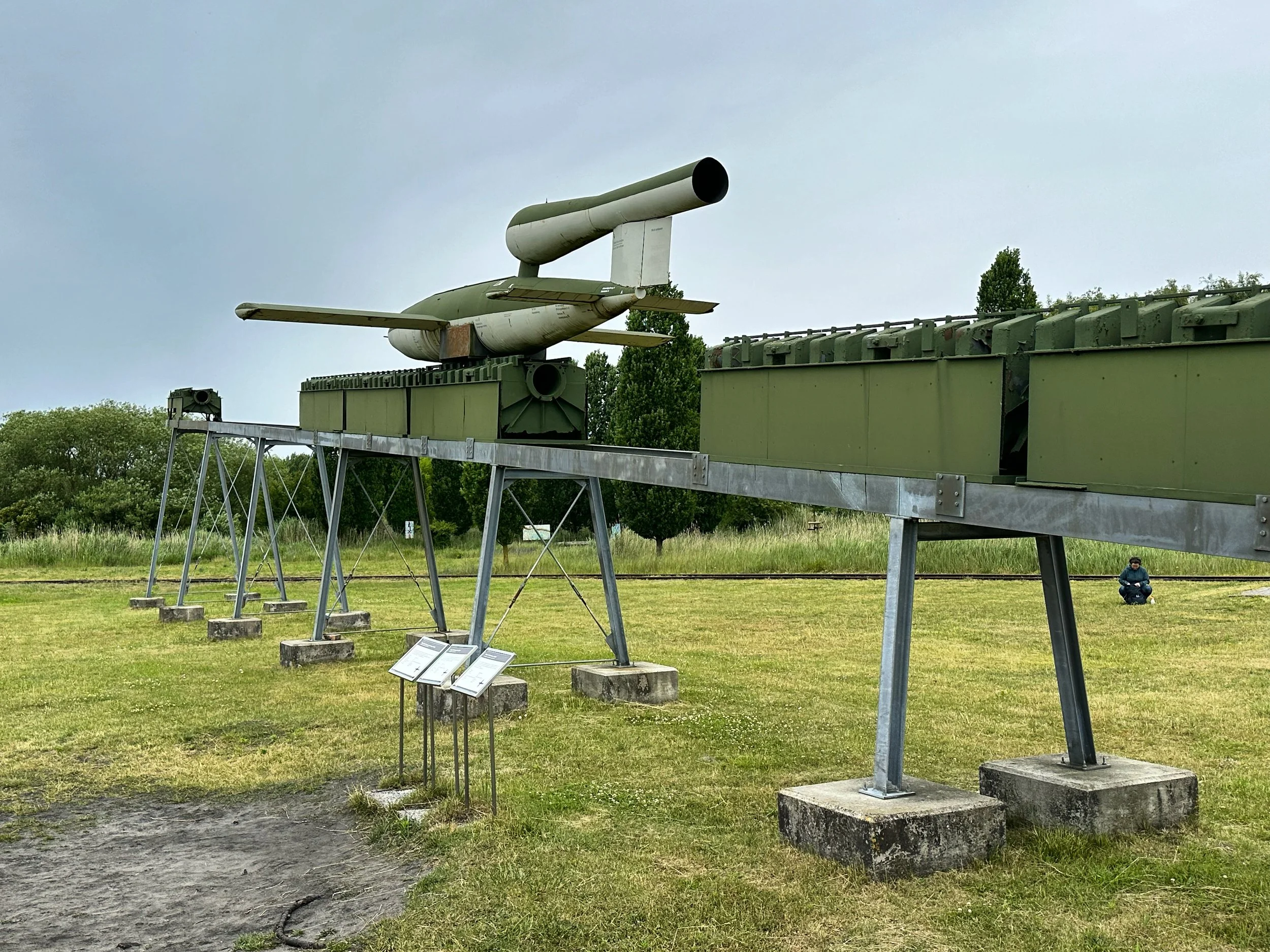
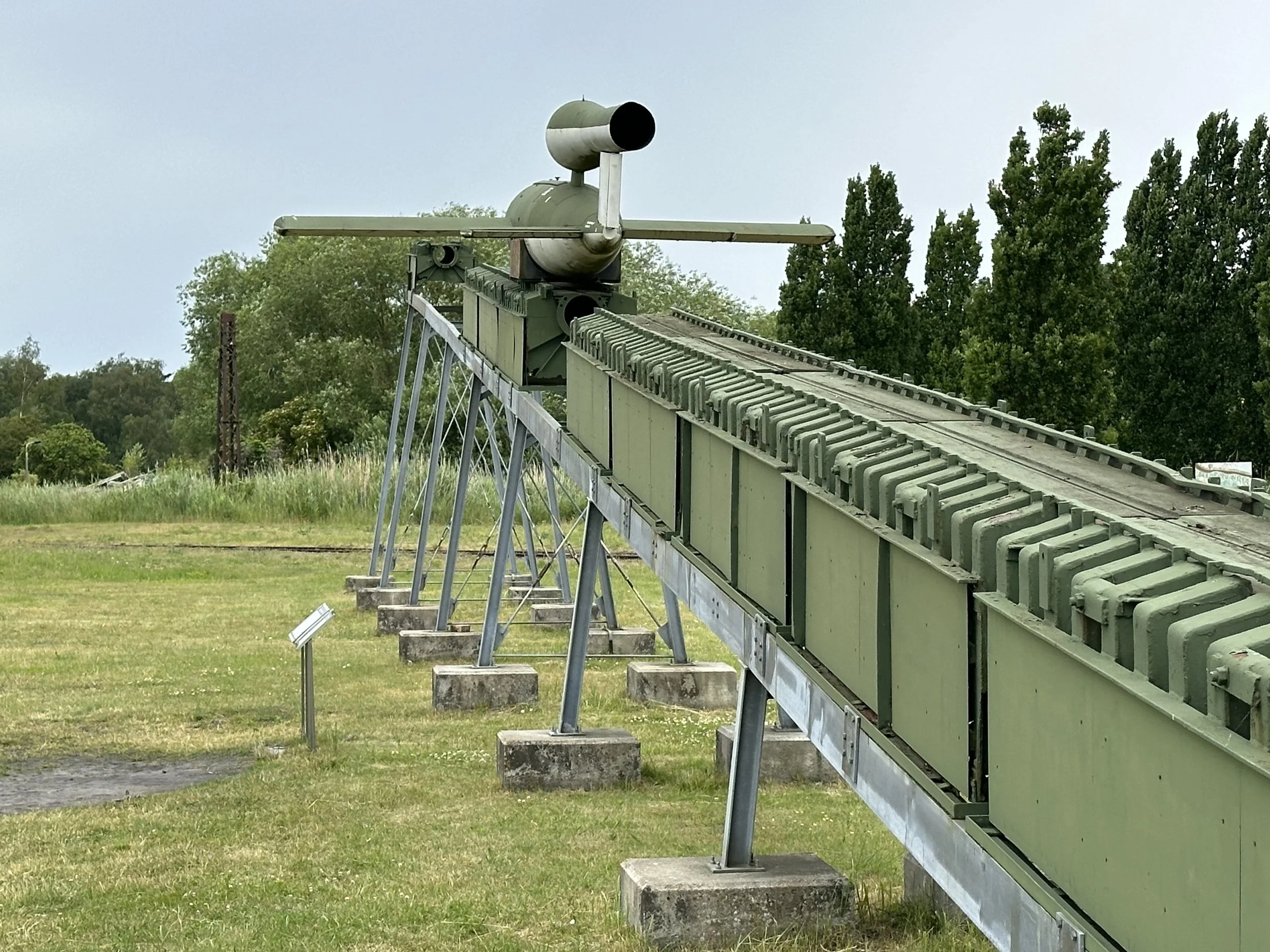
V1
V1
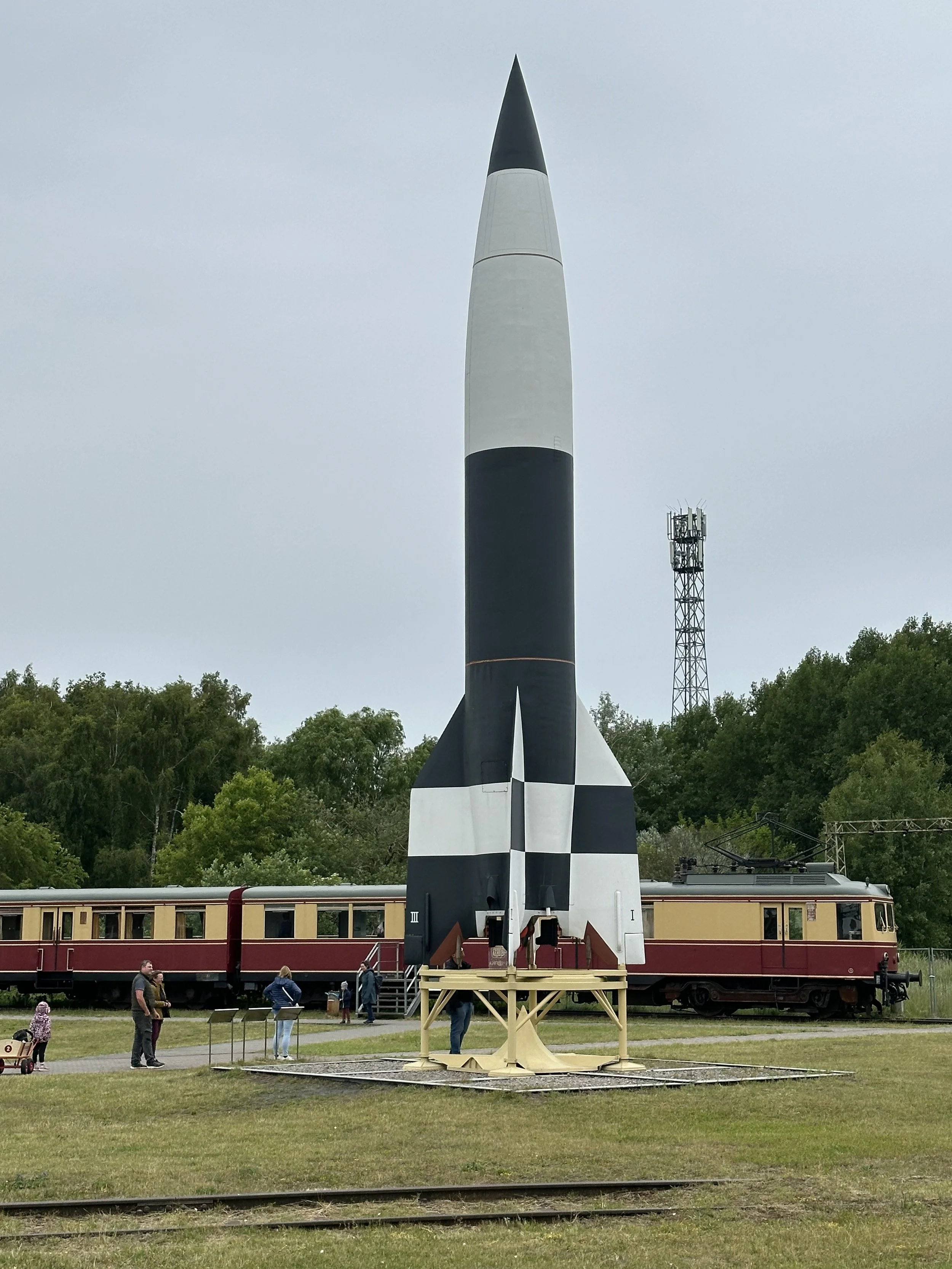
Replica of the V2 rocket. True to size.
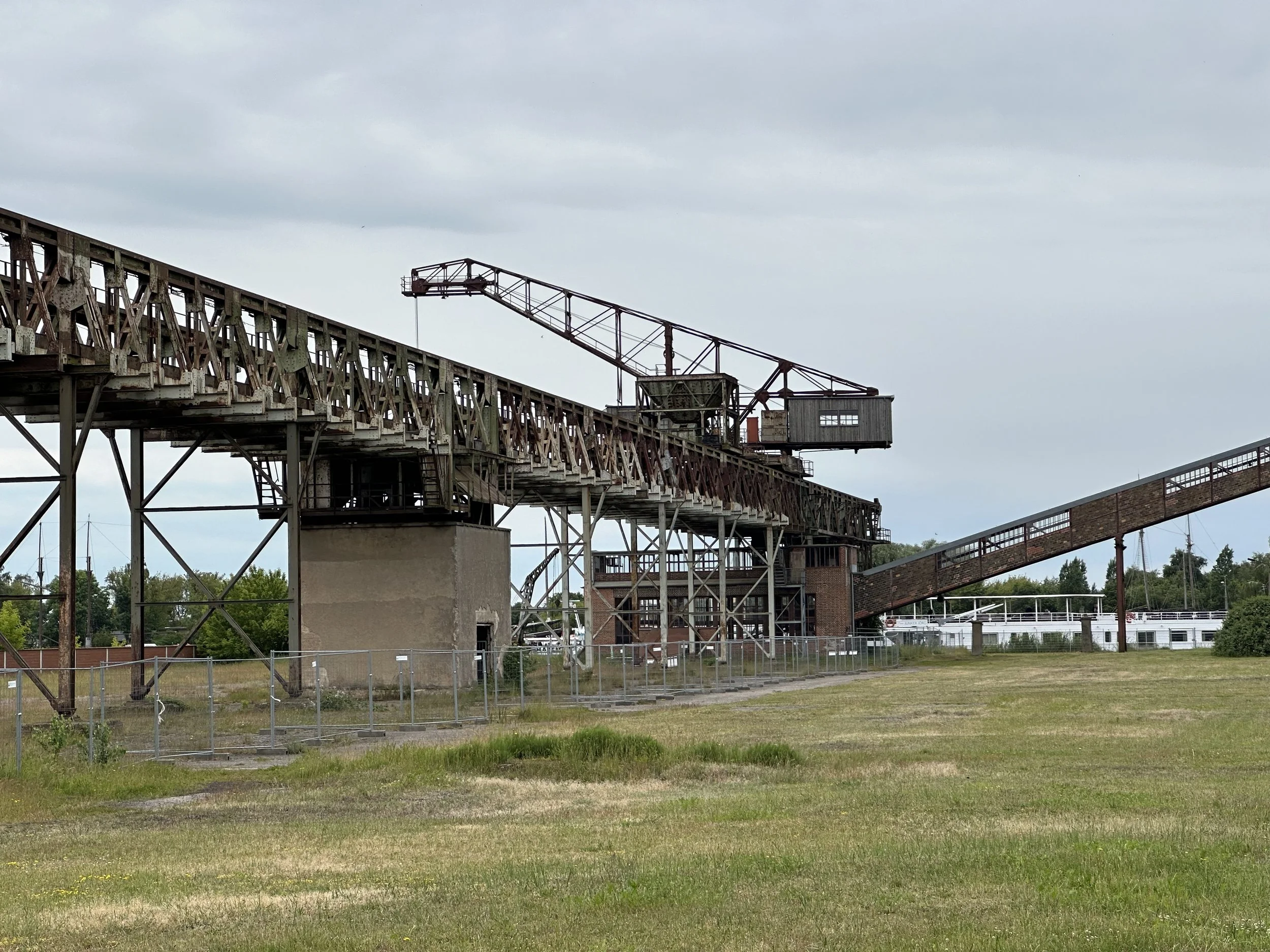
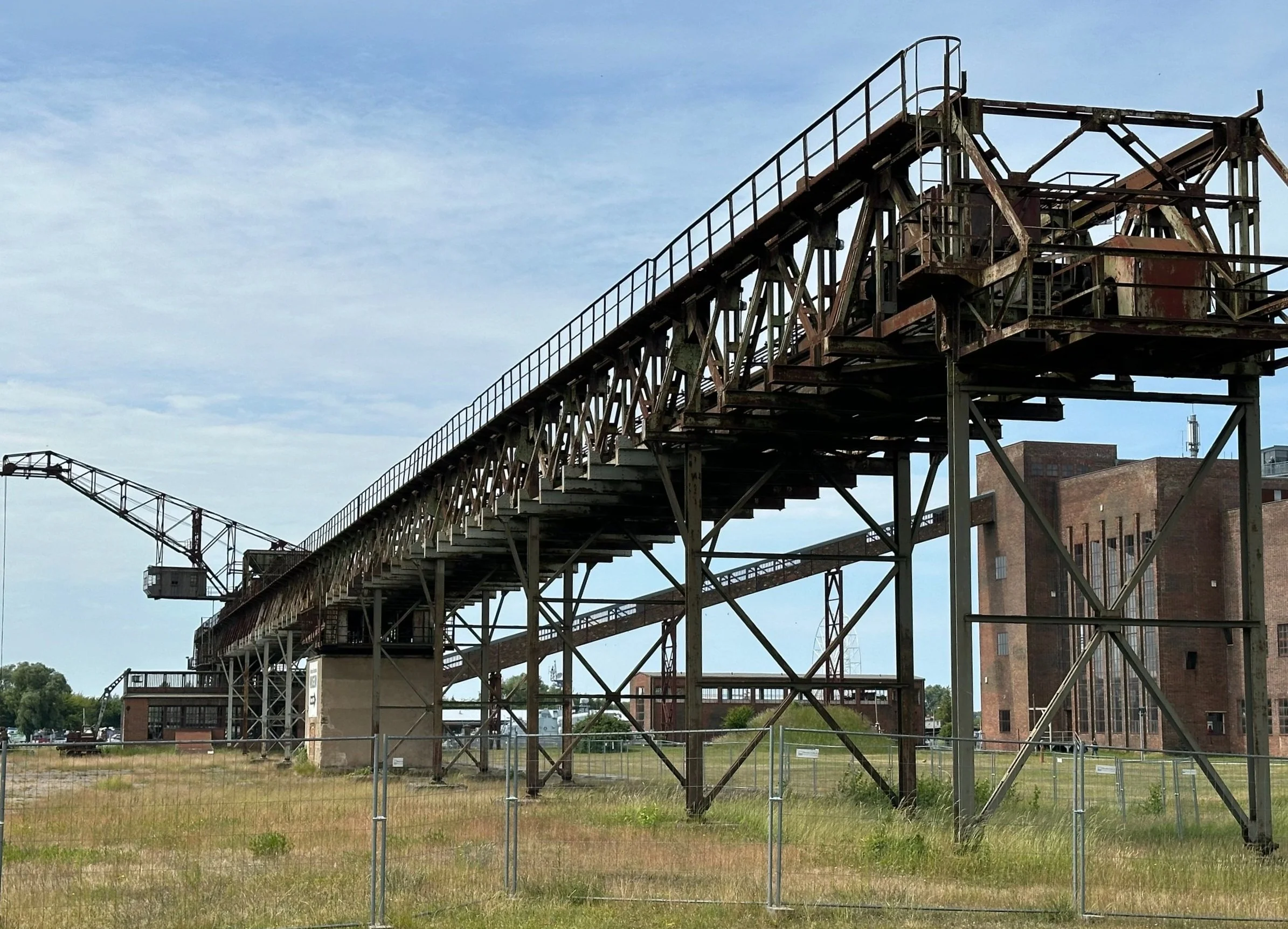
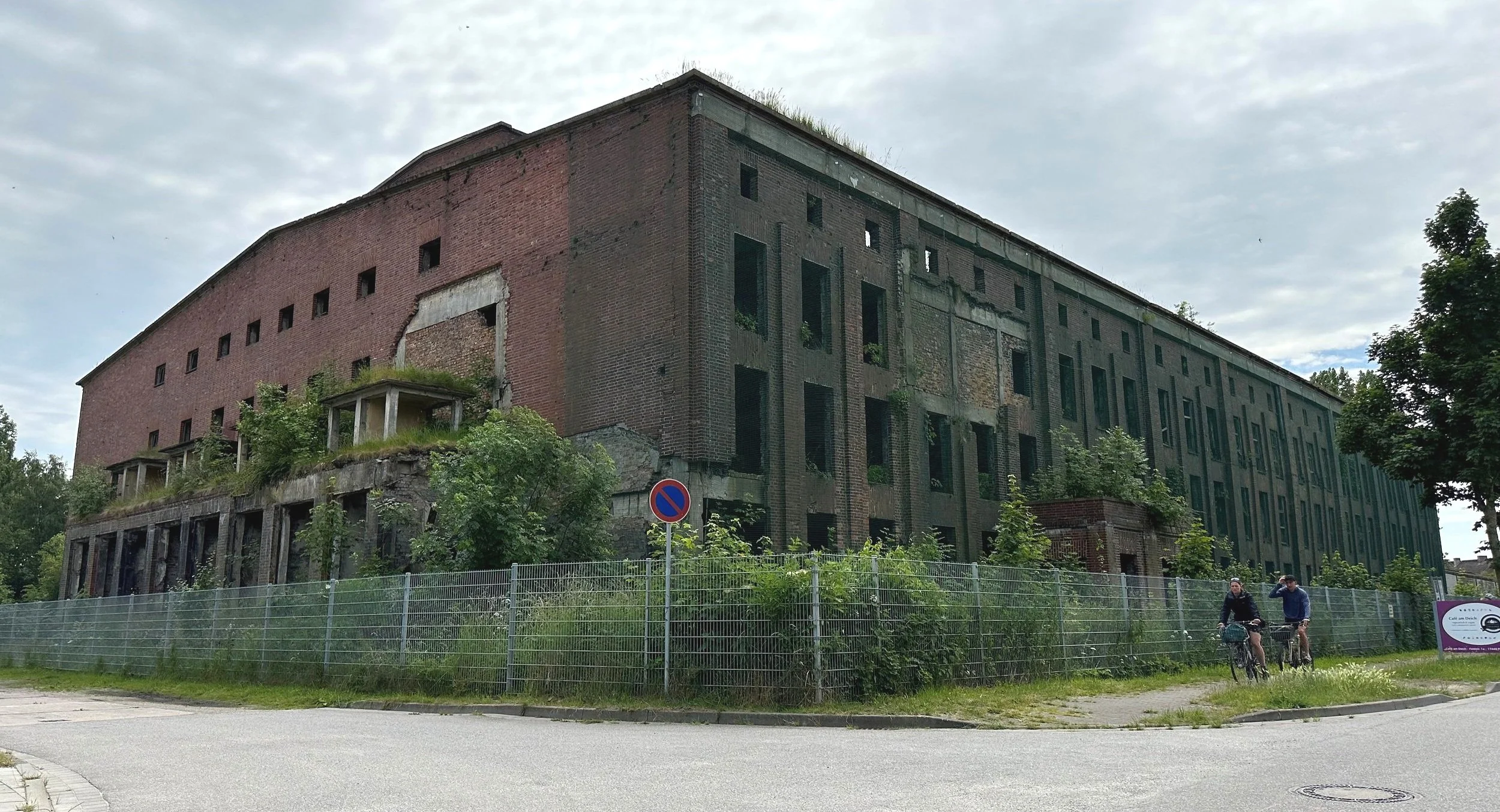
The ruins of the liquid oxygen fuel production plant in Peenemunde.
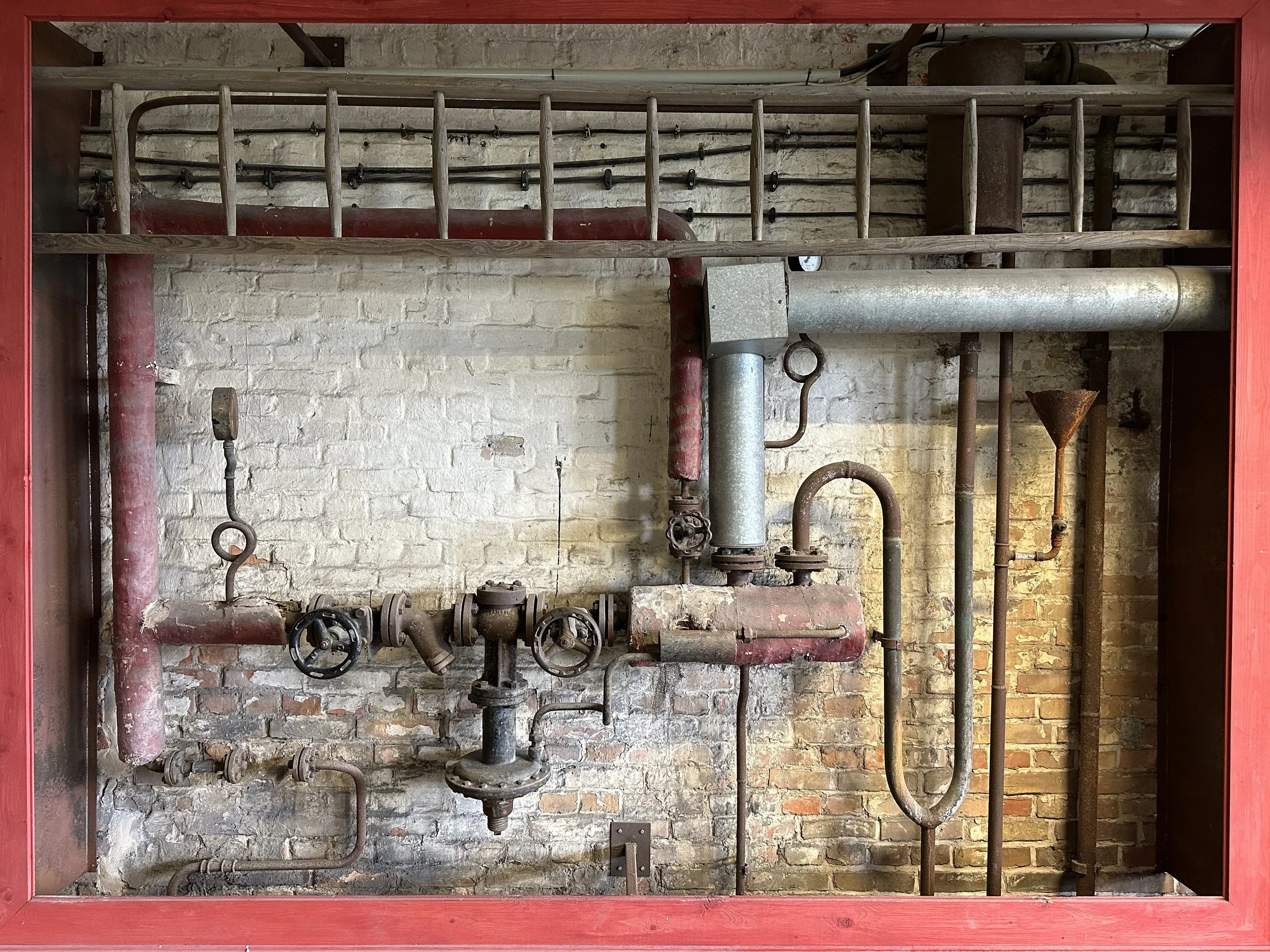
Inside the old electrical plant
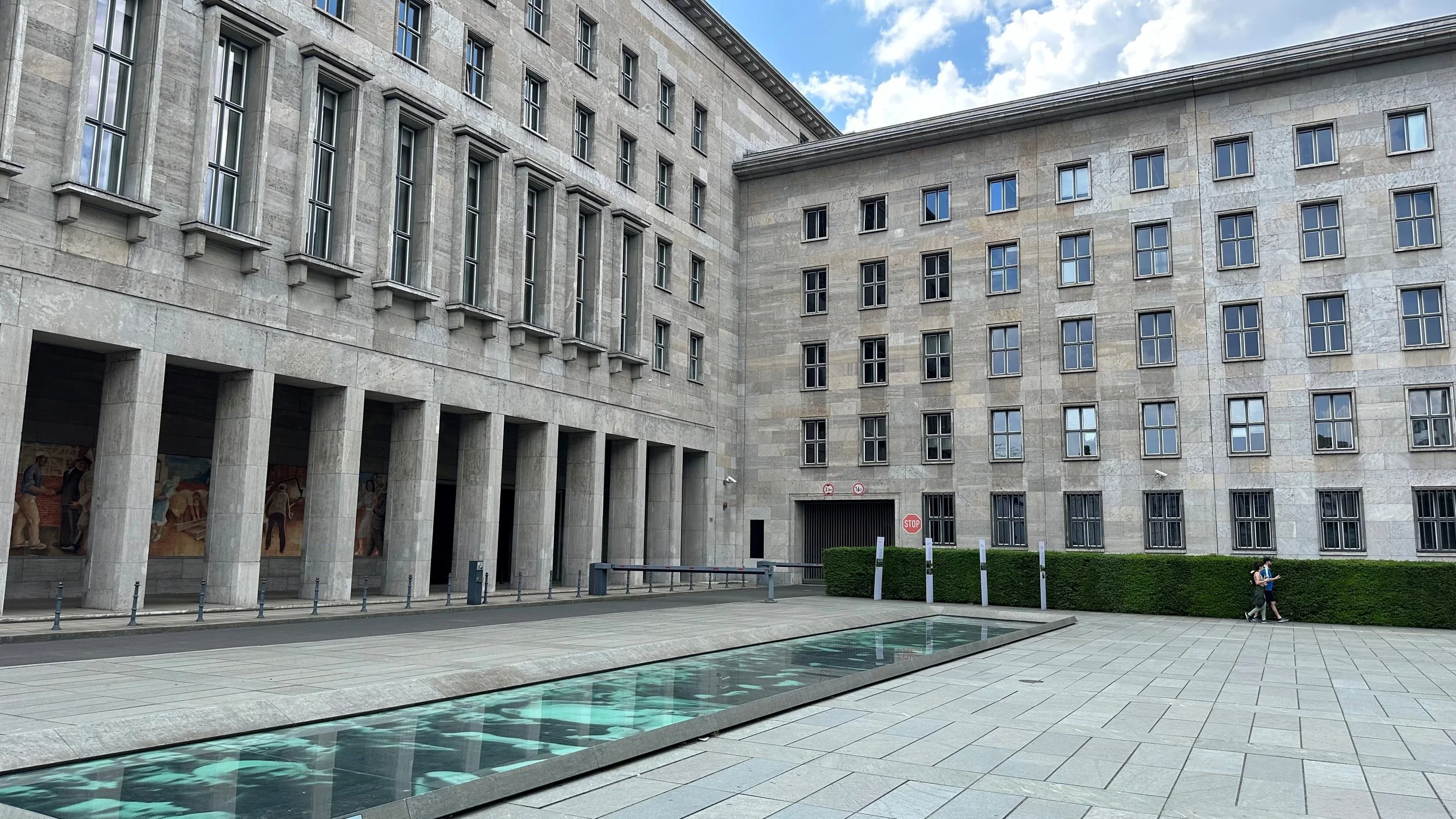
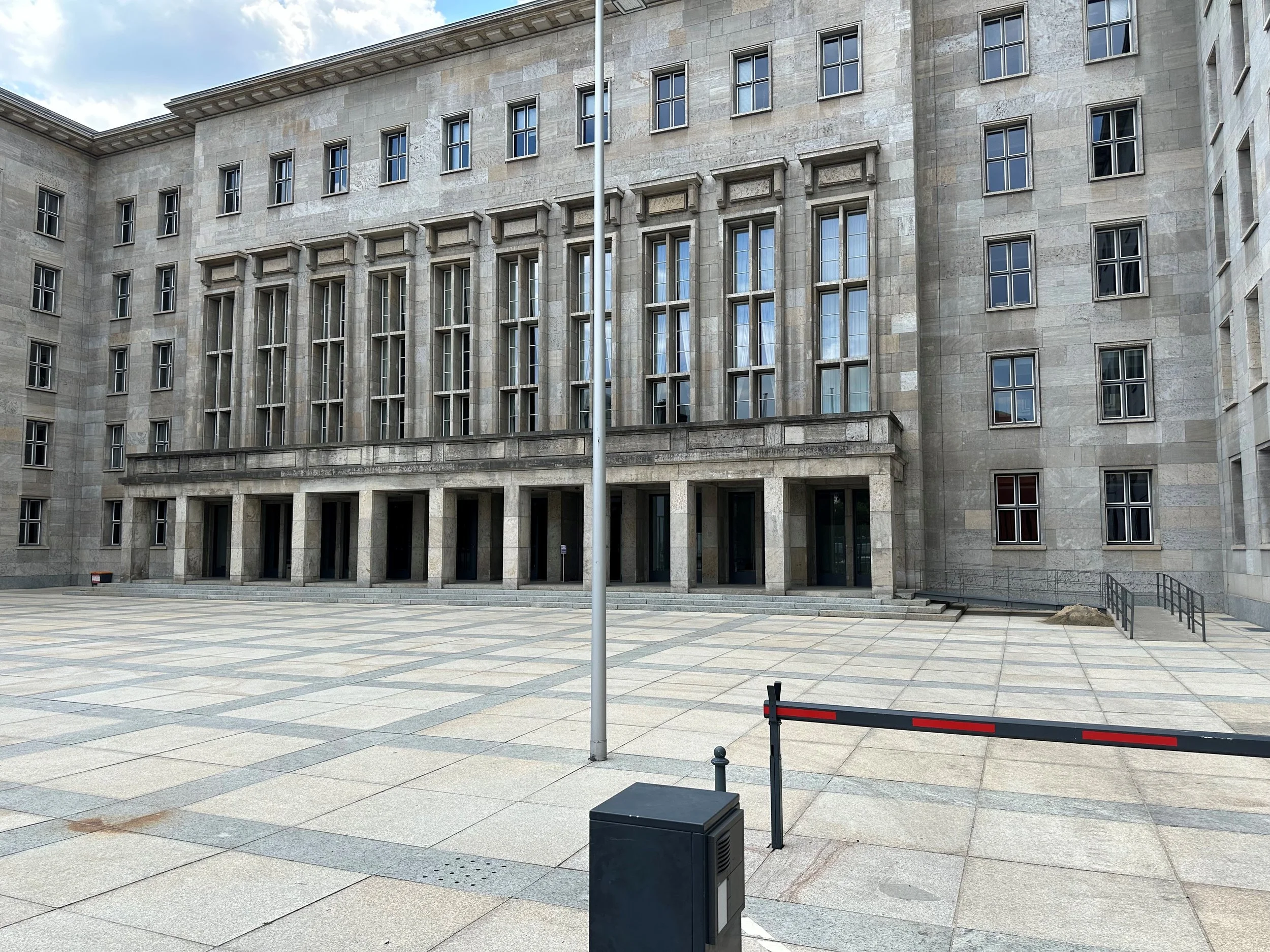
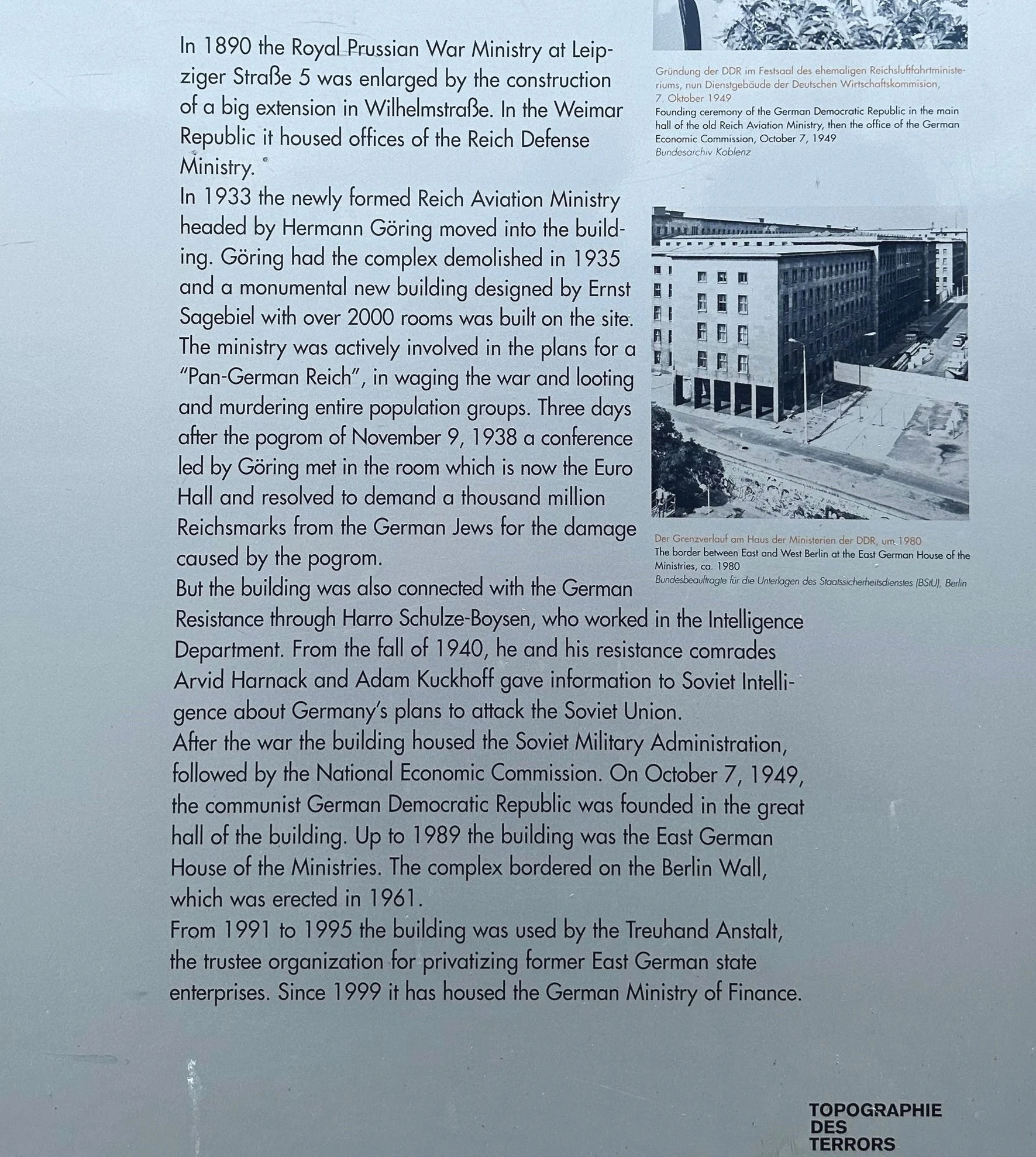
Old Luftwaffe Headquarters in Berlin
Old Luftwaffe Headquarters in Berlin
Join the discussion
Share thoughts, tips, or questions about this trip.
Please keep it kind and relevant.
All Trips and Adventures by Year
A chronological archive of trip reports, photo essays, and route notes across decades.
2026
2025
2024
- Mon - Bhutan
- Bhutan - Snowman Trek Part 1
- Bhutan - Snowman Trek Part 2
- Bhutan - Snowman Trek Part 3
- North of 60º - Polar Adventures
- East Greenland 66º North
- On the Trail of Teutonic Order Castles in Northern Poland
- Wolfsschanze Hitler's HQ, Ketrzyn Poland and Peenemunde WW2 V1/V2 Research Centre in North Germany
- Central Mexico - Mexico City, Puebla and Teotihuacan
- Venezuela - Orinoco River Delta
- Venezuela - Mount Roraima Trek 2810m
- Venezuela - Angel Falls
2023
2022
- Nepal Solukhumbu - Sumna Pass and Lobuche East trip summary
- Nepal Khumbu and Kangchendzonga from the Air
- Nepal Solukhumbu Sundar Peak 5000m and Sumna Pass 5400m
- Nepal Solukhumbu Chola Pass 5450m Lobuche East Ridge 6090m
- Renjola La 5360m Gokyo Ri 5450m, and Cho Oyu BC Photos
- Iceland - Hellismannaleid, Laugavegur and Fimmvorduhals Trails
- The Yukon and the Alaska Highway
- Mount Robson
- Yellowstone National Park
- Grand Teton and Glacier National Parks
2021
- The Rockies of Alberta, Western BC and the Yukon
- Columbia Icefield from the Air
- Waterton Lakes National Park
- Colombia
- Los Nevados National Park Colombia
- Colombia Tayrona National Park
- Colombia Teyuna - Ciudad Perdida Trek (The Lost City)
- Mexico Pico de Orizaba 5,630m
- Mexico - Sierra Negra 4,650m and Izaccihuatl 5,350m
- Chitwan National Park Nepal
2020
2019
- The Grand Mustang Circuit - Part 1: Chame to Kagbeni via Thorong La Pass
- The Grand Mustang Circuit - Part 2: Kagbeni to Lo Mantang
- The Grand Mustang Circuit - Part 3: Lo Mantang to TeriLa Pass
- The Grand Mustang Circuit - Part 4: Terila Pass to Chame via Naar and Kangla Pass
- Kamchatka Trip Report
- Камча́тка, Russia - The Mutnowski and Gorely Volcanoes
- Камча́тка, Russia - The Tolbachik Volcano Circuit and Volcano Bezimienny
- Russia Far East - Sakhalin, Vladivostok, Petropawlowsk-Kamchatsky
- Taiwan
- Ancohuma 6,427M Bolivia
- Huayna Potosi 6,088m Bolivia
- Ausangate Trek Peru
- Yellowstone National Park in Winter 2019
2018
- Calgary Mountain Film Festival
- Langtang, Tilman Pass and Ganjala Trip Report
- Langtang Trek - Tilman Pass
- Langtang Trek - Ganjala Pass
- Paria River Wilderness - USA, Utah
- Slot Canyons - USA, Arizona
- Bryce National Park - USA, Utah
- Zion National Park and Cedar Breaks - USA, Utah
- Norway
- Poland - The Slav and Viking Festival in Wolin
- Iceland
- Bolivia Cordillera Real and Sajama National Park
- Bolivia - Tiwanaku and La Paz
- Togo and Benin
- Benin - Egungun Masquerade
- Benin - Voodoo Festival
- Ghana - The Gold Coast and the Land of the Ashanti
2017
- Annapurna Basecamp and Annapurna Sanctuary Photos
- Annapurna Sanctuary Trip Summary
- Dhaulagiri Basecamp Trek, Dhampus Pass - Trip Summary
- Dhaulagiri Circuit Photos - Nepal
- Peru Central - Huaraz, Cordillera Blanca and Chavin de Hauntar
- Peru South, Sacred Valley - the Land of the Incas, Rainbow Mountain and Lima
- Mt. Brazeau and Maligne Lake in Jasper National Park in Alberta, Canada
- China Shanghai Beijing Wuhan
- Papua New Guinea
2016
- China Far West - Kashgar and Shiphton Arch
- China Far West - Pamir and The Tajik Games
- K2 Basecamp North, Shaksgam Valley Trip Summary
- Chinese K2 (BC North), Shaksgam Valley - Chinese Karakoram
- North Peru Chachapoyas Trip Report
- Peru North - Kuelap, Chachapoyas and Royal Tombs of Sipan
- Wapta Icefiled Area, Alberta, Canada
- The Caribbean and the Panama Canal
- China Far West - Ancient Silk Road Trip Summary
- China Far West - Ancient Silk Road
2015
2014
2013
2012
2011
2010
2009
2008
2007
2006
2004
2002
2001
1996
Get new trip reports when they land
One email when a new story is published. No noise. Just the trail.